Home 5 Articles and Reports 5 Is AI Changing Our Language?

Is AI Changing Our Language?

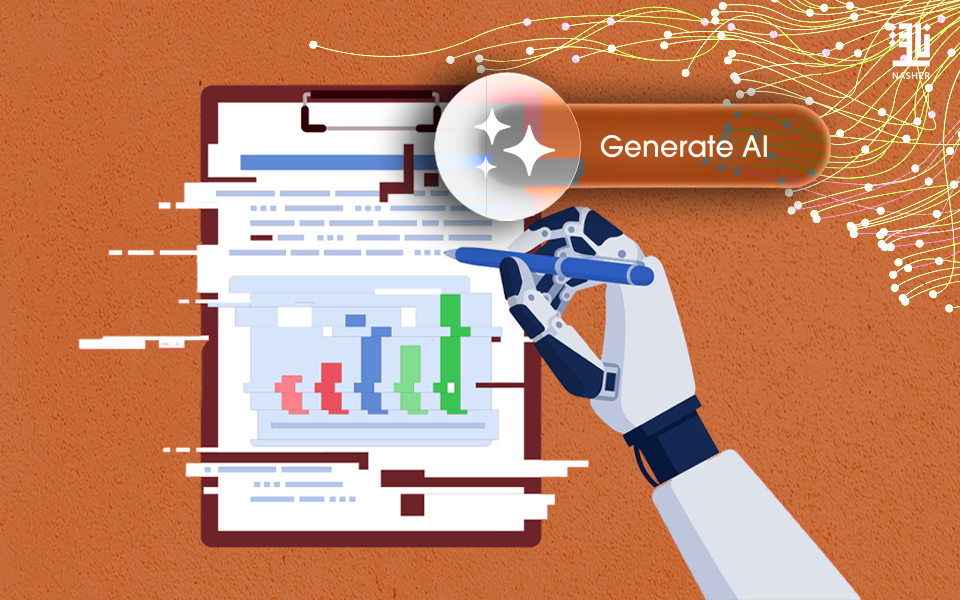
The world is witnessing an increasingly intense debate over the impact of artificial intelligence on language and writing, as generative AI models become more widely used across journalism, literature, and academic research. A report published by “The Guardian” explores how the boundary between human-written and machine-generated text has become increasingly blurred, raising new questions about originality, creativity, and trust in published content, at a time when allegations of AI-assisted writing are becoming more common across a wide range of fields.


The report notes that many of the indicators readers rely on to identify AI-generated text are not necessarily reliable. Linguistic features often associated with AI, such as certain sentence structures, punctuation styles, or repetitive expressions, have also existed in human writing for decades. Linguistics experts further explain that AI detection tools continue to produce varying rates of error, making them an unreliable method for determining whether a piece of writing was created by a human or a machine.


Researchers also argue that AI’s influence now extends beyond generating text to shaping language itself. Certain words and expressions commonly favoured by AI models are becoming increasingly prevalent in academic papers, professional correspondence, and everyday conversations. At the same time, these models tend to standardise writing by steering it towards Anglo-American English, raising concerns that widespread reliance on AI could gradually reduce linguistic and cultural diversity.


At the same time, many of the novelists and linguists interviewed by “The Guardian” maintain that, despite its ability to produce fluent and coherent text, AI lacks the human experience that gives literature its true depth and meaning. In their view, creativity depends not only on linguistic accuracy or stylistic elegance, but also on emotion, memory, lived experience, and the ability to develop original ideas and distinctive voices shaped by human life and interaction with the world.


The report concludes that artificial intelligence will remain a valuable tool for supporting writers and researchers and for accelerating writing and editing tasks, but it is unlikely to replace human creativity altogether. Great works of literature, the experts argue, are not created simply by rearranging existing knowledge, but by challenging conventions and introducing entirely new ways of seeing the world, qualities that remain uniquely human, regardless of how sophisticated AI technology becomes.


Source: The Guardian
 

Recent News

08Jul
Northern Line Tops Literary Ranking

Northern Line Tops Literary Ranking

The Northern line underground has been crowned London’s most literary Tube line after new research mapped more than 1,000 blue plaques across the capital. The English Heritage had installed earlier this year nine new blue plaques across London, celebrating figures who made outstanding contributions in fields ranging from literature to astronomy. The scheme commemorates individuals […]

08Jul
Wuthering Heights Makes History Again

Wuthering Heights Makes History Again

A rare first-edition copy of “ Wuthering Heights,” complete with spelling mistakes, is up for auction for the first time in more than a century, as Emily Brontë’s tragic, tempestuous romance gains new fans through a big-screen adaptation. Christie’s auction house said that it’s the first copy of the novel in the publisher’s original cloth […]

07Jul
Egyptian Publisher Receives Prix Voltaire 2026

Egyptian Publisher Receives Prix Voltaire 2026

Egyptian publisher Yehia Fekry was awarded the 2026 International Publishers Association’s (IPA) Prix Voltaire at the award ceremony of the 35th International Publishers Congress in Kuala Lumpur, Malaysia. The IPA also announced a Prix Voltaire Special Award for the deceased Egyptian publisher Mohamed Hashem.   Fekry, founder and CEO of El Maraya, said: El Maraya […]

Related Posts

When Others Write the Ending… Who Owns a Literary Voice?

When Others Write the Ending… Who Owns a Literary Voice?

When the British author Sophie Hannah accepted the task of continuing the adventures of the famed Belgian detective Hercule Poirot, it was far more than a new installment in a successful series. It was a culturally charged moment that revived old questions in a new...

Has Art Books Become an Economic Burden for Publishers?

Has Art Books Become an Economic Burden for Publishers?

The sector of specialized art and illustrated publishing is going through a particularly delicate phase, as the cost of high-end printing continues to rise. This increase is driven by higher prices for premium paper, inks, and specialized prepress and finishing...

Nigerian Women Reshape African Publishing

Nigerian Women Reshape African Publishing

When contemporary African literature is discussed, the spotlight often falls on celebrated authors and globally acclaimed novels. Yet behind this growing literary presence stands a generation of women who played a pivotal role in rebuilding Nigeria’s publishing...

Previous Next
Close
Test Caption
Test Description goes like this