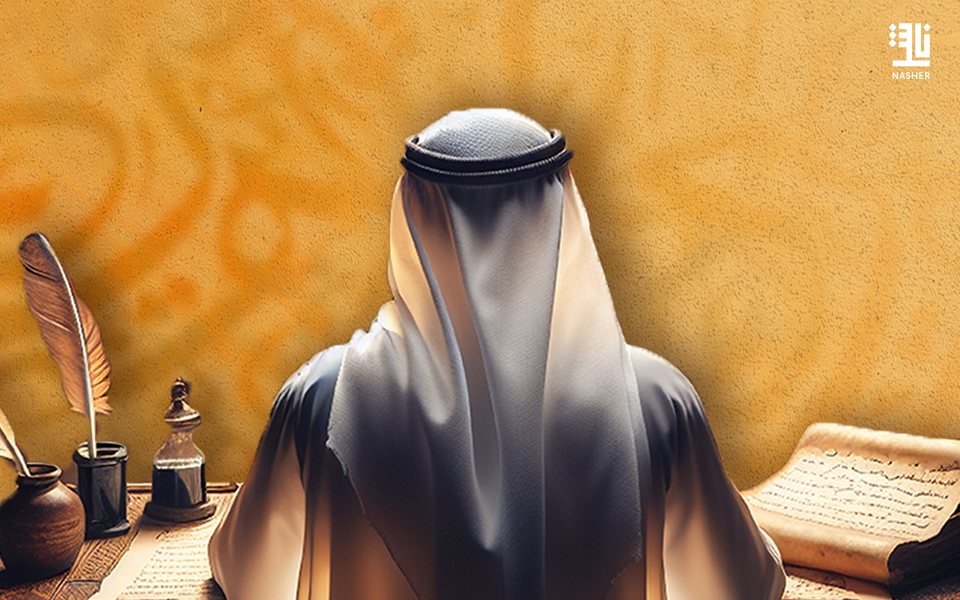
In Emirati literature, pride does not appear as a passing sentiment, but as a deeply rooted value embedded in the collective memory of society. Since the early days of folk and Nabati poetry, poets have expressed their attachment to the land, the tribe, and the values that bind people together. Poetry served as the most prominent medium for documenting daily life and moments of courage and heroism, gradually becoming part of the region’s cultural record. Here, the written word is not merely an aesthetic expression; it is testimony to an entire era and a mirror reflecting the spirit of a society that sees chivalry, generosity, and loyalty as essential elements of its identity. Through both poetry and storytelling, Emirati literature has remained a guardian of the deeper meaning of pride and belonging.
One of the most prominent expressions of these values can be found in Nabati poetry, which occupies a central place in the literary heritage of the United Arab Emirates. Pride stands among the primary themes of this poetic tradition, with poets voicing their attachment to their communities and values while linking heroism to loyalty, fidelity, and social cohesion. Heritage sources indicate that poems of pride were rarely intended as individual glorification; rather, they conveyed collective pride in the tribe and homeland while calling for harmony among people. These poems portray a society that sees solidarity and courage as pathways to preserving dignity and identity.
This meaning has also been reflected in the works of a number of Emirati poets who placed the homeland at the heart of their writing. The Emirati poet Abdullah bin Salem bin Theban, for instance, was known for works addressing national and social issues, using poetry as a space to articulate both human concerns and national belonging. His poems were distinguished by the simplicity of their language and the sincerity of their imagery, qualities that brought them close to the public and enabled them to convey authentic feelings of pride in society and country. His experience demonstrates how poetry can serve as a bridge between personal experience and collective memory.
The presence of heroism in Emirati literature, however, is not confined to poetry alone. It also extends to cultural and narrative writings that draw inspiration from folk heritage and reinterpret it in light of the present. The Emirati cultural legacy is rich with stories of courage, generosity, and sacrifice, values that have shaped the cultural imagination of successive generations. The late Sheikh Zayed bin Sultan Al Nahyan expressed this sentiment when he said: “Our forefathers have left us a great wealth of folk heritage that we have every right to be proud of and to preserve,” highlighting that true pride lies in safeguarding this legacy and passing it on to future generations.
For this reason, Emirati literature remains a space where memory and the present intersect, with poetry and storytelling becoming records of the values that shaped society. Pride in this literature is not simply a poetic theme; it is a cultural vision that views heroism as an everyday ethic, expressed in defending the homeland, preserving identity, and passing heritage to younger generations. Between classical verses and contemporary literary voices, these values continue to shape the contours of Emirati literature, allowing it to stand as a witness to a society that has written its history through words as much as through deeds.