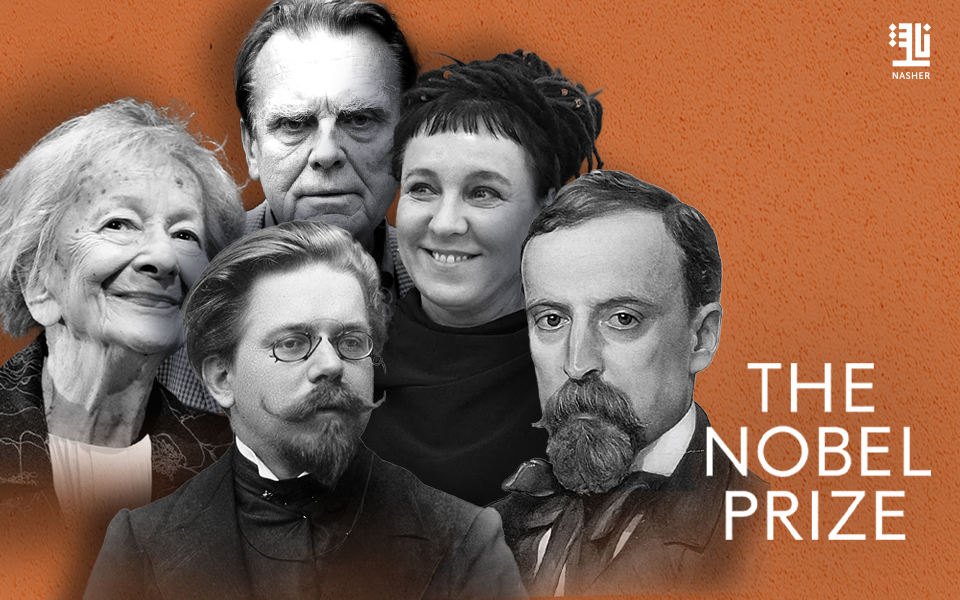
The fact that five Polish writers have won the Nobel Prize in Literature is no historical coincidence. It is the reflection of a literary tradition that has long existed on the edge of pain, upheaval, and transformation. Since the beginning of the twentieth century, Polish authors have written as though literature were a continuous attempt to rescue the human spirit from ruin, or to reinvent a homeland through words after it had been torn apart by empires, wars, and totalitarian regimes. That is why Poland, which this month celebrates Sharjah as Guest of Honour at the Warsaw International Book Fair, occupies such an expansive place in the global imagination: a country that transformed historical suffering into literature capable of crossing borders, languages, and generations.
When Polish novelist Henryk Sienkiewicz received the Nobel Prize in 1905, Poland itself had vanished from the political map, partitioned among competing powers. Yet Sienkiewicz chose to rebuild his nation through historical fiction, crafting sweeping narratives infused with chivalry, dignity, and resistance. His most celebrated novel, Quo Vadis, travelled far beyond Europe and became a global literary phenomenon. For him, history was never a closed chapter of the past, but a moral force capable of preserving the identity of a people threatened with erasure. Years later, Władysław Reymont, awarded the Nobel Prize in 1924, offered an entirely different portrait of Poland, one rooted in the countryside, in seasonal rhythms, and in folk mythology. In his monumental novel The Peasants, the Polish village became a complete universe where nature and humanity moved together in a slow, almost musical cadence.
As the twentieth century descended into turmoil, Polish literature entered a darker and more complex phase. Poet Czesław Miłosz, who won the Nobel Prize in 1980, witnessed both Nazi occupation and the suffocating grip of communism. He spent much of his life in exile, yet continued to write in his native language as though it were the last remaining fragment of home. In his poetry and philosophical reflections, Europe emerges as a continent burdened by guilt and moral uncertainty, while the individual appears fragile, struggling to survive the machinery of history. Miłosz was never merely a political poet in the conventional sense; he was a writer searching for the meaning of inner freedom in a world constricted by fear, censorship, and historical collapse.
Then came Wisława Szymborska, awarded the Nobel Prize in 1996, who gave Polish poetry an entirely different voice, quiet, ironic, and astonishingly precise. She wrote about the ordinary details of daily life, yet transformed them into profound philosophical questions. Her poems do not shout; they whisper, and still they leave a lasting echo in the reader’s mind. Szymborska turned simplicity into an art form of remarkable intelligence, rediscovering the world through forgotten details: an old photograph, a small stone, a cat waiting for its owner after death. Readers far beyond Poland embraced her work because it seemed to speak to anyone bewildered by the complexity of existence.
The most recent Polish name on the Nobel list, Olga Tokarczuk, belongs to a different era, though one no less restless. Her fiction blends myth with history, travel with philosophical meditation, while her characters move through shifting borders and fractured identities. Tokarczuk does not treat the novel simply as storytelling, but as a map for understanding contemporary humanity. In her books, Europe appears as an open landscape shaped by memory, migration, and ecological and spiritual anxieties. For this reason, she has become one of the most influential literary voices of recent years. Her Nobel Prize renewed global attention toward Polish literature as a tradition capable of constant reinvention without ever severing its deep roots.
What unites these five writers is not merely language, but a distinctly Polish conviction that literature is an existential necessity rather than a cultural luxury. In a country shaped by occupation, division, exile, and war, writing became a means of preserving collective memory and resisting oblivion. Perhaps that is why Polish literature feels profoundly human: it was born from a genuine confrontation with fear, loss, and the largest questions of existence. Five names reached the Nobel stage, yet together they represent an entire literary tradition that sees in words a form of survival, and in reading, an endless attempt to understand humanity in a world that never stops changing.