Home 5 Articles and Reports 5 How Digitalization Saved Australian Literature from Extinction

How Digitalization Saved Australian Literature from Extinction

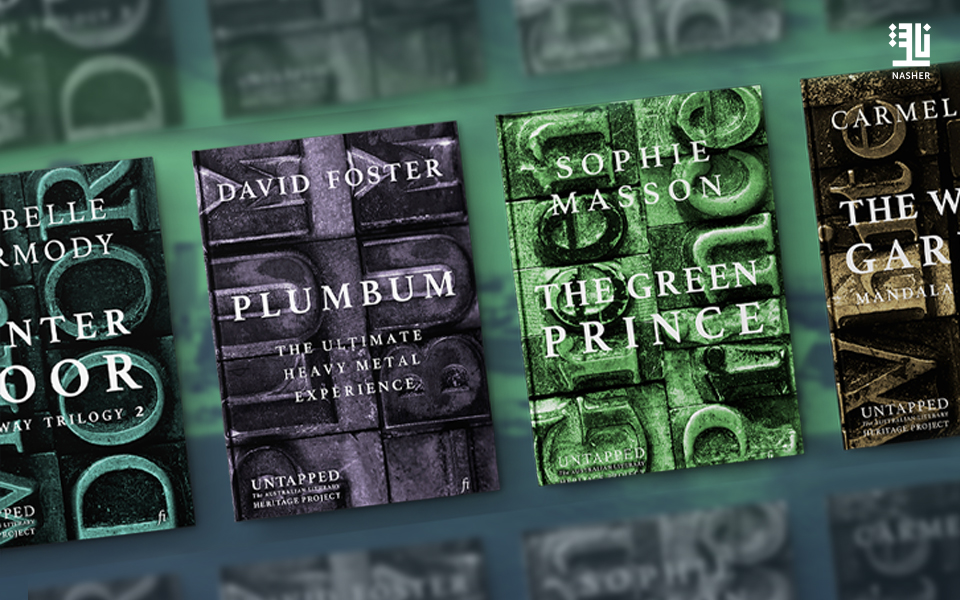
A million or more words — more than 160 substantial titles of Australian authorship, including six winners of the Miles Franklin Award — returned to print as part of the three-year “Untapped” project, which wrapped up recently. The program reintroduced works from acclaimed authors including Thea Astley, Mem Fox, Charmian Clift, Anita Heiss and Dorothy Porter, and Garry Disher’s crime series, “Wyatt.”


A collaboration between researchers from Melbourne Law School and Macquarie Business School, authors, literary agents, libraries and the Australian Society of Authors, the project digitized these works long forgotten, rendering them available to modern audiences. The books raked in big money for authors via digital sales, library lending royalties and fresh interest in print editions.


The “Untapped Potential” report found that the 66 original diverse works, which earned no income, were loaned 15,688 times in a single year, led by Gary Disher’s “Kickback” with 1,744 loans. The resurgence also fueled appetite for digital editions, selling 6,000 copies a year on platforms like Amazon, Apple and Kobo.


This campaign emphasises the need for copyright reform in Australia to enable authors to be compensated for their works. With median author earnings at only $18,200 per year, such endeavors are a welcome addition to writers’ livelihoods.
 

Recent News

02Sep
Why is Global Publishing Turning to Sharjah?

Why is Global Publishing Turning to Sharjah?

Sharjah’s rise to the forefront of the global cultural landscape was neither a matter of chance nor the result of isolated achievements. It is the outcome of a far-reaching cultural vision founded on the belief that culture is not merely a complement to development, but one of its fundamental pillars. For decades, His Highness Sheikh […]

02Sep
Lisbon Asks What Reading’s Future Holds

Lisbon Asks What Reading’s Future Holds

Lisbon will become a meeting point for some of the most influential voices in publishing, culture and public life on September 15 and 16, 2026, as the fourth edition of BOOK 2.0 – The Future of Reading takes place at the Belém Cultural Centre. Under the theme “Back to Basics, Back to Books,” the conference […]

31Aug
PocketBook Puts an E-Reader in Your Pocket

PocketBook Puts an E-Reader in Your Pocket

Swiss e-book company PocketBook has unveiled its latest ‘phone sized’ e-book reader PocketBook Q.  The company says: “The new PocketBook Q combines a slim, smartphone-sized form factor with all the essential features for comfortable reading on the go. Its 5.84-inch E Ink Carta™ 1300 display has a resolution of 788 × 1,576 pixels and a […]

Related Posts

What’s Really Behind the “Bestseller” Label?

What’s Really Behind the “Bestseller” Label?

Sometimes, all it takes is the word “bestseller” on a book cover for its success to appear settled beyond question. The label compresses the choices of thousands of readers into a single claim and pushes the book to the forefront. Yet behind it lies a far more...

Did Borges Enter the Digital Labyrinth Before Us?

Did Borges Enter the Digital Labyrinth Before Us?

On 24 August 1899, a writer was born in Buenos Aires, the Argentine capital, who would spend his life among books, labyrinths, mirrors and questions without end. Jorge Luis Borges never knew the internet, never saw a smartphone screen or a search engine. Yet decades...

Mary Shelley Asked the AI Question First

Mary Shelley Asked the AI Question First

Mary Shelley was born in London on 30 August 1797, and would go on to give literature one of its most famous creations: Frankenstein. She was only eighteen when she began writing the novel, unaware that she was placing at its heart a question that would remain alive...

Previous Next
Close
Test Caption
Test Description goes like this