
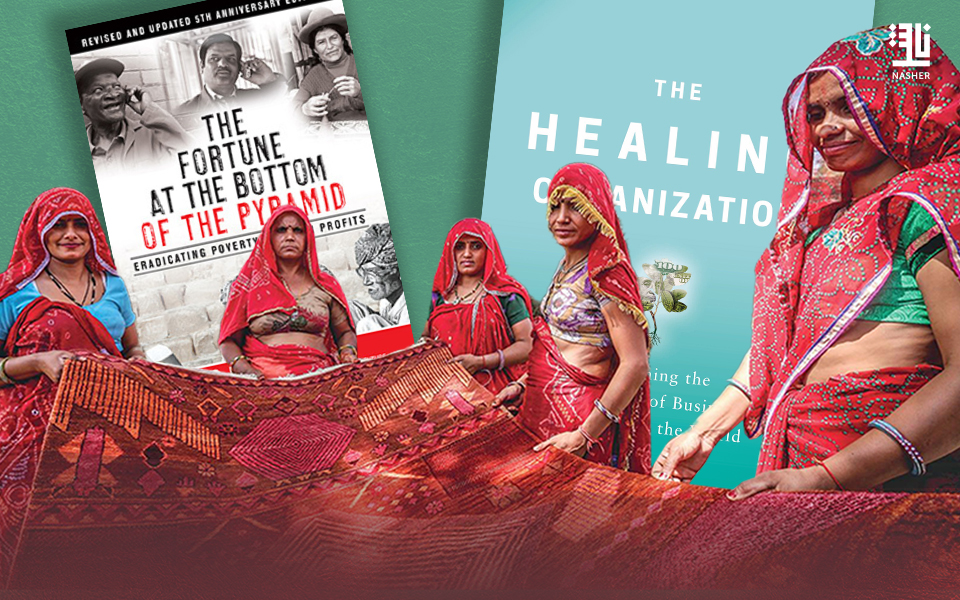
The tale of the Jaipur Rugs, founded in 1978 by Nand Kishore Chaudhary in India, has left the carpet industry and entered the realm of literary obsession. From a two-loom, nine-artisan shop, it has transformed into a world-acclaimed universal business working with more than 40,000 artisans in 600 Indian villages. The company’s extraordinary story — grounded in the preservation of classic craftsmanship, and the empowerment of marginalized artisans — has spawned several books that examine its cultural, social, and economic influence.
Jaipur Rugs has become a malleable case study used across the spectrum by authors, academics and courses, the most notable being “The Fortune at the Bottom of the Pyramid” by C.K. Prahalad. This seminal book explores how businesses bring social change while being profitable, elaborating on the case of Jaipur Rugs: How connecting thousands of rural artisans with global marketplaces creates economic opportunities that can be sustained over time. The book describes how the company’s model subverts traditional business and redefines success with social good at its core.
Another significant work is “Take Me Home”, which was released in 2014 and features the bankable story of Nand Kishore Chaudhary — Rashmi Bansal. In this compelling narrative, Bansal employs engaging storytelling to describe how Jaipur Rugs navigated adversity to position itself as the market leader in handmade rugs — showcasing a journey of resilience, ethical business practices and the reinvigoration of crafts. Through words, the book paints Chaudhary not only as a businessman but as a visionary who made an ancient art form a movement in empowerment.
Jaipur Rugs is also featured in “The Healing Organization” by Raj Sisodia and Michael J. Gelb. This books features businesses that embed the purpose, compassion, and social impact at the heart of their philosophy. It portrays Jaipur Rugs as a model of conscious capitalism, a company whose founder built something that benefits both artisans and customers while keeping an ancient craft alive.
These books are not so much a portrait of Jaipur Rugs as a whole new way to think about the brand — it is now an academic subject, a business strategy, a sale of a story, a narrative in the making. Its inclusion in the literature describes the wider dialogue around corporate ethics, the conservation of the heritage and the potential of craft in an increasingly competitive-moderized society. Jaipur Rugs is a remarkable testament to how tradition, innovation, and storytelling can interlace to form something absolutely timeless — something that authors and scholars alike are still exploring its journey.