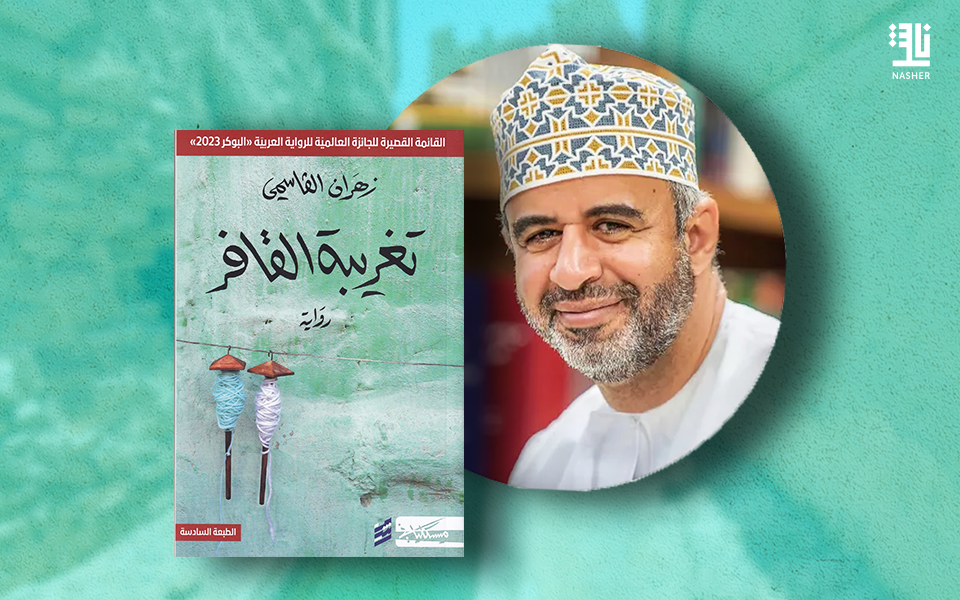
Drawing on the occupation of tracing water beneath the earth, Omani novelist Zahran Alqasmi built The Water Diviner around a community whose daily life and fortunes depend on its presence or absence. Winner of the 2023 International Prize for Arabic Fiction, the novel brought Oman’s aflaj irrigation channels and the people who dig them into the literary spotlight. The judges praised its structure, poetic language and exploration of the relationship between environment and human life, in a narrative that moves between reality and myth.
The story follows Salem bin Abdullah, whose extraordinary ability to hear water flowing underground leads villages to seek his help in locating its sources. His connection with water begins with a birth marked by his mother’s drowning and continues through his childhood, work and travels. Through Salem, the novel introduces a demanding occupation built on knowledge of the land and the struggle to penetrate its rock. Around him gather the villagers’ stories, fears and attempts to explain an unfamiliar gift on which their livelihoods and cultivated land depend.
Alqasmi drew on knowledge acquired while growing up in an Omani village, including the stories and legends surrounding aflaj that he heard as a child. In an interview published on the prize’s official website, he explained that the system combines water management with social relationships shaped by status, class and the rights of orchard owners. His choice of subject also reflected water’s contradictory power: it sustains life but can bring death through scarcity or flooding. The novel follows that tension through the experiences of its characters.
Behind this fictional world lies a cultural and hydraulic system, five examples of which UNESCO inscribed on its World Heritage List in 2006. Aflaj carry water through channels that use gravity to supply farms and households, with access allocated through timed shares managed by local communities. UNESCO identifies close connections between these systems, settlement patterns, agriculture and collective management. This history gives the falaj’s presence in the novel a wider context, linking it to the work, settlement and organisation of resources that have shaped life in Oman.
The Water Diviner belongs to a broader strand of Alqasmi’s fiction exploring occupations and knowledge closely connected to the natural world. His earlier novels include Hunger for Honey, about beekeeping and the search for honey, and The Sniper, which explores ibex hunting. Speaking after his prize win, Alqasmi explained that he chooses a distinct subject for each novel to avoid repeating himself. He also credited his publisher with suggesting the submission of The Water Diviner, recalling that its longlisting brought wider readership and discussion, opening a new chapter in the book’s journey to audiences.