Home 5 Articles and Reports 5 Do Indian Authors Need to Be Influencers to Sell Their Books?

Do Indian Authors Need to Be Influencers to Sell Their Books?

A recent report published by Vogue India highlighted the rapid transformations reshaping the country’s book market, noting that simply writing a good book is no longer enough to secure commercial or popular success. With the sharp decline of traditional media coverage and shrinking space for books in newspapers and magazines, authors today are expected to reinvent themselves as public figures on social media, introducing their work, sharing details of their daily lives, and maintaining a constant presence in the minds of readers. The report stressed that this is no longer an exception but rather an essential part of the publishing equation.


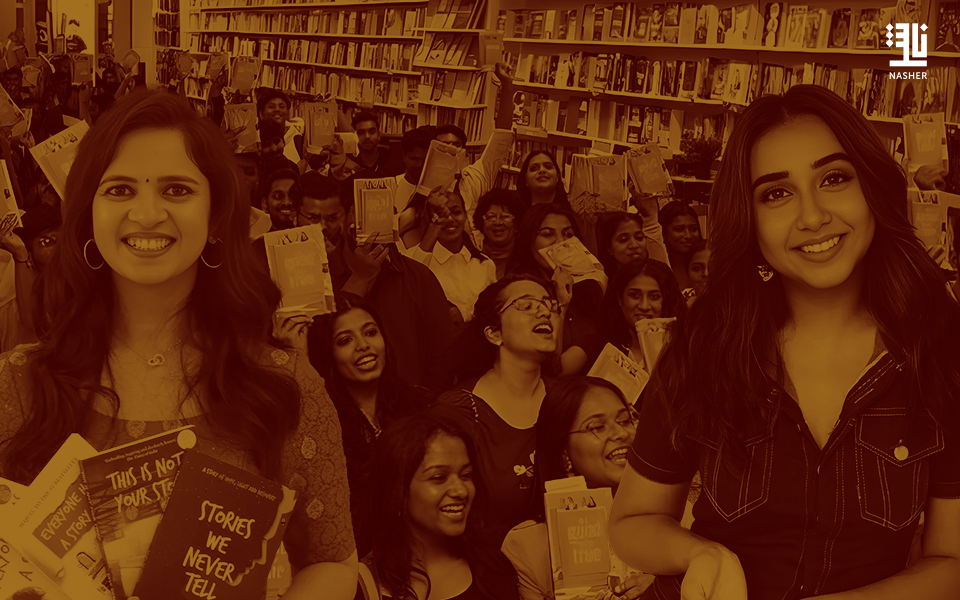
The magazine pointed to a striking example in Prajakta Koli, the digital creator better known online as MostlySane. With more than 18 million followers across YouTube and Instagram, Koli achieved an extraordinary milestone with the release of her debut novel Too Good To Be True. The book sold over 150,000 copies in just one month, a figure that vividly illustrates the power of a digital fan base in shaping literary markets. Publishers see this case as clear evidence that the commercial success of literary works is now closely tied to the author’s standing on digital platforms.


According to Vogue India, publishers in the country have begun to rethink their strategies, with selection criteria for new manuscripts extending beyond literary merit to include an author’s ability to engage audiences and promote their work online. An author with a strong digital presence can be marketed far more easily to readers, dramatically increasing the chances of success compared to a talented writer who lacks such a following. Social media, the report argues, has become an indispensable extension of the publishing world, rather than a secondary tool.


The findings conclude that in today’s India, an author is no longer solely a writer devoted to literary creativity, but also a marketer and influencer striving to sustain an ongoing dialogue with their readership. As competition intensifies and readers’ choices expand, the ability to combine writing with community-building in the digital sphere has become the key to success. This raises a larger question for the future of literature: will more authors enter the literary stage through the doorway of digital fame, or will strong texts continue to assert themselves independently of the virtual world?

 

Recent News

31Aug
PocketBook Puts an E-Reader in Your Pocket

PocketBook Puts an E-Reader in Your Pocket

Swiss e-book company PocketBook has unveiled its latest ‘phone sized’ e-book reader PocketBook Q.  The company says: “The new PocketBook Q combines a slim, smartphone-sized form factor with all the essential features for comfortable reading on the go. Its 5.84-inch E Ink Carta™ 1300 display has a resolution of 788 × 1,576 pixels and a […]

25Aug
Pan Macmillan Tests AI-Assisted Publishing Model

Pan Macmillan Tests AI-Assisted Publishing Model

Pan Macmillan to publish AI-assisted business titlewanted to turn his existing body of economic analysis into a book but “would never have had the time to write” it. Harriman House therefore worked with sister company CHAPTR to develop Weave, a secure proprietary AI application grounded on Pal’s archive of previously published material, speeches, intellectual property […]

24Aug
SIBF Awards 2026 Nominations Open Until August 31

SIBF Awards 2026 Nominations Open Until August 31

The Sharjah Book Authority (SBA) is accepting nominations for the Sharjah International Book Fair (SIBF) Awards 2026 until August 31, with a total prize fund of AED 625,000 recognising outstanding achievements in writing and publishing, spotlighting Emirati and Arab talent, and supporting distinguished literary works locally and internationally. The awards span novels, academic studies, poetry […]

Related Posts

Did Borges Enter the Digital Labyrinth Before Us?

Did Borges Enter the Digital Labyrinth Before Us?

On 24 August 1899, a writer was born in Buenos Aires, the Argentine capital, who would spend his life among books, labyrinths, mirrors and questions without end. Jorge Luis Borges never knew the internet, never saw a smartphone screen or a search engine. Yet decades...

Mary Shelley Asked the AI Question First

Mary Shelley Asked the AI Question First

Mary Shelley was born in London on 30 August 1797, and would go on to give literature one of its most famous creations: Frankenstein. She was only eighteen when she began writing the novel, unaware that she was placing at its heart a question that would remain alive...

Books Written Behind bars

Books Written Behind bars

The prison cell is the perfect microcosm for a psychological novel. It raises issues of power and liberty, shame and repentance, memory and hope. Its claustrophobic walls can represent narrow-mindedness, social restrictions, the womb, the grave or the confined cubic...

Previous Next
Close
Test Caption
Test Description goes like this