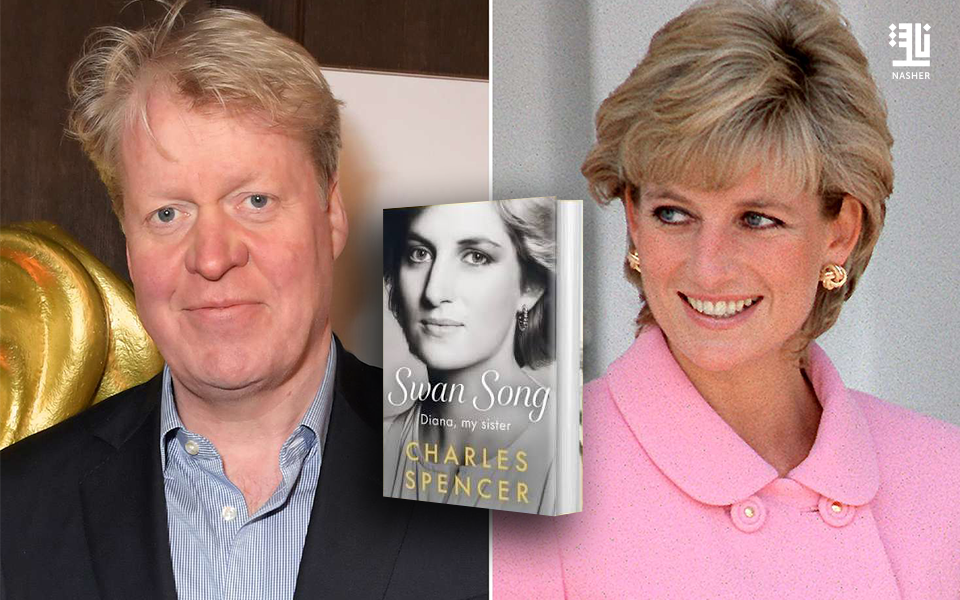
Princess Diana is returning to the cultural spotlight through the intimate lens of memory, as her brother Charles Spencer prepares to publish a new book, Swan Song: Diana, My Sister, on September 22, 2026. Offering a deeply personal account of Diana’s life and the final week before her death, the book marks the first time the 9th Earl Spencer has spoken at length and with such candour about his sister in a volume devoted entirely to her. Its publication comes as the 30th anniversary of the Princess of Wales’s death in Paris on August 31, 1997 approaches, reopening a story that for decades has existed between private family memory and an enduring public image.
Spencer says the approaching anniversary brought a fresh wave of interview requests and invitations to speak about Diana, prompting him to put his own memories and reflections into words rather than leave her story to accounts he believes have, in some cases, allowed inaccuracies to harden into accepted fact. The book is therefore more than a return to the life of a celebrated public figure; it is also an attempt to reclaim a voice obscured by years of interpretation, speculation and controversy. Spencer says his aim is to present “the truth about Diana from her brother’s perspective”, continuing, in a sense, the role he assumed when he spoke on her behalf at her funeral in 1997.
According to the publisher, Swan Song traces Diana’s story through the final week of her life, combining the intimacy of a brother’s recollections with the extraordinary weight of a public figure who became one of the defining icons of the 20th century. Daniel Bunyard, Publishing Director at Penguin Michael Joseph, has described the work as a book of historical significance, noting that while it contains revelations likely to attract considerable attention, it remains, at heart, a tribute to Diana. The book is also set to reach readers around the world, with plans for translation into 12 languages, extending the life of a story that continues to captivate audiences nearly three decades after her death.
Yet Spencer appears determined that the book should offer more than an exercise in nostalgia. He hopes those who remember Diana in her lifetime will recognise something of the woman they knew, while younger generations who never witnessed her extraordinary presence may come to understand her more fully. In speaking about the book, he evokes a singular personality shaped by love, charisma and self-doubt, someone who lived intensely and, in his words, left the world a better place. Moving between private memory and public mythology, the book seeks to return the human being to the centre of the story, beyond the photographers’ lenses and the headlines that pursued her for so long, and closer to the portrait preserved by a brother who carries his own story of his sister.