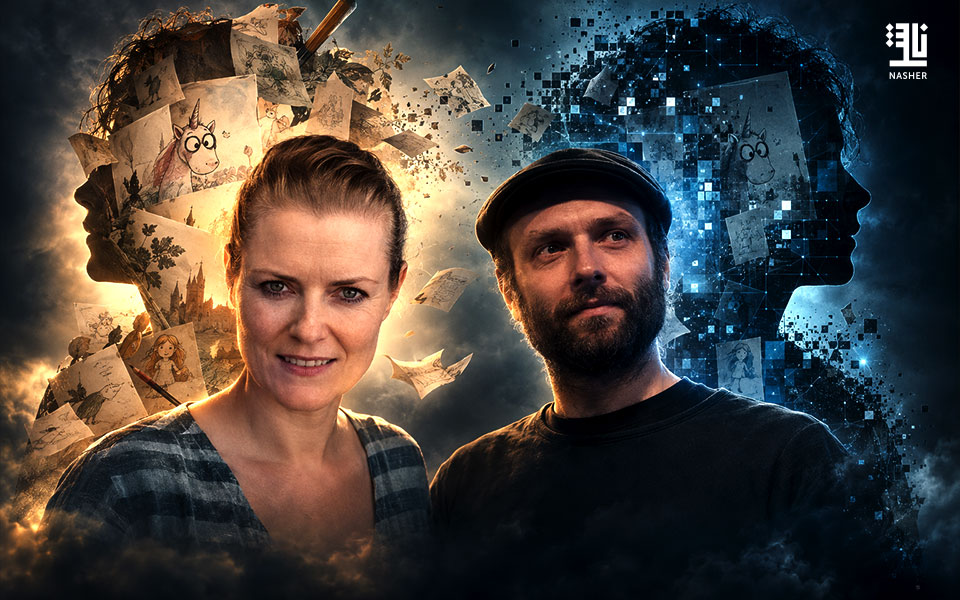
German publisher Carlsen Verlag, supported by the German Bonnier publishing group, has taken legal action against OpenAI Ireland Ltd., joining author Marc-Uwe Kling and illustrator Astrid Henn in a case filed before the Munich Regional Court. Submitted on August 19, 2026, the lawsuit centres on the bestselling children’s series Das NEINhorn, whose creators and publisher allege that protected texts and illustrations were unlawfully used in OpenAI’s artificial intelligence models.
At the heart of the dispute is the claim that ChatGPT can generate stories and images that closely echo the original work even when prompted with relatively simple instructions. Carlsen says its tests produced material containing recognisable creative elements, characters and settings from the series, as well as highly similar illustrations. In some cases, the system also generated print-ready concepts for illustrated books, including covers, publishing information and fictitious ISBNs, prompting the publisher to argue that parts of the original work may have been memorised within the models.
For Carlsen and the creators, the lawsuit is about more than a single children’s title. It touches on one of the most contested questions surrounding generative artificial intelligence: whether companies can train powerful models on copyrighted creative works without permission, and what happens when those models later reproduce material that remains recognisably close to the source. The publisher says protecting authors and illustrators is a fundamental responsibility, while Bonnier has called on OpenAI to end any unlicensed use of protected works and compensate for alleged damages. The court has yet to rule on the claims.
The case forms part of a broader wave of legal challenges now testing the boundaries between copyright and artificial intelligence in Europe. In Germany, a Munich court recently issued a non-final ruling largely supporting claims brought by music rights organisation GEMA against AI music company Suno. Together, these disputes are moving the debate from principle to precedent, raising questions that could shape how creative works are used to train AI systems, how far model “memory” can extend, and where machine learning ends and unlawful reproduction begins.