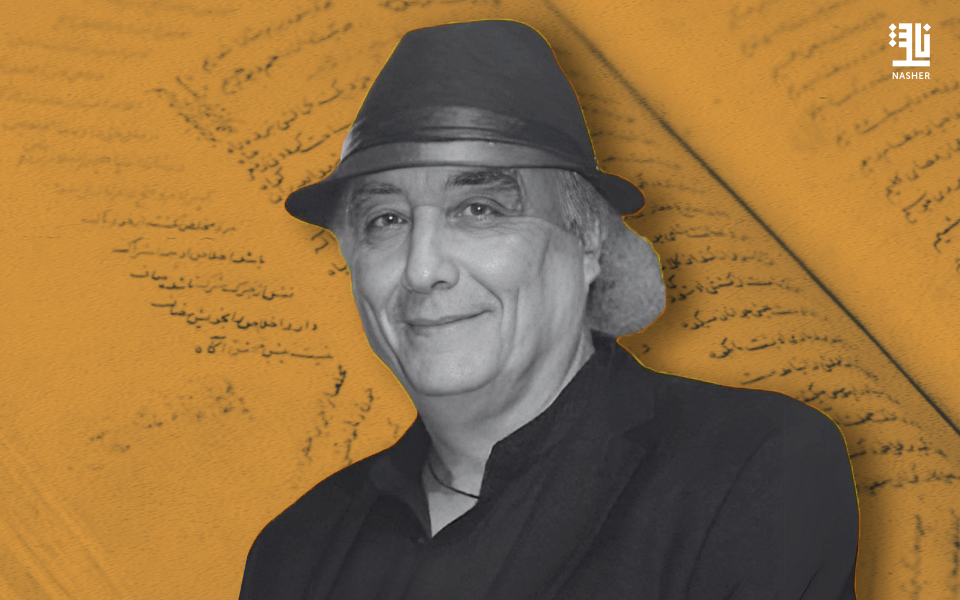
Waciny Laredj, the celebrated Algerian novelist who marks his 70th birthday this week, stands as one of the most resonant literary voices in the contemporary Arab world. Over decades of writing, he has built a cohesive body of work rooted in reclaiming historical memory and transforming it into creative texts that place the human being at their heart. By transcending local boundaries and engaging with universal concerns, Laredj has earned a place in both Arab and international literary landscapes. His novels are read in universities and research centers, and studied within the framework of comparative literature, not only for the beauty of his prose, but for the depth of the questions he poses to his readers.
Laredj’s fiction is distinguished by its seamless interplay between realism and the imaginative craft of storytelling, rendered in narratives rich with symbols and layered meanings. His novels pulse with life: cities appear as living beings, and his characters move freely across time as though crossing invisible bridges linking past and present. In works like The Andalusian House and Balconies of the North Sea, stories and spaces intertwine in intricate structures that remain fluid and inviting, drawing the reader into the journey.
For Laredj, language is no neutral tool of narration, it is a living entity charged with musical cadence and poetic imagery. His sentences carry emotional resonance, his narratives composed like musical scores that stir the heart and ignite the imagination. This meticulous care for style lends his novels the quality of long, poetic compositions, affirming his place among the most distinctive Arab novelists in terms of language. Through his singular style, reading becomes an aesthetic experience in its own right.
His academic background as a professor of comparative literature in both Algeria and France has also left its mark on his work. Laredj weaves multiple cultural contexts into his narratives, sustaining an ongoing dialogue between Arab-Islamic heritage and European and Mediterranean legacies. This cultural interplay transforms his novels into bridges between civilizations, offering readers an opportunity to reflect on questions of identity and belonging in an age of globalization. His writing is never confined to the local; it reaches toward the shared human experience.
Laredj’s fame extends across the Arab world and into Europe, with his novels translated into French, Spanish, Italian, and other languages. This global reach is no accident nor mere cultural courtesy; it is the natural outcome of his engagement with universal themes, memory, exile, war, love, freedom, that resonate far beyond the borders of any single language or place. His works move fluidly between cultures because they speak to the human essence itself.
Ultimately, Waciny Laredj’s body of work embodies the model of the modern Arab novel: firmly rooted in local soil while open to the world. He writes history through the lens of the present, envisions the future in a language that marries dream and reality. Between the lines, he places the reader before profound existential questions: Who are we? Where are we headed? How do we safeguard memory in the swift current of forgetfulness? In each novel, he leaves space for reflection, as if his texts were mirrors reflecting our shifting selves.