
Home 5 Articles and Reports 5 The State of Digital Publishing in Africa

The State of Digital Publishing in Africa

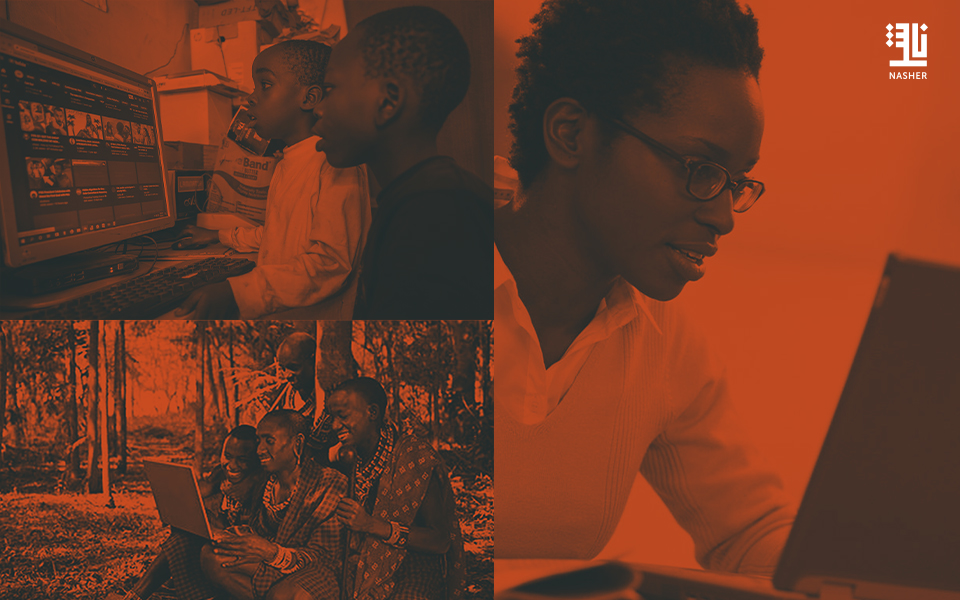
Digital publishing has transformed the global literary and educational landscape, but sub-Saharan Africa faces several challenges that hinder its growth in the region. Despite the promise of improved access to information and a reduction in the cost of publishing, barriers such as limited internet connectivity, high data costs, low digital literacy, and infrastructure gaps continue to slow progress.


One of the most significant challenges is internet penetration. According to Datareportal’s 2024 statistics, internet penetration in sub-Saharan Africa is just 43%, significantly lower than the global average of 65%. In countries like Ethiopia and the Democratic Republic of Congo, less than 20% of the population has access to the internet. This digital divide makes it difficult for publishers to reach a broad audience through digital platforms.


High data costs compound the issue. The Alliance for Affordable Internet (A4AI) reports that, as of 2023, the average cost of 1GB of data in sub-Saharan Africa is 7.1% of monthly income, much higher than the global target of 2%. This makes accessing digital content prohibitively expensive for a large portion of the population, particularly in rural areas.


Low digital literacy also presents a major obstacle. The UNESCO Institute for Statistics (UIS) highlights that in sub-Saharan Africa, nearly 35% of adults are illiterate, and many of those who are literate lack the digital skills required to engage with e-books, online journals, and digital learning platforms.


Despite these challenges, there are signs of progress. Initiatives such as Worldreader have provided digital books to over 18 million readers in the region, indicating that digital publishing can thrive with the right support. However, overcoming these systemic challenges will require sustained investment in infrastructure, education, and policy reforms.


 

Recent News

02Sep
Why is Global Publishing Turning to Sharjah?

Why is Global Publishing Turning to Sharjah?

Sharjah’s rise to the forefront of the global cultural landscape was neither a matter of chance nor the result of isolated achievements. It is the outcome of a far-reaching cultural vision founded on the belief that culture is not merely a complement to development, but one of its fundamental pillars. For decades, His Highness Sheikh […]

02Sep
Lisbon Asks What Reading’s Future Holds

Lisbon Asks What Reading’s Future Holds

Lisbon will become a meeting point for some of the most influential voices in publishing, culture and public life on September 15 and 16, 2026, as the fourth edition of BOOK 2.0 – The Future of Reading takes place at the Belém Cultural Centre. Under the theme “Back to Basics, Back to Books,” the conference […]

31Aug
PocketBook Puts an E-Reader in Your Pocket

PocketBook Puts an E-Reader in Your Pocket

Swiss e-book company PocketBook has unveiled its latest ‘phone sized’ e-book reader PocketBook Q.  The company says: “The new PocketBook Q combines a slim, smartphone-sized form factor with all the essential features for comfortable reading on the go. Its 5.84-inch E Ink Carta™ 1300 display has a resolution of 788 × 1,576 pixels and a […]

Related Posts

What’s Really Behind the “Bestseller” Label?

What’s Really Behind the “Bestseller” Label?

Sometimes, all it takes is the word “bestseller” on a book cover for its success to appear settled beyond question. The label compresses the choices of thousands of readers into a single claim and pushes the book to the forefront. Yet behind it lies a far more...

Did Borges Enter the Digital Labyrinth Before Us?

Did Borges Enter the Digital Labyrinth Before Us?

On 24 August 1899, a writer was born in Buenos Aires, the Argentine capital, who would spend his life among books, labyrinths, mirrors and questions without end. Jorge Luis Borges never knew the internet, never saw a smartphone screen or a search engine. Yet decades...

Mary Shelley Asked the AI Question First

Mary Shelley Asked the AI Question First

Mary Shelley was born in London on 30 August 1797, and would go on to give literature one of its most famous creations: Frankenstein. She was only eighteen when she began writing the novel, unaware that she was placing at its heart a question that would remain alive...

Previous Next
Close
Test Caption
Test Description goes like this