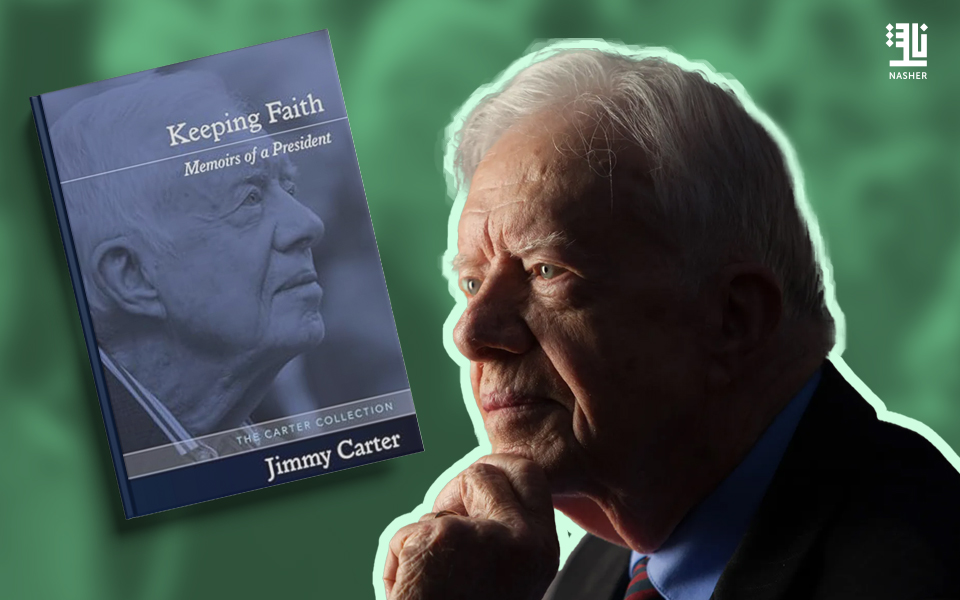
Former US president Jimmy Carter, who has died at the age of 100, was one of the most literary of presidents to occupy the Oval office, authoring some 32 books, ranging in subject from politics and foreign affairs to faith and Scripture and including a coffee-table book on his woodworking hobby replete with photos of furniture he had built, a children’s book and even a volume of poetry.
Simon & Schuster published 13 of his titles and CEO Jonathan Carp told Publishers Weekly. “President Carter wrote memoirs, calls to action, fiction, poetry, and children’s books. He wrote appreciations of Scripture and nature. He offered advice on how to live a meaningful life. He delighted in reading the audiobook versions of his work, for which he won three Grammy awards. In all of his books, he maintained a voice of great integrity and intellectual honesty. We are grateful to have published so many books by President Carter, books that will endure as a legacy for readers who want to appreciate the life and mind of one of the most inspiring and admirable world leaders of our time.”
At the American Booksellers Association conference in 1982, Carter, invited to talk about his post-White House book, Keeping Faith: Memoirs of a President, began by joking that he had intended to be there talking about his memoirs in 1986 rather than 1982, according to PW. He told a sold-out ballroom crowd his book addressed the Camp David talks, the Iran hostage situation (“The worst year of my life”), and the agony of his rejection by the voters. Carter said, “I’ve really put my heart into this book and I didn’t want to waster 16 months of my life on a book only a few people would read.”
He won the Nobel Peace Prize in 2002, but didn’t shy away from controversial topics. He clashed with S&S editor Alice Mayhew when he insisted that his 2006 look at the Middle East carry an incendiary title: Palestine, Peace not Apartheid. His agent Lynn Nesbit recalls. “Apartheid was a trigger word. The backlash over his appearing to associate Israel with South Africa’s system of racial segregation was so fierce that few looked inside to read his mainstream call for a two-state solution, said Jonathan Alter, author of the Carter biography, His Very Best (S&S, 2020). He said that Carter told him years after the book came out that the title was a mistake, and that he intended it to signal a future danger for Israel.
His poetry book Always a Reckoning and Other Poems was initially rejected but eventually published by Random House where editor Peter Osnos observed: “Poetry may not be one of his greatest legacies, but his commitment to honourable goals, which was so much of his character, was in that book.”
Many across the book trade are agreed: the industry has witnessed the passing of a friend.