Home 5 Articles and Reports 5 The Hidden Story Behind ‘Animal Farm’ by George Orwell

The Hidden Story Behind ‘Animal Farm’ by George Orwell

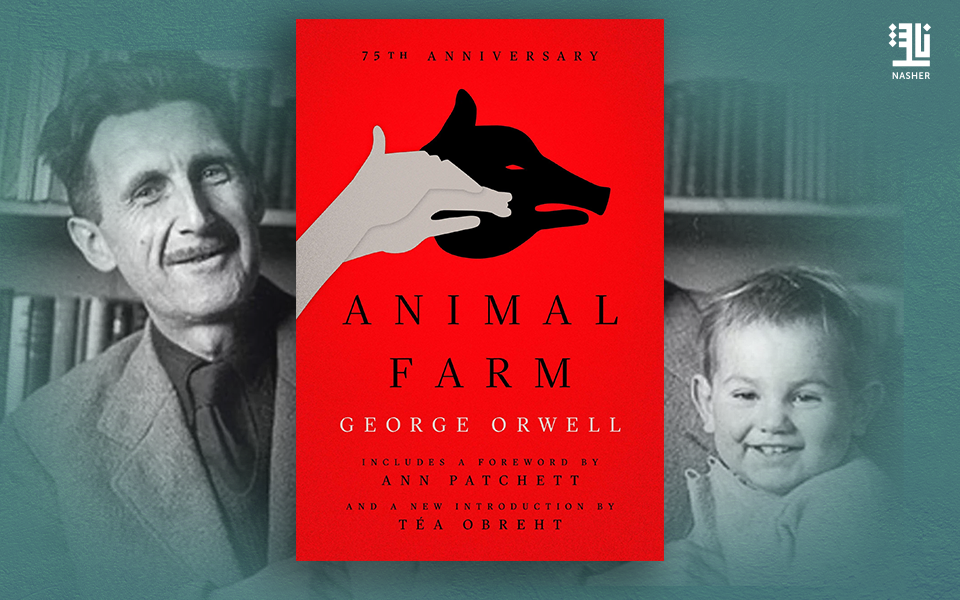
On the 80th anniversary of the publication of Animal Farm, Richard Blair, son of George Orwell, revealed to The Guardian the pivotal role his mother, Eileen O’Shaughnessy, played in shaping the satirical novel that went on to become a 20th-century classic.


During the bitter winter of 1943–1944, Orwell was writing chapters in a modest flat in Kilburn, north-west London. Each evening, he would read aloud to his wife under heavy blankets, turning their bedroom into a nightly editorial workshop. According to Blair, his mother was not only editing and typing his drafts, but may also have suggested recasting the project from a direct political essay into a “beast fable,” giving the book its enduring allegorical power.


Although the manuscript was completed in February 1944, publishing it proved fraught with obstacles. Britain’s wartime alliance with the Soviet Union created a climate in which criticism of Moscow was unwelcome. Several major publishers, including Faber, advised by the poet T.S. Eliot, rejected the manuscript, while pro-Soviet figures within British institutions sought to suppress dissenting narratives. It was only thanks to publisher Fredric Warburg of Secker & Warburg, who accepted the risk in July 1944, that the book eventually appeared on 17 August 1945, delayed further by paper shortages.


Since then, Animal Farm has sold more than 11 million copies and has never gone out of print. For Blair, the book transcends its satire of the Russian Revolution and Stalinism: it is a timeless warning against leaders who hijack noble causes for selfish ends. Its message has inspired democratic movements from behind the Iron Curtain to Myanmar, Zimbabwe, and Ukraine. In today’s world of rising authoritarianism, nationalism, xenophobia, and political deception, Blair insists, Animal Farm remains an indispensable companion for all who value freedom and accountability.

 

Recent News

31Aug
PocketBook Puts an E-Reader in Your Pocket

PocketBook Puts an E-Reader in Your Pocket

Swiss e-book company PocketBook has unveiled its latest ‘phone sized’ e-book reader PocketBook Q.  The company says: “The new PocketBook Q combines a slim, smartphone-sized form factor with all the essential features for comfortable reading on the go. Its 5.84-inch E Ink Carta™ 1300 display has a resolution of 788 × 1,576 pixels and a […]

25Aug
Pan Macmillan Tests AI-Assisted Publishing Model

Pan Macmillan Tests AI-Assisted Publishing Model

Pan Macmillan to publish AI-assisted business titlewanted to turn his existing body of economic analysis into a book but “would never have had the time to write” it. Harriman House therefore worked with sister company CHAPTR to develop Weave, a secure proprietary AI application grounded on Pal’s archive of previously published material, speeches, intellectual property […]

24Aug
SIBF Awards 2026 Nominations Open Until August 31

SIBF Awards 2026 Nominations Open Until August 31

The Sharjah Book Authority (SBA) is accepting nominations for the Sharjah International Book Fair (SIBF) Awards 2026 until August 31, with a total prize fund of AED 625,000 recognising outstanding achievements in writing and publishing, spotlighting Emirati and Arab talent, and supporting distinguished literary works locally and internationally. The awards span novels, academic studies, poetry […]

Related Posts

Did Borges Enter the Digital Labyrinth Before Us?

Did Borges Enter the Digital Labyrinth Before Us?

On 24 August 1899, a writer was born in Buenos Aires, the Argentine capital, who would spend his life among books, labyrinths, mirrors and questions without end. Jorge Luis Borges never knew the internet, never saw a smartphone screen or a search engine. Yet decades...

Mary Shelley Asked the AI Question First

Mary Shelley Asked the AI Question First

Mary Shelley was born in London on 30 August 1797, and would go on to give literature one of its most famous creations: Frankenstein. She was only eighteen when she began writing the novel, unaware that she was placing at its heart a question that would remain alive...

Books Written Behind bars

Books Written Behind bars

The prison cell is the perfect microcosm for a psychological novel. It raises issues of power and liberty, shame and repentance, memory and hope. Its claustrophobic walls can represent narrow-mindedness, social restrictions, the womb, the grave or the confined cubic...

Previous Next
Close
Test Caption
Test Description goes like this