Readers visiting Frankfurt have a few addresses worth noting alongside publishers’ stand numbers: a house where a novel changed its author’s life, a museum preserving the trace of a writer’s hand, a place to hear literature in the voice of its maker. As the Frankfurt Book Fair approaches, running from 7 to 11 October 2026, a walk through the city centre offers a natural extension to a day at the fair. Together, these places tell another story of the book, one visitors can follow at their own pace, on foot.
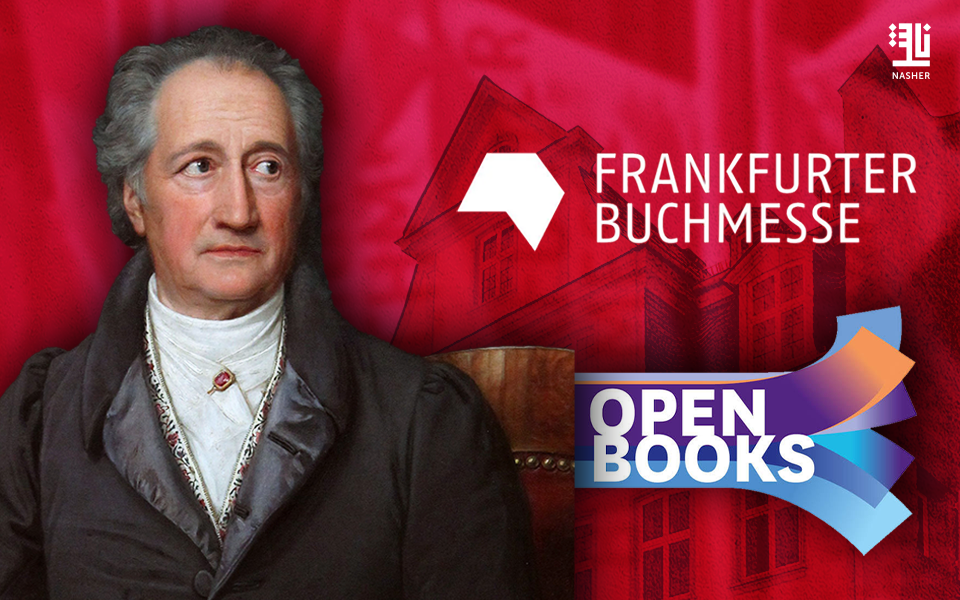
The walk might begin at Johann Wolfgang Goethe’s family home on Großer Hirschgraben, where he was born and spent his childhood and much of his youth. Here he wrote The Sorrows of Young Werther and the earliest version of Faust, long before they became fixtures of world literature. The furnished rooms evoke the family’s domestic life and eighteenth-century Frankfurt. An author whose name is familiar from countless book covers acquires a more intimate presence here: a young man living at home, writing works whose future readers had yet to discover him.
Next door, the German Romanticism Museum opens onto a wider literary world through manuscripts, drawings, paintings and everyday objects. These materials invite visitors to consider literature before it settles into a finished edition, when it is still handwriting on a page, or an idea connected to an image, a piece of music or a private experience. Moving between the two institutions takes the visitor from one writer’s life into a network of artistic relationships, revealing how different arts can meet in the imagination that gives a book its earliest form. Frankfurt am Main. The route continues to St Paul’s Church, a landmark in the history of both Frankfurt and its books. In 1949, it hosted the first Frankfurt Book Fair after the Second World War; it is also the venue for the Peace Prize of the German Book Trade ceremony.
These associations lend the building a significance beyond its architecture. The return of publishers after the war meets a cultural tradition committed to understanding between peoples. Seen from its doorstep, the fair’s history becomes part of a city’s effort to recover its voice.
Towards the River Main stands Literaturhaus Frankfurt, the city’s house of literature, based since 2005 in the reconstructed Old City Library. Readings, conversations and programmes for different generations sustain the relationship between Frankfurt and its writers. After encounters with an author’s former home and manuscripts that outlived their makers, this is a place for books being written and discussed today. An event here can offer the particular pleasure of returning to a familiar text with its author’s voice still in mind.
During fair week, these literary addresses become part of a larger gathering. This year’s OPEN BOOKS festival runs from 6 to 10 October, with readings and conversations around Römerberg and at other cultural venues. Admission is free, except for the opening event at the German National Library. A walk might end with a seat at a reading, or a book chosen after hearing its author speak. The journey home then carries something that cannot quite be packed: memories of the places that gave books faces and voices.