Home 5 Articles and Reports 5 Artificial Intelligence as an Author: Can Machines Be Creative?

Artificial Intelligence as an Author: Can Machines Be Creative?

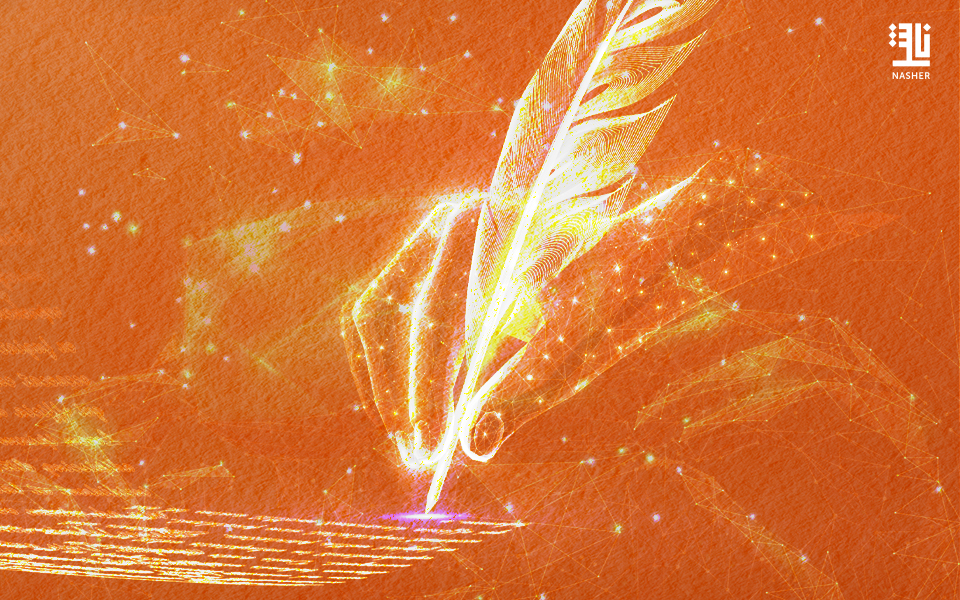
Published with the attentive genius of an editor, and skilled at generating clever lines, AI has become a rival to creativity, not just a technology to assist it, particularly in publishing. Platforms similar to ChatGPT have managed to write short stories, literary texts, and research studies that have subsequently been converted into books and publications. Such pieces have drawn admiring reviews from some, haughty disdain from some others and opened a Pandora’s box-like discussion about the edge of machine creativity: Can it transcend mimicry to the realms of inspiration or innovation?


One of the more the notable experiments was short stories and educational books written with the help of AI, which seemed quite structured and intelligible. Yet critics have noted that these texts do not express emotional depth or human experience. AI can read millions of characters and string together writing style by copying different texts, but what they lack is the human touch, which is the very thing that gives texts their uniqueness and relevance to readers.


Readers, for their part, have mixed feelings. One group, however, sees AI-generated texts as a tool to access new worlds of writing, and adjust them to their preferences. And yet, some argue that where no soul or personal experience infuses language, it can never rival conventional literature. On the legal side, this development creates questions about intellectual property rights: who owns the texts generated by AI, the publisher, the programmer or the user?


Still, technology experts say AI is unlikely to be the replacement — and more likely a partner that allows writers to develop their as-yet-not-fully-realized works and enhance production times, especially for those whose work involves a lot of research. AI is still a strong tool to help writers get assistance; however, it lacks the most crucial part that gives creativity its purpose: human experience. So, the question remains: can a machine compete with a true author, or is it fated to being but a pale shadow of their efforts?
 

Recent News

08Jun
Stephen Hawking Through His Father’s Eyes

Stephen Hawking Through His Father’s Eyes

Stephen Hawking’s father feared for his future, newly revealed diaries show Previously unseen diaries kept by Stephen Hawking’s father reveal that the future physicist’s early years were marked by family concern, academic doubts and the first signs of a life that would later defy expectations. In exploring the physics and geometry of the universe, Stephen […]

31May
Her Highness Sheikha Bodour Al Qasimi launches AUS Press during Warsaw International Book Fair

Her Highness Sheikha Bodour Al Qasimi launches AUS Press during Warsaw International Book Fair

Her Highness Sheikha Bodour bint Sultan Al Qasimi, President of American University of Sharjah (AUS), launched AUS Press at the Warsaw International Book Fair during Sharjah’s participation as Guest of Honour.  AUS Press is the university’s new publishing arm, established to advance scholarship, support translation and strengthen knowledge exchange between the region and the world. […]

Related Posts

Five Polish Writers Who Redefined Literature

Five Polish Writers Who Redefined Literature

The fact that five Polish writers have won the Nobel Prize in Literature is no historical coincidence. It is the reflection of a literary tradition that has long existed on the edge of pain, upheaval, and transformation. Since the beginning of the twentieth century,...

Załuski Library in Warsaw… Books May Burn, but Ideas Do Not Die

Załuski Library in Warsaw… Books May Burn, but Ideas Do Not Die

The Załuski Library in the Polish capital, Warsaw, stands among Europe’s earliest public libraries, with origins dating to the period between 1747 and 1795, a time when books were treated as private treasures, before two men chose to open that treasure to the public....

Publishing in an Unstable World: Strategies for Adaptation

Publishing in an Unstable World: Strategies for Adaptation

In an era where crises intertwine and geography collides with economics, the publishing industry is no longer insulated from global disruptions, it stands at their very core. The rising costs of paper and ink, the volatility of supply chains, and the complexities of...

Previous Next
Close
Test Caption
Test Description goes like this