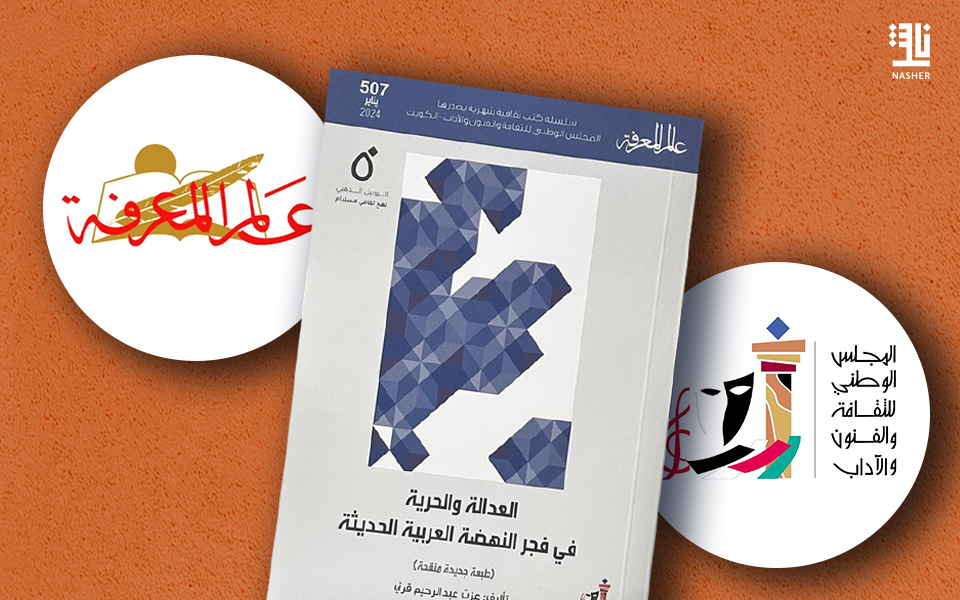
Since its inaugural issue in January 1978, the “Alam Al-Ma’rifa” series, published by the National Council for Culture, Arts and Letters in Kuwait, has been far more than a monthly publication. It is an ambitious Arab cultural project that reshaped the relationship between the reader and knowledge. Emerging at a time of urgent need for accessible, high-uality content, the series positioned itself as a bridge between global thought and the Arab reader. Over the decades, it has become one of the most influential and widely circulated series in the region, with some first editions exceeding 40,000 copies, an exceptional figure that places it among the Arab world’s most widely read publications and reinforces a lasting culture of reading.
At its core lies a simple yet profound belief: knowledge belongs to everyone. From literature and philosophy to science, history, and contemporary thought, the series has consistently offered a rich and carefully curated spectrum of subjects. This diversity reflects a deliberate cultural vision, one that seeks to cultivate a well-rounded reader capable of engaging with the world from multiple perspectives. Its symbolic pricing further expanded its reach, allowing it to enter homes across the Arab world and become part of personal libraries that collectively shaped a shared cultural memory.
Behind this enduring project stands Ahmad Mashari Al Adwani, whose vision extended beyond founding a series to democratizing knowledge itself. Alongside leading intellectuals such as Fouad Zakaria, the series attracted distinguished Arab and international thinkers, offering high-quality translations of global works alongside original Arab contributions. In doing so, “Alam Al-Ma’rifa” evolved into a space of intellectual exchange, where Arab thought meets the wider world in a continuous dialogue.
For decades, the series maintained a remarkable publishing rhythm, interrupted only briefly by exceptional regional circumstances, a consistency that earned it rare credibility in the Arab cultural landscape. Its hundreds of titles form a rich intellectual archive reflecting the evolution of both Arab and global thought. From foundational works like “Civilization” by Hussein Mounes to contemporary critical studies, the series has remained committed to quality, diversity, and openness, sustaining its role as a trusted cultural reference.
Today, “Alam Al-Ma’rifa” is remembered not merely as a collection of books, but as a cornerstone initiative that helped shape modern Arab intellectual life. It stands as a sustainable model of knowledge dissemination, maintaining relevance despite shifting media and reading habits. In an age of accelerating information and diminishing deep reading, the series endures as a powerful reminder: when cultural policy places the reader at its center, knowledge ceases to be a luxury and becomes a necessity.