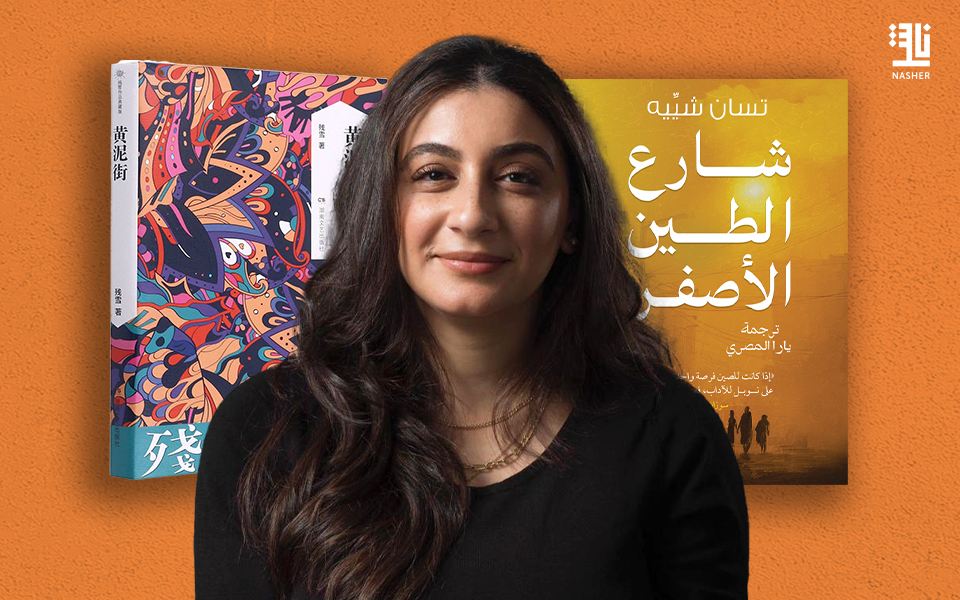
As part of its ongoing commitment to expanding the horizons of the Arabic library with distinguished works of contemporary world literature, Kuwaiti publisher, Kalimat has released the Arabic translation of Yellow Mud Street, the acclaimed novel by prominent Chinese writer Can Xue, translated from Chinese by Egyptian translator Yara El-Masri. First published in 1986, the novel is Can Xue’s debut work and one of the foundational texts of what is known in China as “Avant-Garde Literature.” The Arabic edition is accompanied by a critical introductory essay by the translator, offering readers insight into the novel’s intellectual and aesthetic context.
The novel belongs to an experimental literary current marked by boldness and innovation. It constructs a nightmarish narrative world in which reality and symbolism intertwine, and where place, the “street”, is transformed into a philosophical and social space reflecting human anxiety, alienation, and the struggle against oppression, toxic relationships, epidemics, and memory itself. Within this imagined world, the characters do not feel distant from the reader; rather, they echo fractured dreams and familiar fears, granting the text a deeply human dimension that transcends the specificity of its Chinese setting and opens onto a universal horizon.
Can Xue is regarded as one of the most significant contemporary literary voices in China and has been dubbed “the Kafka of China” in her home country, in reference to the philosophical strangeness and unconventional narrative structures that characterize her work. Her writing has attracted wide international critical attention and is taught at leading universities such as Harvard, Cornell, and Columbia. Several of her novels have been shortlisted for major international awards, including the Neustadt International Prize for Literature and the International Booker Prize. The late American critic Susan Sontag famously remarked that China’s chance of winning the Nobel Prize in Literature is closely tied to the name of Can Xue.
This translation forms part of a broader cultural project pursued by Kalimat to introduce influential global literary voices to Arab readers through refined language and high literary sensitivity, drawing on Yara El-Masri’s extensive experience in translating Chinese literature into Arabic. Yellow Mud Street represents a distinctive addition to this endeavor, opening a window onto a unique narrative experience and reaffirming the role of translation as a vital bridge for cultural dialogue and a means of discovering human worlds that, despite geographical distance, converge in their profound questions of existence and meaning.