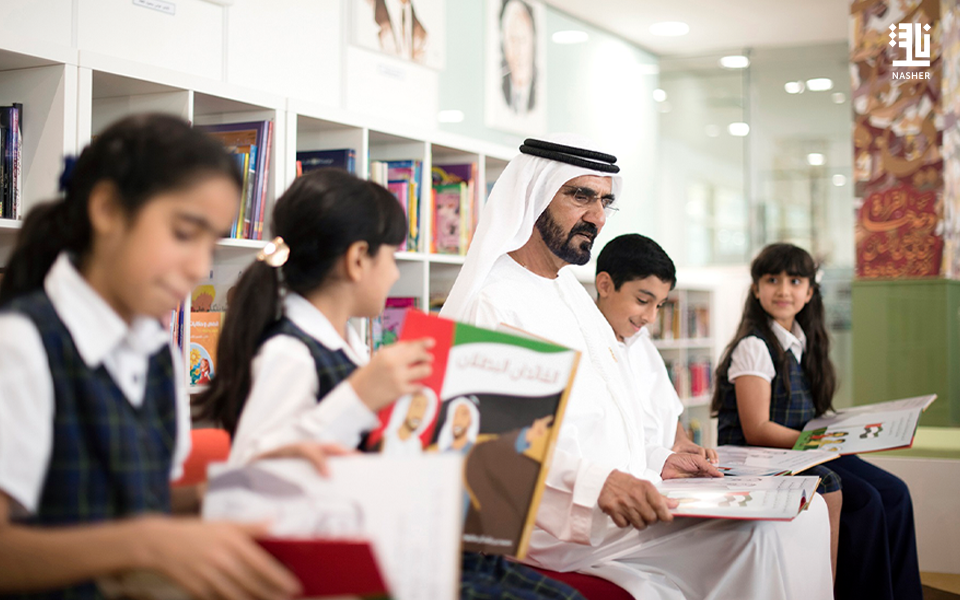
Throughout March, the United Arab Emirates celebrates Reading Month, an occasion that has evolved into a national tradition reflecting the central place of books within the country’s civilizational vision. Reading is no longer perceived as an isolated individual pursuit, but as a shared social practice renewed each year through programs that span schools and universities, public libraries and cultural centers. During this month, the meaning of the first page is reclaimed, and the conviction is reaffirmed that knowledge is not a luxury, but a cornerstone in the making of the human being. Governmental and private efforts converge to embed reading as a daily habit, moving beyond slogans toward tangible initiatives, so that March becomes an open space for celebrating the written word and strengthening society’s bond with the book as an instrument of awareness and growth.
Since designating March as a national month for reading, the UAE has adopted a long-term strategic framework aimed at rooting a culture of reading across all age groups. The ambition extends beyond increasing reading rates; it encompasses cultivating critical awareness, enhancing analytical thinking, and connecting knowledge to everyday life. Initiatives are therefore carefully designed to reach children, young people, and families, and are activated within educational institutions, workplaces, and public spaces. These efforts are supported by cultural policies that seek to measure impact and continuously refine programs. In this sense, Reading Month becomes both a moment of assessment and a platform for advancement, reviewing achievements while charting the path ahead.
Activities throughout March range from interactive reading sessions and creative workshops to specialized seminars and competitions that inspire the exploration of new worlds through books. Publishers, libraries, and cultural institutions contribute by launching initiatives that reinforce the presence of books in daily life, whether through promotional campaigns or targeted programs for children and youth. Reading also finds a dynamic presence in the digital sphere through interactive campaigns designed to reach broader audiences, expanding the initiative’s impact and giving it a contemporary dimension. At the heart of these activities remains storytelling, an enduring magnet that draws children back to the book as a realm of imagination and delight, rather than merely an educational tool.
Within the publishing industry, Reading Month offers an opportunity to showcase local and Arab literary production, highlighting both the quality and diversity of content. The celebration extends beyond readers to include authors, illustrators, and publishers who enrich the cultural landscape. New releases come to the fore, while landmark titles that have shaped the Arab library are revisited and reintroduced. The month also stimulates discussions on the development of the book industry and on strategies for attracting new generations of readers amid rapid digital transformation. In this way, March becomes a cultural season that revitalizes publishing activity and reopens essential questions about quality, appeal, and their role in nurturing a sustainable reading culture.
Ultimately, Reading Month is not regarded as a passing occasion, but as part of a broader vision to build a fully integrated knowledge-based society. In the UAE, the book is more than a cultural product; it is a tool for shaping awareness, a bridge between generations, and a space for renewing dialogue with the self and the world. With each annual edition, the conviction deepens that investing in reading is an investment in the future, that the page opened by a child today may become the seed of tomorrow’s idea, project, or innovation. March remains a yearly rendezvous with the written word, yet it also stands as a lasting expression of a profound belief: that knowledge is the most direct path to progress.