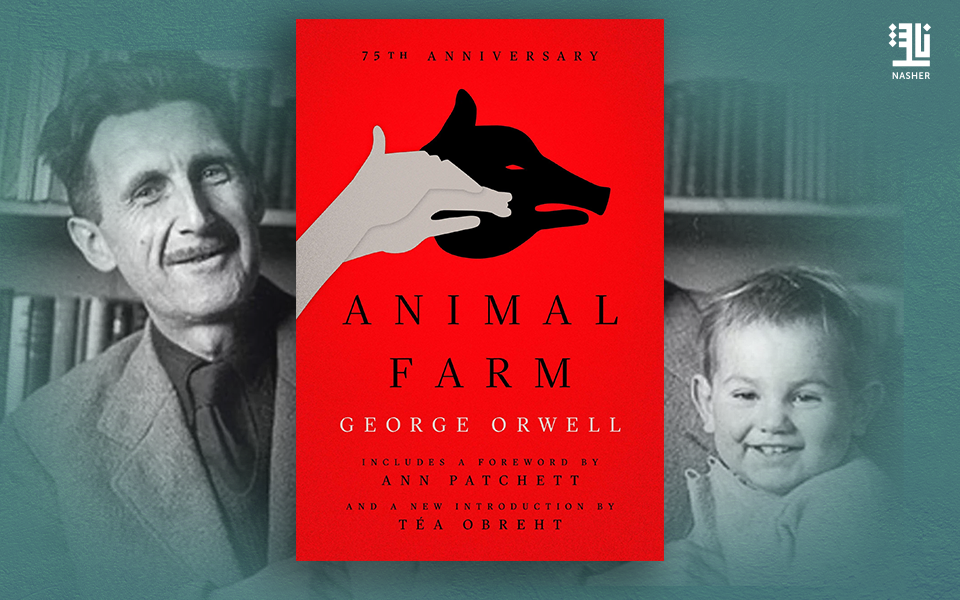
On the 80th anniversary of the publication of Animal Farm, Richard Blair, son of George Orwell, revealed to The Guardian the pivotal role his mother, Eileen O’Shaughnessy, played in shaping the satirical novel that went on to become a 20th-century classic.
During the bitter winter of 1943–1944, Orwell was writing chapters in a modest flat in Kilburn, north-west London. Each evening, he would read aloud to his wife under heavy blankets, turning their bedroom into a nightly editorial workshop. According to Blair, his mother was not only editing and typing his drafts, but may also have suggested recasting the project from a direct political essay into a “beast fable,” giving the book its enduring allegorical power.
Although the manuscript was completed in February 1944, publishing it proved fraught with obstacles. Britain’s wartime alliance with the Soviet Union created a climate in which criticism of Moscow was unwelcome. Several major publishers, including Faber, advised by the poet T.S. Eliot, rejected the manuscript, while pro-Soviet figures within British institutions sought to suppress dissenting narratives. It was only thanks to publisher Fredric Warburg of Secker & Warburg, who accepted the risk in July 1944, that the book eventually appeared on 17 August 1945, delayed further by paper shortages.
Since then, Animal Farm has sold more than 11 million copies and has never gone out of print. For Blair, the book transcends its satire of the Russian Revolution and Stalinism: it is a timeless warning against leaders who hijack noble causes for selfish ends. Its message has inspired democratic movements from behind the Iron Curtain to Myanmar, Zimbabwe, and Ukraine. In today’s world of rising authoritarianism, nationalism, xenophobia, and political deception, Blair insists, Animal Farm remains an indispensable companion for all who value freedom and accountability.