
What Is Magical Realism?
Magical realism refers to a genre in which every detail of the setting is identical to our own, except for one strange element that is passed off as completely normal in the world of the book. A key difference is that the magic goes unexplained.
To differentiate from fantasy, where books often take place in different worlds with dragons, witches, mystics, kings or queens, books involving magical realism specifically focus on our world. Another key difference is that the element in question is unremarked upon by the characters in the books: strange families, magical abilities, ghosts or other supernatural elements are incorporated into the world of the novel without attention being drawn to them. Magical realism has existed as a genre since the early 20th century, with many ties to Latin America. The genre has traveled across the world but is usually associated with writers of the global majority, particularly writers displaced due to political turmoil and writers descended from various diasporas.
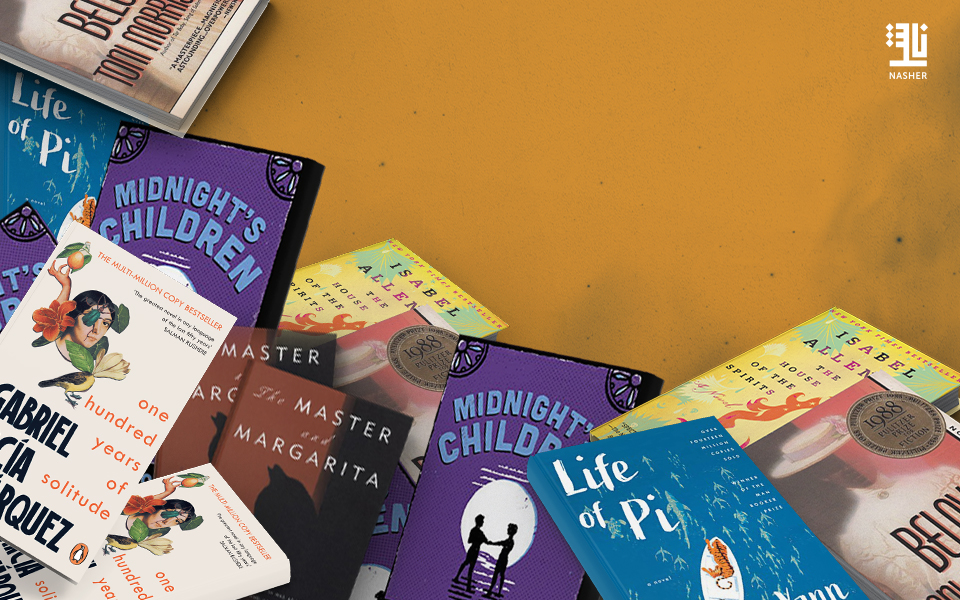
One Hundred Years of Solitude // Gabriel García Márquez
Gabriel García Márquez didn’t invent it, but he helped popularise magical realism when his epic novel One Hundred Years of Solitude was published in 1967. The book tells the story of seven generations of one family living in the same village, and it tackles ambitious themes like the nature of reality. Half a century after its publication, One Hundred Years of Solitude is regarded as one of the best works of literature ever written—and it came to García Márquez while he was driving his family from Mexico City, their residence at the time, to a vacation in Acapulco. “It was so ripe in me,” he said later, “that I could have dictated the first chapter, word by word, to a typist.”
Life of Pi // Yann Martel
Perhaps the best-known example of magical realism in literature from the 21st century is Life of Pi. Yann Martel’s novel follows a boy stranded at sea for hundreds of days while sharing a lifeboat with a Bengal tiger. The surreal premise is part of the book’s theme, which calls on readers to reflect on the subjectivity of reality.
Midnight’s Children by Salman Rushdie
A revered classic, Midnight’s Children follows the triumphs and tragedies of a country fighting for a path forward and wrestling with the weight of colonialism. The novel follows Saleem, a young man born at the exact moment India establishes itself as an independent nation, and his mysterious telepathic link to all of the other children born the exact minute he was. Dense and moving, this novel is perfect for readers interested in exploring heavy political themes wed to prose exploring individualism and patriotism.
Beloved by Toni Morrison (1987)
An undisputed literary classic and winner of the Pulitzer Prize, Beloved is a foundational novel that cemented Toni Morrison as a literary titan. Set during the Reconstruction period, the novel follows Sethe and her introverted daughter Denver as they struggle to live in a haunted house. After the arrival of a formerly enslaved man from her past, Sethe’s life changes forever when she finds a young woman on her porch calling herself Beloved. How is this woman connected to the ghost? How will the family be affected by her presence? An exploration of haunting as a metaphor, this novel uses magical realism as a tool to investigate mental illness and the psychological effects of slavery.
This novel is celebrated for its powerful depiction of a family in crisis.
The House of the Spirits by Isabel Allende
Chilean author Isabel Allende’s 1982 debut novel The House of the Spirits tells the story of one family, a member of which possesses clairvoyant abilities. The Wall Street Journal called the book “an alluring, sometimes magical tale … In its tumultuous story of rebellion and love among three generations, it is an allegory in which any family should be able to recognize a bit of itself.” Before it became a best-selling book, The House of the Spirits originated as a letter. After learning that her grandfather was dying, “I started a letter to tell him that I remembered everything he had ever told me,” she told the Harvard Business Review. He died before he could read the message, but she continued writing it until it evolved into a 500-page manuscript.
The Master and Margarita // Mikhail Bulgakov
In Bulgakov’s ambitious critique of his home country, Satan himself visits the Soviet Union, which practiced state atheism. Mixing political commentary with supernatural elements, The Master and Margarita is considered a masterpiece of both social satire and magical realism. It was published posthumously many years after the author’s 1940 death, and ironically, the first version was heavily edited by official censors.