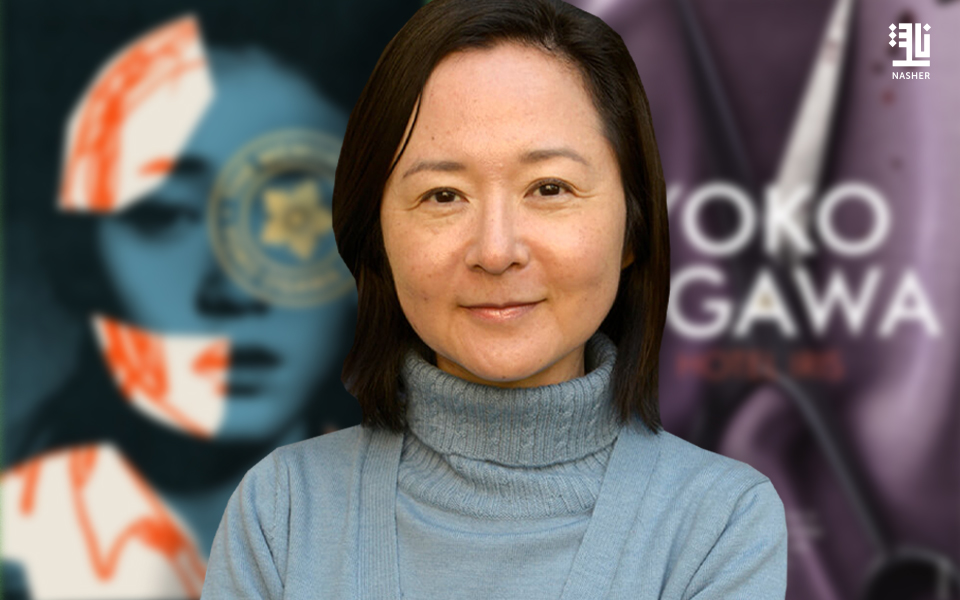
In the literary worlds crafted by Japanese author Yoko Ogawa, grief is never a fleeting emotion or a dramatic collapse. Instead, it emerges as a quiet essence, gently permeating the fabric of daily life. In her writing, sorrow is not a shock but a silent equilibrium, a complicity with the self, seeping through gestures, unfinished sentences, and the voids left by absence. It intertwines with solitude and memory to form a soft narrative language that conceals piercing existential questions beneath its surface.
In her most renowned novel, The Memory Police, Ogawa imagines an island ruled by a surreal system: things vanish gradually, flowers, birds, books, and their traces are forcibly erased from collective memory. Those who dare to remember are hunted down, turning the past into a crime and memory into a quiet form of resistance. Within this strange, vanishing world, sorrow becomes entangled with the erasure of identity and the dread of becoming rootless, memoryless beings. Ogawa’s narrative does not attempt to heal pain but rather embraces it as a fragile human state, sketching the contours of a world slowly dissolving.
In Hotel Iris, Ogawa delves into darker emotional terrain, telling the story of a teenage girl working in a seaside hotel who enters into a mysterious and painful relationship with an older man. Built on secrecy, control, and silence, the relationship reveals an urgent need for connection, even through suffering. As unsettling as the story may be, it reveals how isolation can drive a person to seek meaning in the most painful of encounters, highlighting the tension between longing for love and gravitating toward pain as a way to fill the inner void.
Ogawa’s language in both novels is delicate and subdued, yet thick with implication. She doesn’t describe grief; she enacts it, through slow rhythms, fragmented dialogue, and deliberate gaps in narration. Feelings of anxiety, loss, and emotional detachment slip through these quiet structures, not to shock, but to gently draw the reader into the wound itself.
Ultimately, Yoko Ogawa transforms pain into an intricate artistic structure, not merely documenting suffering, but reimagining it as an aesthetic experience. In her writing, grief is not a mark of weakness, but a lens that reveals our humanity, and the grey, silent spaces within us that only become visible when we sit still for long enough in the presence of sorrow.