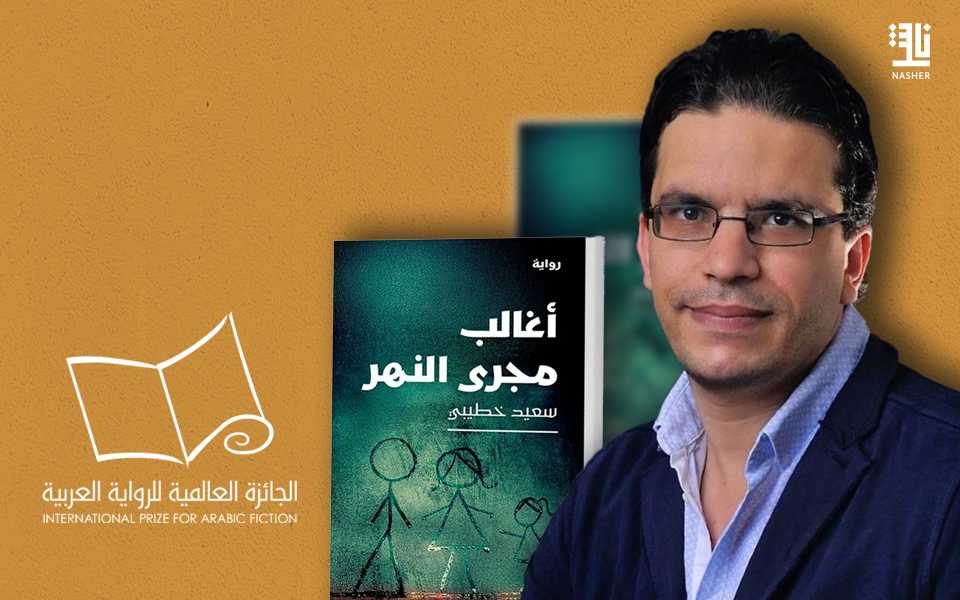
In a cultural moment shaped by pressing contemporary questions, the International Prize for Arabic Fiction announced Algerian novelist Said Khatibi as the winner of its 2026 edition for his novel Swimming Against the Tide. The announcement, delivered through a virtual event this year, captured the essence of a time in which literature and reality are no longer distinct realms, but increasingly intersect and inform one another. Between the broadcast screen and the memory of the text, the award felt like an extension of a narrative voice that writes against the current, re-examining history from unfamiliar vantage points, where storytelling becomes a symbolic act of resistance to layers of silence and fracture.
The jury selected the winning novel from a shortlist of six titles that reflected both the geographic and thematic diversity of the contemporary Arab literary scene. Chaired by Tunisian critic Mohamed El Kadi, the panel described the novel as “a compelling journey against the current of history,” highlighting its complex narrative architecture and its nuanced unpacking of a volatile historical moment. The decision, he noted, was not merely about awarding a literary work, but about affirming literature’s capacity to grasp what official records fail to capture, and to reframe it in a language that moves beyond the literal toward deeper interpretation.
The novel begins with a structure reminiscent of crime fiction, centred on an ophthalmologist entangled in a mysterious murder case. Yet it soon unfolds into deeper narrative layers, tracing Algeria’s history from the Second World War to the so-called “Black Decade” of the 1990s. Through the intersecting voices of a daughter and her father, the narrative crosses generations, revealing tensions of identity, belonging and memory. Here, the crime is not an isolated incident, but an entry point into understanding the “greater crime” experienced by society, as the author suggests, a metaphor that invites readers to question what they have long taken for granted.
Said Khatibi brings to this recognition a steadily evolving literary career, shaped by earlier works that garnered both critical and popular acclaim, including Forty Years Waiting for Isabelle, Firewood of Sarajevo, and The End of the Desert. This award confirms the maturity of his voice and his ability to employ narrative as a means of engaging with major historical transformations. More broadly, the prize reflects its ongoing commitment to supporting contemporary Arabic literature and expanding its global reach through translation, positioning the novel as a vital bridge between cultures, and a voice that speaks to a shared humanity despite differences.