Khartoum, Sudan
By Yasser Faiz
At some point during my quest to find references on Sudan’s modern history, I ended up on a street in East Khartoum, near the Etihad and Kambouni schools, where bookman Omar Daf’ Allah had his books spread out over the sidewalk in a surreal display. Sat on a nylon-cord woven chair beneath a tree, he was surrounded by a noisy group of researchers, students, academics and authors, who went on enthusiastically about books on Sudanese modern history, enlightened by his most useful and unique tips on the subject.
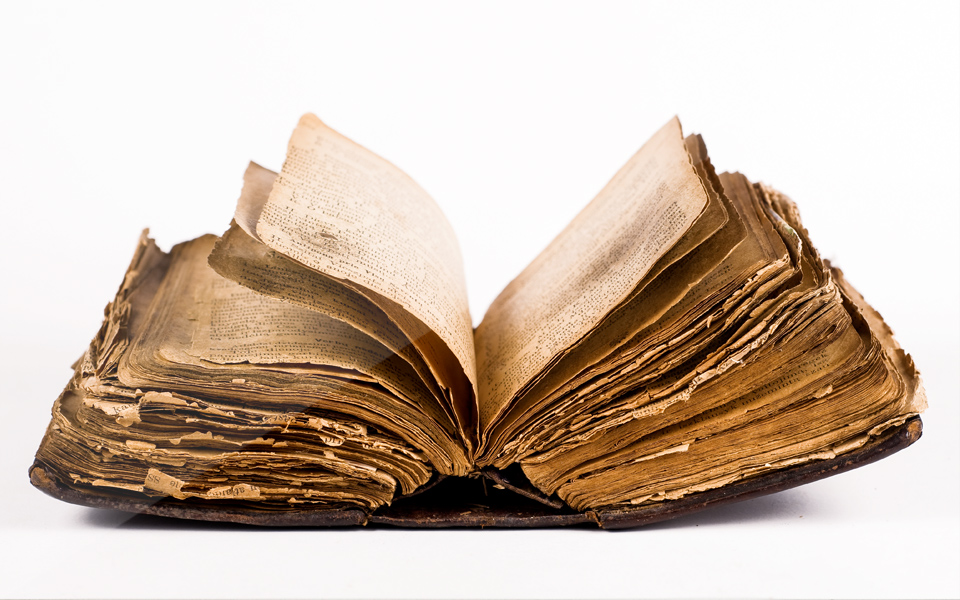
Omar gave me an original 80-year-old book in its first edition. It was fragile, making it extremely difficult to turn its pages without damaging the tips, no matter how delicate I was. My obsession about protecting the book manifested in severe anxiety, because I did not know anyone other than myself who was touching it!
Omar is one of the few bookmen who own invaluable, old and rare books, which he has added to his collection over numerous years, guided by his vast knowledge and experience. He got them from home libraries, bought some from their owner’s heirs who wanted to replace old books with new ones, and so on. Omar considers his old books prized possessions – cherishing the value of each book not just by the quality of its content, but by its age, its changed physical form, the printing press it was produced by, etc.
Omar has turned collecting old books into a hobby irrespective of whether sometimes he is unable to understand the content fully or have a clear idea about what he is purchasing. The man is smitten by the prestige and status old printing houses like ‘Macro Cordelle’ – the first British printing house in Sudan, or ‘Al Tamaddon’ printing house enjoyed for their role chronicling and disseminating knowledge. He also takes advantage of his vast social network and strong friendship with a host of academics, researchers and authors, with whom he strategised this plan to buy old, valuable books at reasonable prices, and in exchange lend them the vast pool of materials he had acquired from other sources for their research and study.
“I do what I do not only because I am a bookman, but because I have a message to spread. A bookseller has a bigger responsibility to deliver intellectual and cultural services; not just make a financial profit,” says Omar Daf’ Allah.
Often struck by the classical inner dilemma of whether to sell his books or keep them, he chooses to stick to his trusted lending policy, giving books away to researchers and students who he knows personally to use and return as per their requirements.
Rare books on the decline
Omar has some old Arabic and English books, which he keeps hidden from the world. He was kind to show me some of them: The Armed Clash for Uniting Sudan by Mohammed Abdul Rahim (1936); The Establishment of Khartoum and Al Mahdiyah by Soleiman Kasha (published in the 1930s); The Fung Kingdom by O.G.S. Grawford (1951); The Nile by Eliot Elisofon (1964), among others. Sometimes, Omar restores and repairs some of the books without harming the original materials. There are times when he receives books so damaged by heat, dust and sunlight that they are irreparable.
“Books published in Sudan in the past 30 years and can be found after some searching. Most of them are published by governmental entities like Khartoum University Press, and the Ministry of Education, but the number of those books is decreasing rapidly. In a few years to come, it will be extremely difficult to find them other than at the Sudan National Archives, which are treated as national documents neither to be lent or sold,” Omar said.
Over Omar’s long book lending and bartering years, he saw some important rare books vanish and perish, especially those written by Sudanese authors dealing with the history of Sudan in general, and some on the modern history of Sudan before it gained independence in 1956 in particular.
“It is essential that the government adopts projects to revive these books and republish them, or at least provide them to academic and research entities, which go through an awful lot of trouble looking for old references and resources on Sudan, only to be disappointed in the end,” Omar added.
Researcher Al Tayeb Ahmed shared an opinion on the matter, saying: “The limited attempts to revive some books are sometimes thwarted by the refusal of the author’s heirs to grant permission for reprinting them. Intellectual rights laws allow the government to reprint without permission. That hasn’t materialised in Sudan yet, over and above a considerable number of titles that are lost due to the authors’ heir’s refusal to grant permission. There are books whose authors have passed for 50+ years, and intellectual rights laws permits the republication of such books. The government doesn’t have a strategy to revive these titles, since it lacks interest in heritage and history.”
A limited readership and poor access to books
Sudan is yet to open a national library, and collage libraries suffer from a terrible shortage of historical references and old books. Some of these books are available, but confined to post graduates, researchers and academics. That doesn’t cover the entire population of Sudan, depriving a large number of prospective readers from even the knowledge that such books exist.
Under British colonial rule and in the years that followed, Sudan saw the publication of a big number of books written by British and other European authors who were present during the occupation. Given the archaeological researches and findings, as well as the British archives and documents, a number of books on Sudan were published, but unfortunately most of them vanished rapidly.
A notable number of books by Sudanese historians, and biographies, testimonials, poetry collections and other literary books are lost forever. An enormous amount of invaluable cumulative knowledge has been lost in the haze of time. It is crucial that we try to find it and revive whatever we still can.