Author: Shahad Al Rawi
Publishing house: Dar Al Hikma, London
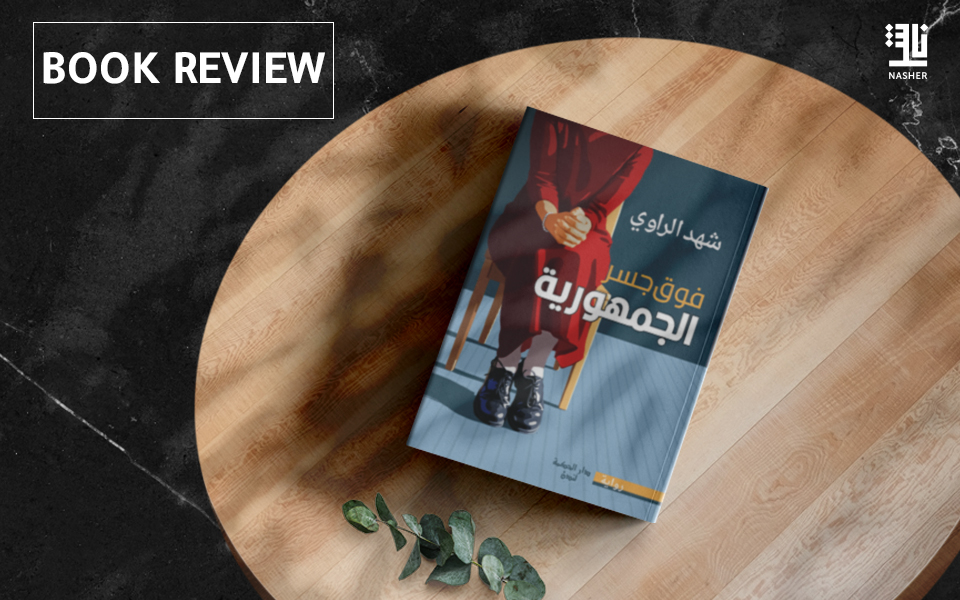
The young Iraqi author, Shahad Al Rawi returns with her second book ‘Over The Republican Bridge’ and after the success that her debut novel ‘The Baghdad Clock’ achieved, many readers were wondering what will Al Rawi next book be about and how different it will be.
In ‘Over The Republican Bridge’ the reader is invited to witness how the 2003 American invasion of Iraq and prior events impacts not just one generation but three; the grandparents, the parents, and children, and how one location, or rather the Republican Bridge is the place that plays a major part in one family over the decades. The novel begins with the bridge and ends with it, and just as it represents hope and change, it is also a source of danger and despair. Thinking about the bridge and its symbolic meaning within the novel, one comes to the realisation that just as ‘bridges’ are the way we cross over the river from onside to another without much thought to what awaits us, the bridge in Al Rawi’s novel is the deciding factor in every character’s fate, it is the deciding factor between new and old, life and death.
It is on the Republic Bridge that the protagonist recalls how the American Tanks were crossing into the heart of Baghdad, signaling the end of Iraq that everyone knew and the start of the unknown journey that many people had to take. Like most people in Iraq, the protagonist and her family leave Iraq into an unknown neighbouring country where they aim to start a new life, only to lose their mother to a deadly illness less than a month later. It is then that the reader is again struck by the use of symbolism, whether it is intended or not, the loss of the mother figure is the loss of one’s home country, loss of security, and the loss of belonging. This is demonstrated through the novel’s nameless protagonist, who throughout the book has no clear sense of belonging, not with her sister, father, cousin, or friends. Even when she tries to fall in love, it is a half-hearted attempt, which confirms the point that she has no sense of belonging and by finding a romantic interest, she assumed that will be her focal point after all don’t we all need something or someone that we call home?
In ‘Over The Republic Bridge’ the theme of escapement and longing for the past are evident at every stage of the novel, even before the family’s departure of Iraq there is a sense of longing to the past by the mother when she talks about her school, and it is clear that people often look back to the past with a romanticised view yet in our protagonist case, even the good times are marred with sorrow such as the death of her uncle during the first war that Iraq endured in the 80s.
If you have been following the work of Al Rawi, you would have noticed that there is a sense of maturity in ‘Over The Republic Bridge’ in her writing in the way that the characters are all given space to form a bond with the readers, they are all multi-dimensional with flaws and attractive qualities; essentially they are humanised by their contradictory qualities, no one is perfect, and that is the aspect of Al Rawi’s characters that made them memorable to readers. The novel’s ending is another sign of Al Rawi’s progression and maturity as a writer, it is daring and different which might leave some readers disappointed at the unexpected ending but for others, it is a fitting and realistic end for a troubled community such as Iraqis with their long-suffering history and any other end would have just been unacceptable and unrelatable.
Regardless of your nationality or background, ‘Over The Republic Bridge’ is a good read for anyone who has experienced loss in its various nature, it is a journey of acceptance and on this journey, you will meet many characters that shape your thoughts and outlook on life. We at Nasher have given it a rating of 3/5.