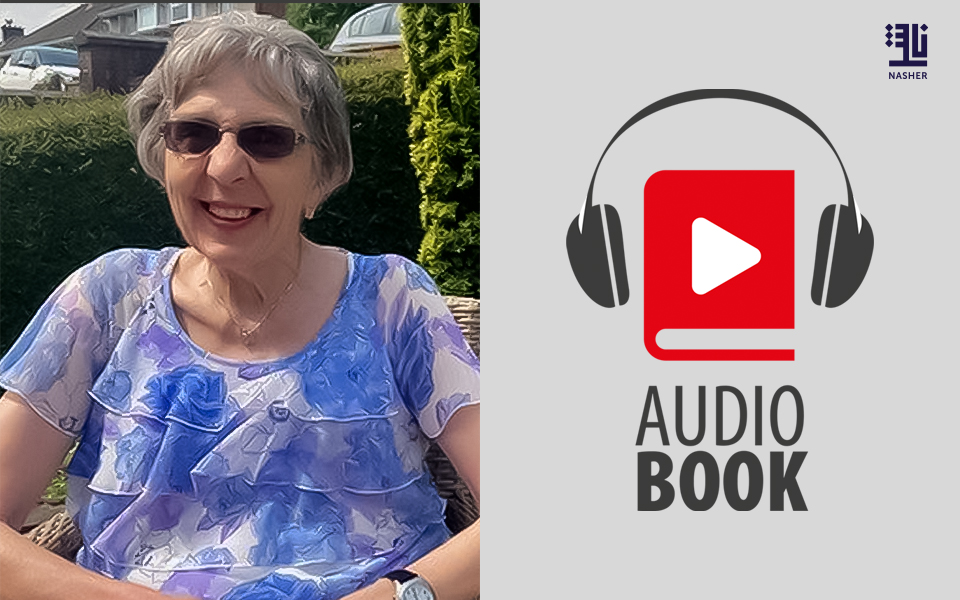
Rhian Evans was a bookworm, an avid reader, and a passionate librarian and at the age of 32 years old was diagnosed with a condition called retinitis pigmentosa – a genetic disorder that involve a breakdown and loss of cells in the retina.
Books were Rhian’s life when she worked as a librarian at Trinity College in Carmarthen, Wales. She struggled to see how she would adjust to life after being told she would lose her sight but she was determined not to let her sight loss get the better of her, so she started a talking newspaper service for blind and partially-sighted people in her home town in 1976. Rhian said it all started from “self-interest really because when I lost my sight, I could no longer read the Carmarthen Journal”. “It took a lot of time for me to transfer from using my eyes to using my hands and hearing,” she said. Rhian, now 76, said: “I was recording stories of people in Carmarthen, old railwaymen and so on, all going on tape for Carmarthen public library and that’s when I thought we should be recording the local newspaper for blind and partially sighted people.”
Along with fellow founder and broadcaster Sulwyn Thomas, who was running Glangwili Hospital Radio, Carmarthen Talking Newspaper was born. Rhian said: “We were based in a building next to the library at the old Jeremy’s Commercial Hotel and would record the news on cassettes at the Radio Glangwili studio at the hospital.”
“I thought ‘there must be many people like me who’d be glad to hear the journal if it was recorded’, so I got a team of volunteers together and we recorded our early programmes in the studio in the car park at Glangwili Hospital.”
Rhian and her volunteers started recording whole books in English and Welsh, under the service name Welsh Cassette Scheme.
Now the small army of dedicated volunteers are recording on CDs, and 2,500 books later, have their own building in Carmarthen: Ty Llafar (Talking House). So what’s the secret to Talking Books Wales’ longevity?
Even though the audio book service for blind people started almost 45 years ago, it become a lifeline during the pandemic, as many people are still scared to go out or lost their confidence or physical ability such as 90-year-old Rita Brown, from Carmarthen, who found the service quite vital to her mental well being.
“I’ve lost confidence going out on my own,” she said. Losing her sight at 60 after retiring was a “big loss”, but she said “the talking books do just as well”. “I do value the service because I look forward every month to having a book.
Many who use the service say Rhian is an inspiration – someone who has refused to let her disability get in her way.
And while she recognises how vital technological advancements have been for people with sight loss, she is not going to let it get in the way of the continuing success of Talking Books Wales.
“There are so many other ways now to access information. I still get recordings though which are synthesized voices and they’re not pleasant to listen to – the human voice is much better, so I’m all for Talking Books staying on the scene for many years to come.”
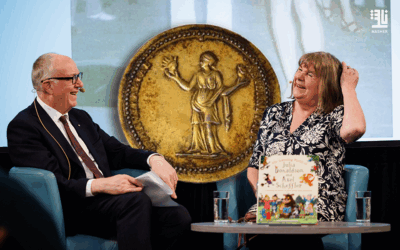
Rhian Evans has written a book celebrating the volunteer-run enterprise, from its first steps in the mid-1970s to serving hundreds of people every week across Carmarthenshire.
The bilingual book, in English and Welsh, is called Speaking Volumes and was written during lockdown last year.
The city Västerås in Sweden is often credited as being among the first to have a talking newspaper. The library there had, with the local association for the blind, started a talking newspaper, Arosbandet.
Rhian said the uptake and interest in a talking newspaper back in the 1970s was immediate.
Reflecting on its success, Rhian said: “It’s gone from strength to strength and really gave me a sense of purpose because losing your sight at a young age does make you think ‘what can I do now, how can I contribute to society?’