
Home 5 Articles and Reports 5 Jules Verne: A Novelist Who Inspired Scientists and Inventors

Jules Verne: A Novelist Who Inspired Scientists and Inventors

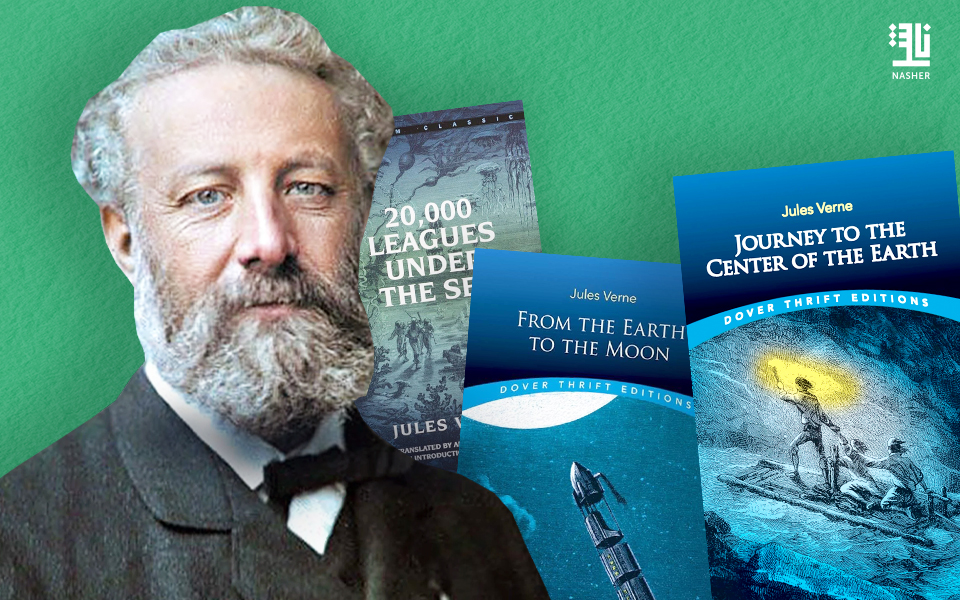
February 8 commemorates the death in 1905 of Jules Verne, French writer and forerunner of science fiction (1828–1905). A bestselling adventure novelist, Verne was also a visionary who envisioned a world filled with futuristic inventions and discoveries — many of them realized many years after his death — cementing his place as one of literature’s most influential figures.


Verne was born in Nantes, France, and was raised during a time of fast-paced scientific and industrial growth that inspired his thirst for knowledge and invention. This fascination manifested itself in his novels, in which he gracefully intertwined science fiction with geographic and technological realities, turning scientific ideas into adventurous prose for the lay reader. Some of his best-known works are Twenty Thousand Leagues Under the Sea, which foresaw modern submarines; From the Earth to the Moon, which eerily imagined space travel almost 100 years before man landed on the moon; and Journey to the Center of the Earth, which explored the secrets below the Earth’s surface.


Verne’s influence was not limited to literature. His concepts influenced famous scientists and inventors, including Thomas Edison and Robert Goddard, and his writings were critical to the development of contemporary space exploration. His novels have inspired NASA astronauts, they said, among their early interest in space. And his tales have been turned into movies and TV shows, laying the ground for the sci-fi genre on screen and influencing creators to produce things based on his visions.


Over a century after his death, Jules Verne towers over literary and scientific realms. And he was never just a writer; he was an ideas man, an explorer of new terrain in thought, and his legacy is here, alive. It serves as a reminder of how often imagination is a necessary precursor to invention. More significantly, he turned science fiction into a flourishing literary genre that was adopted by major publishing houses. His works are successful with a worldwide audience numbering in the tens of millions, encouraging creativity and inspiring generations of readers to dream beyond the limits of today.
 

Recent News

20Dec
When Dia Mirza Writes for Children

When Dia Mirza Writes for Children

Indian actor Dia Mirza is embarking on a new creative journey as she develops a five-book children’s series inspired by her personal experiences, values, and long-standing love for storytelling. The project marks a significant shift in her artistic path, allowing her to channel her worldview into stories crafted to spark curiosity, nurture imagination, and offer […]

18Dec
Born With a Library Card

Born With a Library Card

UK think tank the Cultural Policy Unit (CPU) has proposed giving all UK newborns a lifelong library card to boost literacy rates among children and into adulthood.   Its proposal means that membership would be linked directly to registrations of birth, meaning library cards would be waiting for newborns at their local library. Currently, parents have […]

18Dec
Epistolary Literature Reclaim its Literary Power

Epistolary Literature Reclaim its Literary Power

In an age where words rush past like lightning and messages are reduced to quick taps on glowing screens, epistolary literature returns to remind us that writing was once a slow, deep, emotion-laden act. This form of literature offers more than a topic, it reveals its writer as they truly are: fragile, sincere, or brimming […]

Related Posts

Valentino and the Fine Line Between Beauty and Meaning

Valentino and the Fine Line Between Beauty and Meaning

In a world crowded with brands and glittering names, Valentino remains a rare artistic exception. This luminous Italian house is not merely about fashion and design, it is a cultural and intellectual vision of human beauty, where thread meets thought, and fabric...

How Do Travel Books Shape Our Choices?

How Do Travel Books Shape Our Choices?

In every era of history, travel has opened horizons, but books have always been the compass that gives a journey its meaning and directs the traveler’s steps. Travel literature does not merely describe places; it shapes imagined portraits of them, often brighter in...

Tales of Small Languages Defying Disappearance

Tales of Small Languages Defying Disappearance

From Estonia to Iceland: Tales of Small Languages Defying Disappearance   Small languages, those spoken by only a few million people, face mounting pressure under cultural globalization and the dominance of English in publishing, education, and the media. This...

Previous Next
Close
Test Caption
Test Description goes like this