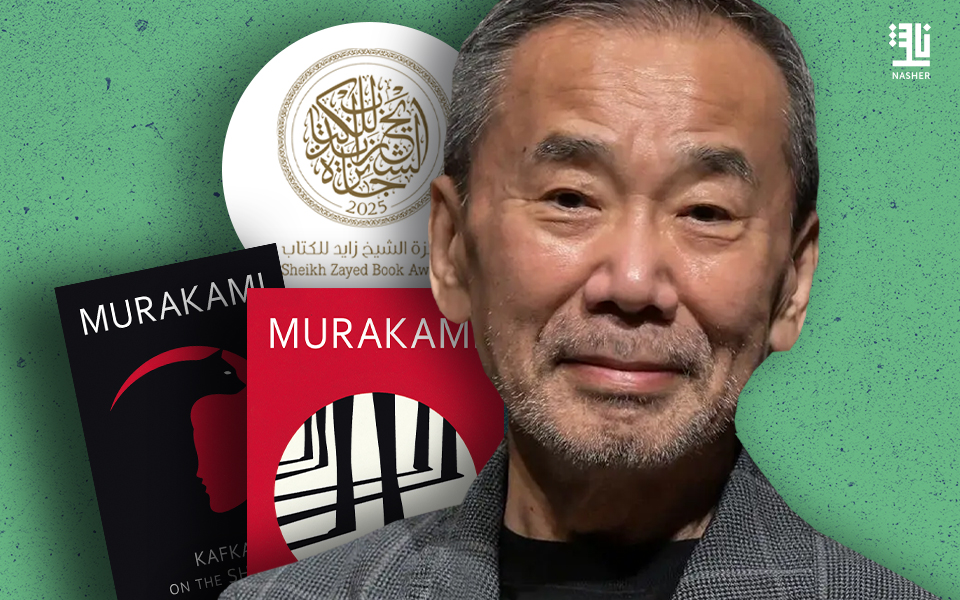
A new milestone has been added to the distinguished literary journey of Japanese author Haruki Murakami, who was named Cultural Personality of the Year in the 19th edition of the Sheikh Zayed Book Award (SZBA)—one of the most prestigious cultural honors in the Arab world. The award celebrates Murakami’s lifelong contributions to literature and his powerful role in bridging cultures through narratives that transcend borders, languages, and identities.
Murakami, whose novels such as Kafka on the Shore and Norwegian Wood have captivated millions of readers across the globe, is known for a literary voice that is both intimate and universal. His unique blend of realism and surrealism touches on solitude, longing, and the search for meaning—qualities that resonate with readers regardless of their background. His recognition by the SZBA highlights literature’s power to connect cultures and promote empathy across differences.
The 19th edition also recognized outstanding authors, translators, and scholars from seven countries across a range of disciplines:
Literature: Hoda Barakat (Lebanon/France) won for her novel Hind or the Most Beautiful Woman in the World, published by Dar Al-Adab (2024). The novel explores the life of a woman suffering from acromegaly, reflecting on societal perceptions of beauty, marginalization, and human resilience through rich psychological and narrative depth.
Children’s Literature: Latifa Labsir (Morocco) received the award for her book The Phantom of Sabiba, published by Markaz Kitab (2024). The story addresses autism through the eyes of an older sister, offering young readers a heartfelt and artistic tale that raises awareness with emotional clarity and literary elegance.
Translation: Marco Di Branco (Italy) was recognized for his English translation of Orosius by Paulus Orosius, published by Pisa University Press (2024). The book, originally translated from Latin into Arabic, is now presented in Arabic-English format, offering scholars a rare window into historical intellectual exchange across civilizations.
Literary and Art Criticism: Dr. Said Laouadi (Morocco) won for his book Food and Language: Cultural Excavations in Arab Heritage, published by Afrique Orient (2023). His interdisciplinary study explores the intricate connections between food and rhetoric in Arab literary texts, from poetry to proverbs, offering bold and original insights into Arab cultural expression.
Contribution to the Development of Nations: Dr. Mohammed Bechari (UAE) received the award for his book The Right to Strive: Perspectives on Muslim Women’s Rights, published by Nahdet Misr (2024). The book presents a foundational Islamic jurisprudential framework for women’s rights, emphasizing the concept of striving (s‘ay) and its relevance to contemporary gender roles and equity.
Arabic Culture in Other Languages: Andrew Peacock (UK) won for Arabic Literary Culture in Southeast Asia in the Seventeenth and Eighteenth Centuries, published by Brill (2024). His work is a pioneering study of the spread of Arabic literature and language in Southeast Asia, particularly its connection to Sufism and royal courts, broadening the understanding of Arab cultural influence beyond traditional geographies.
Editing of Arabic Manuscripts: Rasheed Alkhayoun (Iraq/UK) was honored for his scholarly edition of News of Women, published by the King Faisal Center for Research and Islamic Studies (2024). The manuscript, one of the earliest literary compilations on women, stands out for its rigorous editing and historical significance, adding immense value to Arabic literary and historical scholarship.
The winner of the Cultural Personality of the Year receives a gold medal, a certificate of appreciation, and a prize of AED 1 million, while winners in other categories are awarded AED 750,000, along with a gold medal and certificate, in recognition of their outstanding intellectual and creative achievements.