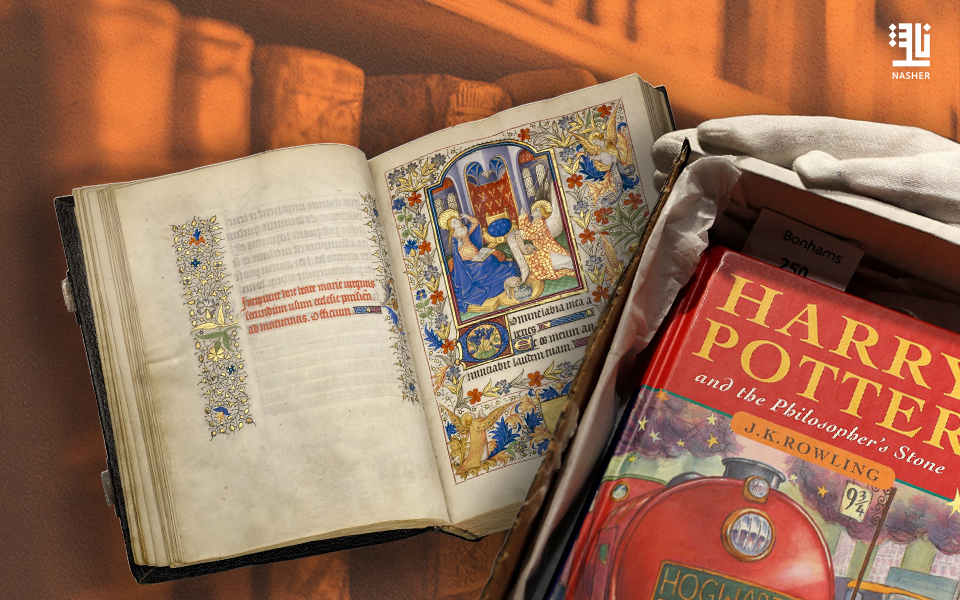
The passion for collecting books is no longer confined to readers who seek out old editions or first printings out of nostalgia or intellectual delight; it has now evolved into a promising field of investment, attracting bibliophiles and collectors from across the globe. A single copy of a famous book or a celebrated novel, whether a first edition or bearing the author’s signature, can become a financial asset rivaling fine art or rare jewelry in value.
This shift stems from a blend of rarity, history, and cultural allure. First editions are often printed in limited quantities before a book gains widespread fame, which grants them considerable value over time. Signed copies, meanwhile, carry a personal touch, forging a direct link between reader and author, especially when the signature was penned at a special occasion or tied to a remarkable story. That value rises even further when the book or its author has received a prestigious award.
In recent years, international auction houses have recorded striking figures in this domain. A first edition of The Great Gatsby by F. Scott Fitzgerald sold at Christie’s for over USD 400,000, while a signed copy of Harry Potter and the Philosopher’s Stone by J.K. Rowling fetched more than USD 150,000 at Bonhams. Historically rare works have also commanded extraordinary prices, such as a sixteenth-century copy of Mercator’s Atlas, which sold at Sotheby’s for over USD 1.2 million.
What is remarkable is that investing in rare books is not limited to classic literature or historical manuscripts; it also extends to modern releases that quickly become prized collectibles. Certain limited editions, such as numbered luxury printings or special issues bearing the author’s signature, can multiply in value within just a few years, especially when linked to globally celebrated works or cultural icons.
Entering this field, however, requires a keen understanding of the market and a grasp of valuation factors such as a book’s condition, authenticity, publishing context, and the author’s reputation. For this reason, many new investors turn to auction houses or rare book specialists to ensure the authenticity of their acquisitions and to accurately assess their worth. Ultimately, collecting old, first, or signed editions is more than a financial venture, it is an investment in culture and in humanity’s collective memory.
Perhaps the most beautiful aspect of this world is how it intertwines the love of knowledge, the thrill of discovery, and the spirit of investment. Whoever acquires a first edition or a signed copy today may find themselves, years later, the custodian of a rare treasure whose worth far surpasses its material value. It is an open invitation to book lovers and opportunity seekers alike to explore this unique cultural realm, where cover, paper, and ink become keys to a world of memories, assets that speak the language of time, growing ever more luminous as the years pass.