Charles Dickens’s time as child labourer to be displayed to mark 200-year milestone
This autumn will mark 200 years since Charles Dickens, as an eleven year old boy was forced to leave school and do something that he never spoke of, although it laid the foundations for much of his writings as an adult.
His impoverished family was desperate to avoid a debtor prison, so the young Charles Dickens was sent to work in a factory roughly underneath where Charing Cross stations platforms 5 & 6 are today. From the autumn of 1823 to September 1824, for 10 hours a day six days a week, he worked alongside other children in Warrens Blacking Factory gluing labels onto bottles of boot-cleaning blacking liquid shoe polish.
While at the factory, Charles encountered Bob Fagin, a fellow child labourer, whose name he stored for future use. His father was eventually sent to the debtors prison, and although released after three months, in May 1824, Charles Dickens was kept at the blacking factory until September to financially support the rest of the family. After he got out of the factory, he never spoke about it again, and it was only after his death that details emerged. To mark the 200th anniversary of a pivotal episode, which shaped Dickens personality, politics, and works, the Charles Dickens Museum will display a collection of key items which throw more light on a punishing part of Dickens boyhood.
The items will be on display in Charles Dickens study from Friday August 25 until January 21 2024.
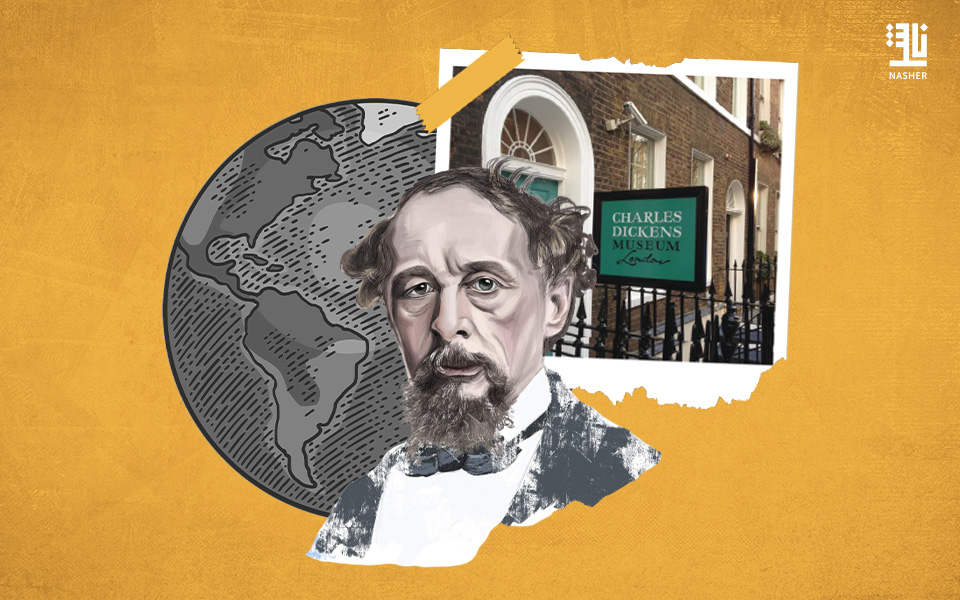
The museum, located at 48 Doughty Street, in Holborn, is the only adult home in which Dickens lived in London that survives, and where he wrote the stories that earned him global fame.
By the time the family left the address, Dickens was world famous, having written a trio of wildly successful novels The Pickwick Papers, Oliver Twist and Nicholas Nickleby.
Among the newly-displayed objects and documents is a pair of letters written by John Dickens the inspiration for Wilkins Micawber in David Copperfield, which gives important insights into the father-son relationship.
One of the letters was last seen by the public back 1936, and the other has never been seen before.
Also on display will be an early edition of The Life of Charles Dickens, the three-volume biography by Dickenss friend John Forster which revealed the grim truth about Dickenss childhood. Before its publication in 1872, two years after Dickenss death, there does not appear to have been any written account of Dickenss child labour, nor mentions by his family and friends and it was also excluded from the account which Dickens gave to his great friend and fellow writer Wilkie Collins.
Also joining the display is a stoneware bottle inscribed Warrens liquid. 30 Strand on one side and Blacking Bottle on the other.
Dickens worked with bottles such as this item, which was excavated in 2006 by a group of Science Museum archaeologists from an old ice well which had been used as a builders rubbish dump in the 19th century.
The well was underneath the London Canal Museum and the bottle was donated to the collection by the Canal Museum that year.