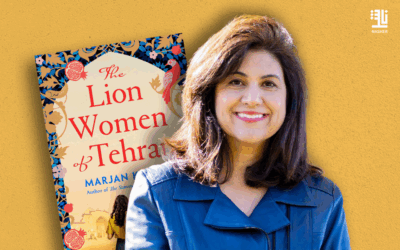

The Eyes of Gaza: A Diary of Resilience by Plestia Alaqad
Plestia Alaqad is an award-winning journalist and author who bravely risked her life to report what was happening on the ground in Gaza after October 7th. She rose to prominence in a way no one should ever have to — by documenting the destruction of her home, the loss of lives, and the displacement of millions. Through her courageous reporting, the world was able to see the reality unfolding in Gaza, beyond headlines and statistics.
The Eyes of Gaza reads like a personal journal, capturing her experience with the raw honesty of a 21-year-old navigating unimaginable trauma. Plestia shares her feelings, fears, exhaustion, her deep love for her country and her people. She writes about the depression, hopelessness, and numbness she felt after escaping to Australia, and the guilt that came with her survival — a privilege she did not want but was forced to accept. Her longing to return to a homeland that has been irrevocably changed, where precious memories and beloved people have been lost, is palpable on every page.
Personal stories like Plestia’s allow us to step into another person’s reality — to see through their eyes, to hear what they hear, and to feel what they feel. It’s heartbreaking, yes, but it’s real, and it’s necessary.
It is a diary entry account of Plestia Alaqad who lived in Gaza for the first 45 days following the outbreak of war in Gaza in October 2023. It is a story of violence, tragedy, and the unimaginable destruction that war brings. But it is also a story of the indomitable human spirit, of people carrying with them the weight of destroyed homes, lost family members, and shattered lives, yet still finding the strength to go on.
The book begins with Plestia’s life looking just like any other 21 year old’s – hanging out with friends, spending time with family, figuring out university plans, and dreaming big. And then, in a single day, everything changes. The tone of the book shifts to stories of displacement, unimaginable trauma, the constant fear of losing loved ones, of losing limbs, and the terrifying thought of preferring death over the pain of survival.
On 6 October 2023, Plestia Alaqad, a young journalism graduate, was sitting at a cafe with a friend, the two contemplating their futures over pizza and hot chocolate.
Plestia already had some reporting, social media, and human resources experience under her belt – what might come next?
Hours later, her near future had been determined. She would quickly become one of Gaza’s most prominent and recognisable reporters, a channel through which we would see at least some of the realities of Israel’s brutal onslaught on the Palestinian territory.
With a quick flip of the camera on her phone, the then-21-year-old would switch between the brave relaying of the facts on the ground and the horrors unfolding around her in real time.
While reporting, she continued with her longtime habit of keeping a diary, writing entries while in hospital waiting areas and from the homes that sheltered her as Israel pummelled her home territory. She continued to keep that diary after she left Gaza for Australia in November 2023.
The Eyes of Gaza, published by Pan Macmillan, is based mostly on extracts from the diary she kept, with the book’s title originating from the nickname she was given by her followers on social media. The diary entries are replete with stories of individuals on a personal scale but tell of a very Palestinian insistence on not just the preservation but the celebration of life.
A young boy’s insistence on searching through the remains of his destroyed home to find the small plant he had been growing; the rushed purchase of scarce sweet treats to give a child a makeshift fifth birthday party; a woman’s continued care for animals even as she lived in a tent outside a hospital.
These stories challenge not only Israel’s incessant violence but also media and political narratives that dehumanise Palestinians and reduce them to “a suffering that results in death or survival”, as she writes.
To compile her writing in a book immortalises some of the stories of Palestinians in Gaza, and the experience of a Palestinian journalist covering and collecting those stories.
Through The Eyes of Gaza, however, Plestia resolutely zooms in, all the way in, to map life. She does this not just with Gaza before 7 October – the cafes and restaurants she hung out in with friends, the homes of friends she would visit – but the signs and sites of life that persisted even as bombs rained down on Gaza; the falafel stand that kept operating in seemingly impossible conditions; the hospitals that managed to keep treating people with almost no power and no medicine.
Rubble is not rubble, but a former home, or a once bustling cafe, or a church for congregation and solitary worship. A look through that destroyed site of life might reveal a once-bitten sandwich, or a baby’s bottle – more clues of life persisting.
Not many journalist make great authors as it is a big leap from reporting to writing a book but for someone as young as Plestia and being her debut book, The Eyes of Gaza humanise the statistics we see on the news, gives a voice and a story to every death or injury we read about. For these reasons we have given the book 7/10.
The Eyes of Gaza was published on the 17th of April in the UK, and Little, Brown and Company will publish the US edition on September 30.
Quotes:
“The international media outlets were only interested in covering news about Gaza during an Israeli Aggression, she said, making it hard to work as a journalist full time. It would seem that the eyes and ears of the world aren’t interested in Palestinian life, only in Palestinian death.”
“The world can’t pretend that there are two sides here any more. There is no humanity, no equity, no semblance of justice. It’s a calculated, deliberate and ruthless ethnic cleansing, and nobody seems to care enough.”
“Why do we study history when clearly nobody ever learns from it?”
“I wish I had the capability to report on every single story, every single person I meet, but I don’t have the time or equipment, let alone the battery power or internet connection to upload everything. The reality is I have to choose which stories are worth reporting on, like some sort of sick judge of human suffering. Another layer of trauma for a journalist in Gaza.”
“I’ve always loved writing and journaling, but I like documenting happy moments. And yet here I am living through a Genocide. I feel I have to show the world the truth, but that’s difficult to do while I’m also trying to stay alive.”
“I can’t always gather the strength to film what I see, because my eyes don’t want to believe that what they see is true. So instead, I just walk through the camp, between the tents, watching people’s eyes and trying to memorize their faces, so that somebody will have known them before the end.”
“It’s a different type of pain, to see your homeland, once covered with olive and lemon trees, lush, fruitful pastures and the remnants of ancient, beautiful humanity, reduced to rubble, populated by camps and tents.”
“You know what always inspires me? The spirit of Palestinians. How after every loss, you only find us stronger and trying even harder to live and love life.”
“I love the version of myself I am in Gaza, far more than the version of me that was in Cyprus. Back home, I feel like I have a purpose, a sense of community. Outside of Gaza, I feel like an average person living an unremarkable life. At home, I come alive. There was only one thing missing at this time: I hadn’t achieved my wish to show the world Gaza through my eyes.”