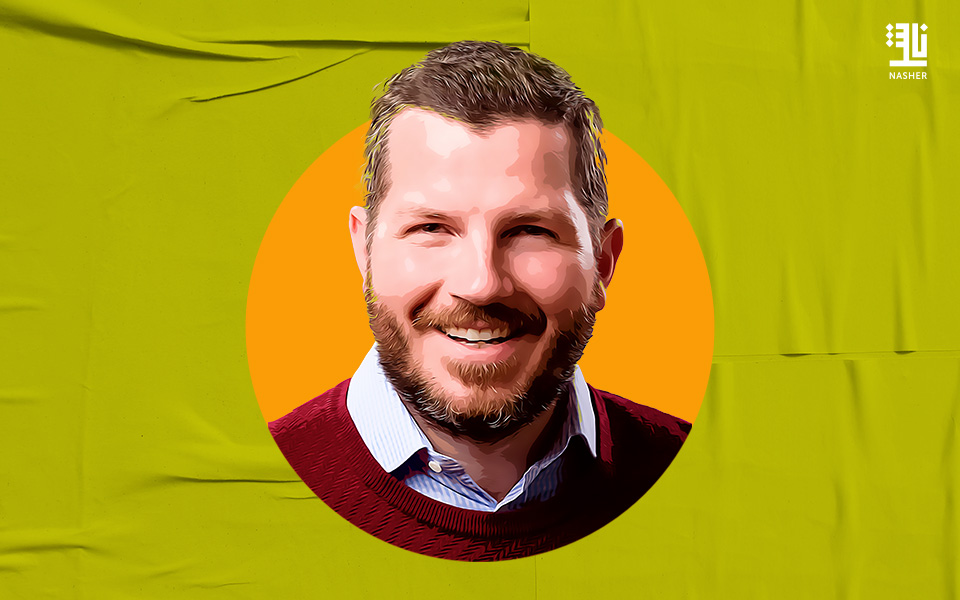
As a teenager, Thomas Leeds was hit by a car and lost his entire memory. Twenty years on, having learned to read and write again, his children’s adventure book has been published to much hype and a 10-way fight for the rights.
Every day during his recovery, Thomas would open a newspaper. He would pore over it, desperate for the jumble of letters and words to make sense. He was 20 years old.
It was more than frustrating. From what people had told him about the boy he had been before the accident, he had been a reader. He was desperate to find that boy again.
Thomas’s life took an extraordinary turn when he crossed a road in central London aged 19 and was hit by a taxi. The doctors initially thought he’d miraculously escaped serious injury but within days a blood clot was found on the brain and all his memories had disappeared.
He didn’t remember his parents, or five siblings. He had no idea he had been about to go to university and had lost the ability to recognise peoples’ faces. Scar tissue on his brain also led to epilepsy, something he still has today.
Throughout his 20s, Thomas focused on his recovery, always hoping his memory would resurface. He talked to people about what he used to be like, looked at photos and re-visited old haunts, but nothing emerged.
Then, on the eve of his 30th birthday, there was a breakthrough. Preparing a playlist for his 80s inspired party he flicked through the songs and The Whole of The Moon by The Waterboys sang out. “It was magical,” Thomas says. “Just knowing that I’ve got something real from before, from the beginning of my story, really helped me face the future.”
It set in motion the desire to write a series of books for nine to 12 year olds, the first of which is Jayben and The Golden Torch.
But it was a long slog for Thomas to learn to read and write again.
Thomas persevered and moved on to children’s chapter books falling in love with fantasy and adventure stories set in alternate worlds which he felt were relatable. Very early on, he came up with the idea for a character called Jayben. He, like Thomas, would have a brain injury and experience seizures.
In the book, Jayben wakes up in the Elf world with no memories to discover he’s the only person who can save it from a villain called Null, who is making everybody forget. Jayben is told he has a special power, but it’s locked up in his memories that he can’t access.
Thomas started writing for himself, creating fantastic creatures such as skoggles – green dog-pigs – and trees where precious memories hang in jars, as a form of escapism and as a way to “recycle” his own experiences into an exciting story.
Writing helped improve his memory and focus and he learned that he is better at remembering new information if it is linked to an emotion.
But having set Jayben off on his adventure, Thomas wasn’t sure what to do with the book. Word started to spread about his personal story and the book, and he met with The Good Literary Agency, which takes on under-represented British authors, including disabled writers. They believed in the story and convinced Thomas, a stay-at-home dad of two girls, to structure his day around writing.
He discovered the morning was the best time for him to write, when his brain was most rested and the pain manageable, but he still had to respect his limits. Being signed to an agency brought new challenges. Hard deadlines, expectations and collaborations with the editorial team.
Thomas was, however, confident in one area. He knew Jayben, his hero, would live with a brain injury and he wouldn’t shy away from the reality of the condition. Blank pages in the book and silences on the audiobook imaginatively denote seizures and memory loss.
“When I was re-discovering books, the heroes I loved were great, but they never forgot what they did yesterday or had to rest,” Thomas says.
It has been a rollercoaster ride, but when Thomas saw himself splashed across the front cover of the publishing industry’s well known magazine, The Bookseller, he described it as “amazing” and started to believe it was finally happening.
Jayben and The Golden Torch has been released in the UK and will be out in Australia and New Zealand later in February. Books two and three will follow in 2024 and 2025 and he has a further three already plotted.