Sales of Emily Brontë’s Wuthering Heights have risen by 469% in the UK since last year, as anticipation builds for Emerald Fennell’s bold and highly anticipated film adaptation, figures from Penguin Classics UK show.
In January of this year, 10,670 copies were sold, compared with 1,875 in January 2025, in what Penguin has described as an unusually large boost.
Sales of the book increased by 132% after the release of the first teaser trailer for the film last September. Between the trailer’s release and the end of the year, Penguin sold 28,257 copies in the UK, compared with 12,134 over the same period in 2024.
Jess Harrison, publishing director for Penguin Classics, said: “I can’t remember the last time a film adaptation generated this much excitement for the book. Wuthering Heights is one of our evergreen bestsellers, but I do think the film is coming out at the perfect moment.
“There seems to be a real yearning among readers for intense, maximalist, tragic love stories,” Harrison added. “We’ve seen huge demand for similarly angsty classics like Dostoevsky’s White Nights and Sabahattin Ali’s Madonna in a Fur Coat. But Wuthering Heights stands apart in being so wild and unhinged – an extreme book for extreme times.”
Fennell’s A-list adaptation, which stars Margot Robbie as Catherine Earnshaw and Jacob Elordi as Heathcliff, premieres in the UK on 13 February. The Saltburn director’s modernised take is set to be an intense, visceral reimagining of Brontë’s gothic romance, complete with contemporary costumes, and a soundtrack by Charli xcx.
The promotional materials have sparked backlash from Brontë fans and online commentators. Some critics have voiced scepticism about its overt sexual tone, as well as the casting choices: Robbie, 35, plays a character who is 19 in the novel, and Elordi’s casting as Heathcliff has revived debate over the racial identity of the character, who is understood to be of Romany heritage in Brontë’s text.
“I don’t think an adaptation needs to be completely faithful to the book: many of the best ones – like Clueless riffing on [Jane Austen’s] Emma – aren’t,” Harrison said. “But what you hope for is that an adaptation will capture the spirit of the original. With Wuthering Heights, it’s the extreme intensity of emotion that matters the most.”
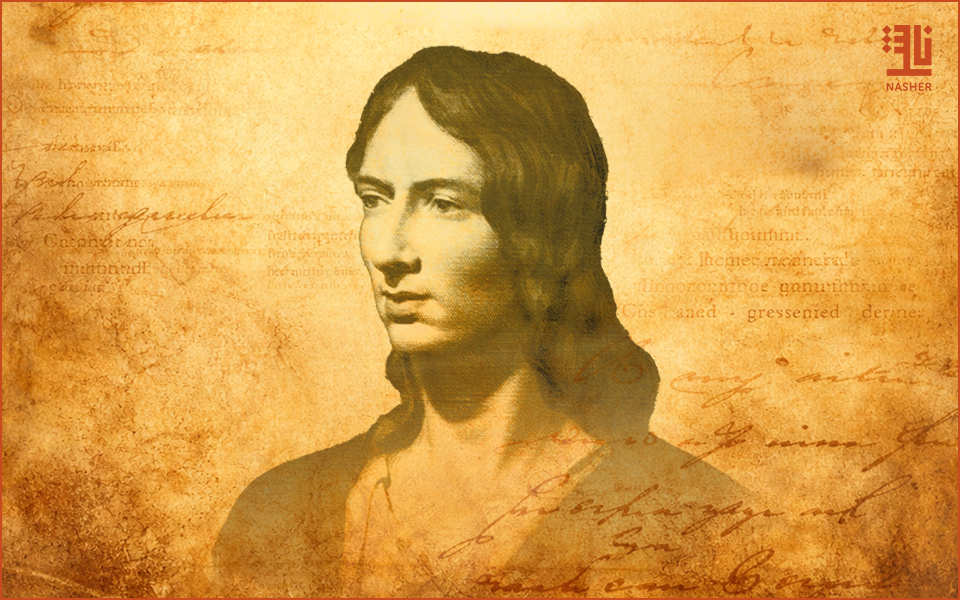
Born in Thornton, Yorkshire, on July 30, 1818, Brontë was the daughter of a respected church curate, Patrick Brontë, and his wife, Maria Branwell. Along with her six siblings, she spent much of her childhood in a parsonage at Haworth, a small village near the Yorkshire moors. During this time, she experienced a series of significant losses. She was only 3 when her mother died, and her older sisters Maria and Elizabeth died from tuberculosis a few years later. Brontë remained close with her surviving siblings, her sisters Charlotte and Anne and her brother, Patrick Branwell, known simply as Branwell. The group often read, wrote and shared stories with one another.
In 1846, Brontë and her sisters released a book of poetry under male pen names, hoping to stave off criticism influenced by their gender. Titled Poems by Currer, Ellis and Acton Bell, the collection received positive press, but it was far from a commercial success, reportedly only selling two copies. A year later, Brontë published her novel, Wuthering Heights, under the name Ellis Bell. She did not live long enough to see what ultimately became of her book, dying in 1848 at age 30 from tuberculosis.
When Wuthering Heights was first published, critics were appalled.
A reviewer for Douglas Jerrold’s Weekly Newspaper wrote, “The reader is … disgusted, almost sickened by details of cruelty, inhumanity and the most diabolical hate and vengeance.”
Another critic for Graham’s magazine fumed, “How a human being could have attempted such a book as the present without committing suicide before he had finished a dozen chapters, is a mystery. It is a compound of vulgar depravity and unnatural horrors.”
Brontë’s sister Charlotte—who would become a literary heavyweight in her own right with Jane Eyre—struggled with the backlash, mostly due to fears that their family would undergo permanent social ostracism. Anne similarly experienced condemnation for her novel, The Tenant of Wildfell Hall.
After her sisters died, Charlotte tried to defend their reputations, writing the “Biographical Notice of Ellis and Acton Bell” in 1850. In the account, she reworked Brontë into a more palatable persona, describing her as a naïve and impressionable woman who was not “learned.” This stood in stark contrast to who Brontë appeared to be: savvy, intellectual and educated. Yet Wuthering Heights unnerved the public—and Charlotte—to such an extent that her sister grew determined to change the conversation. It is rumored that she even burned the manuscript of Brontë’s second novel.
But Brontë’s legacy proudly lives on, inspiring (and terrifying) readers to this day. Despite its earlier critics, Wuthering Heights is now applauded as a feat of creative genius.