Born In April
William Wordsworth (born April 7, 1770, Cockermouth, Cumberland, England—died April 23, 1850, Rydal Mount, Westmorland) English poet whose Lyrical Ballads (1798), written with Samuel Taylor Coleridge, helped launch the English Romantic movement.
Early life and education
Wordsworth was born in the Lake District of northern England, the second of five children of a modestly prosperous estate manager. He lost his mother when he was 7 and his father when he was 13, upon which the orphan boys were sent off by guardian uncles to a grammar school at Hawkshead, a village in the heart of the Lake District. At Hawkshead Wordsworth received an excellent education in classics, literature, and mathematics, but the chief advantage to him there was the chance to indulge in the boyhood pleasures of living and playing in the outdoors. The natural scenery of the English lakes could terrify as well as nurture, as Wordsworth would later testify in the line “I grew up fostered alike by beauty and by fear,” but its generally benign aspect gave the growing boy the confidence he articulated in one of his first important poems, “Lines Composed a Few Miles Above Tintern Abbey…,” namely, “that Nature never did betray the heart that loved her.”
Wordsworth moved on in 1787 to St. John’s College, Cambridge. Repelled by the competitive pressures there, he elected to idle his way through the university, persuaded that he “was not for that hour, nor for that place.” The most important thing he did in his college years was to devote his summer vacation in 1790 to a long walking tour through revolutionary France. There he was caught up in the passionate enthusiasm that followed the fall of the Bastille, and became an ardent republican sympathizer. Upon taking his Cambridge degree—an undistinguished “pass”—he returned in 1791 to France, where he formed a passionate attachment to a Frenchwoman, Annette Vallon. But before their child was born in December 1792, Wordsworth had to return to England and was cut off there by the outbreak of war between England and France. He was not to see his daughter Caroline until she was nine.
The three or four years that followed his return to England were the darkest of Wordsworth’s life. Unprepared for any profession, rootless, virtually penniless, bitterly hostile to his own country’s opposition to the French, he lived in London in the company of radicals like William Godwin and learned to feel a profound sympathy for the abandoned mothers, beggars, children, vagrants, and victims of England’s wars who began to march through the sombre poems he began writing at this time. This dark period ended in 1795, when a friend’s legacy made possible Wordsworth’s reunion with his beloved sister Dorothy—the two were never again to live apart—and their move in 1797 to Alfoxden House, near Bristol.
- Wordsworth was separated from his sister, Dorothy
After the death of their mother in 1778, William and Dorothy were torn apart by their father, who sent them to live with different relatives and Wordsworth ended up in Penrith. They didn’t see each other for the next nine years, despite having been so close as children.
After being reunited, they made up for lost time by spending many of the next few decades living and travelling together, even taking trips to France and Germany.
- Wordsworth only spent 8 years living at Dove Cottage
Born at Wordsworth House, Wordsworth lived in France and Germany for a time during the French Revolution, eventually finding himself homesick for the glorious rugged countryside of the Lake District. Returning home in December 1799, Wordsworth and his sister moved into the quintessential Dove Cottage where they lived until 1808, over 40 years before his death.
- Wordsworth is considered the father of the Romantics
Coined towards the end of the 18th century, the Romantic era is widely seen as having been started by poets William Wordsworth and Samuel Taylor Coleridge, who co-wrote the poetry collection Lyrical Ballads which is said to have changed the perception of how poetry should be written.
With Romanticism came a new age and approach to poetry writing which brought us some of the greats we’ve come to know and love. Wordsworth. Coleridge. Keats. Shelley. Byron. Blake. I could go on…
As Wordsworth said, poetry should begin as “the spontaneous overflow of powerful feelings: it takes its origin from emotion recollected in tranquillity”. This style of writing can be found throughout many of his best known works, particularly his most famous poem ‘I Wandered Lonely as a Cloud’.
- ‘I wandered lonely as a cloud’ wasn’t entirely written by Wordsworth
More commonly known as ‘Daffodils’, Wordsworth’s most famous poem is considered to be ‘I Wandered Lonely as a Cloud’. This lyric poem was inspired by a walk Wordsworth took with his sister Dorothy where they came across a field of yellow daffodils on the shores of Glencoyne Bay at Ullswater.
The poem itself was written two years after the fact, but what you didn’t know was two of its famous lines, often mentioned in the school curriculum, weren’t in fact written by Wordsworth.
‘They flash upon that inward eye
Which is the bliss of solitude’
The lines above were added by Wordsworth’s childhood friend and future wife, Mary Hutchinson
More interestingly, Wordsworth often found inspiration for his poetry by reading from Dorothy’s journal, in which she kept detailed accounts of her explorations through nature.
- William Wordsworth was Poet Laureate of England for 7 years
Holding the title of Poet Laureate of the whole of England is impressive in itself, what makes it more unbelievable was he maintained the title until his death despite not writing a single verse during that time.
Considering himself too old for the title and responsibility, Wordsworth initially declined the offer to be Poet Laureate but was assured by the Prime Minister at the time, Robert Peel, that there would be no expectation of him to write further.
William Wordsworth’s Poet Laureate status was taken entirely on his previous merit as a writer. Wordsworth did continue to write personally, but no further work of his was ever published and he officially gave it up in 1847, after the death of his daughter.
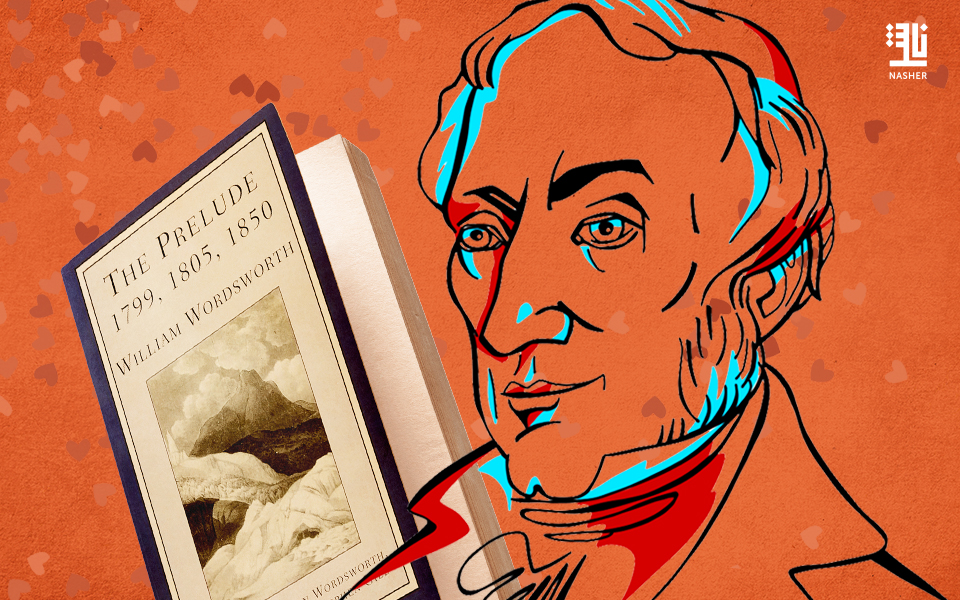
- Wordsworth’s best known work, The Prelude, was published after his death
William Wordsworth’s death was reported to be in April 1850 due to a condition called pleurisy, an inflammation of the membranes surrounding the lungs and chest cavity. He spent many of the aforementioned years adding to this autobiographical poem, but never got the chance to show it to the world before his death.
Published three months after his death, it was the first time the public became aware such a poem had been in progress. It was his widow Mary who eventually gave the poem its famous name as Wordsworth himself hadn’t decided what to call it.
Wordsworth originally dedicated ‘The Prelude’ as an autobiographical poem to Coleridge, whom he had a tricky relationship with for many years due to the latter’s opium addiction; its unofficial name is ‘Poem to Coleridge’.
- Wordsworth had a child with Frenchwoman Annette Vallon
During the French Revolution, Wordsworth visited France, where he met Frenchwoman Annette Vallon and fathered a daughter, Caroline, a fact only later discovered by scholars in the early 20th century.
Because of financial issues he was forced to return to England, though he did his best to provide financial stability for his daughter. Many years later he returned to France for a visit with the company of his sister Dorothy to meet his daughter and announced to Annette his forthcoming marriage to childhood sweetheart Mary.
- Mike Myers is a descendant of William Wordsworth
One thing that’s sure to blow your mind is that famous actor Mike Myers is actually related to Wordsworth. Yes, that’s right, the Canadian-born actor, best known for his iconic portrayal of Austin Powers, is in fact Wordsworth’s first cousin, seven times removed.
- During and after his university years, Wordsworth spent a lot of time abroad and in the south of England, and became a political radical.