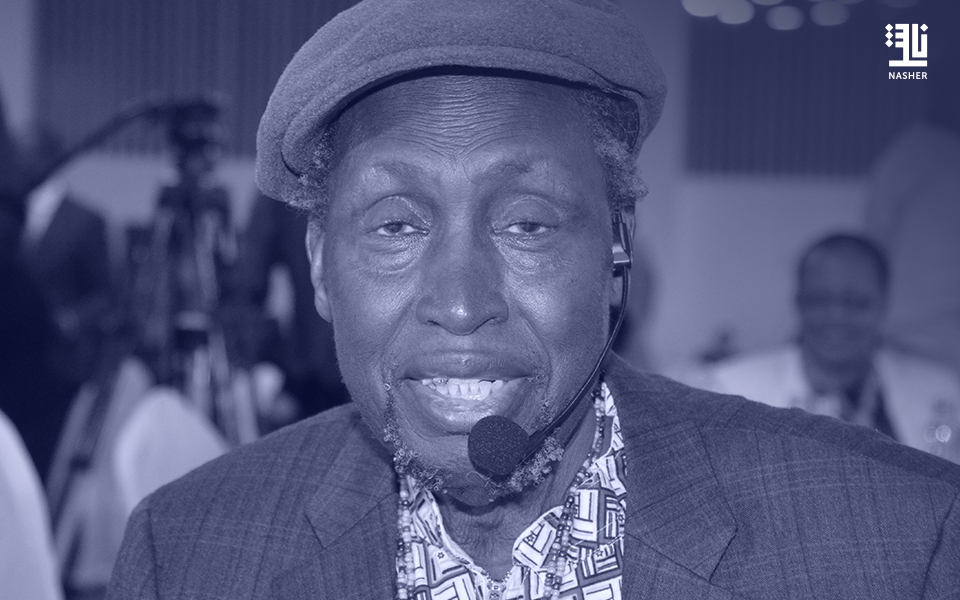
At the age of 83 the Kenyan writer Ngũgĩ wa Thiong’o, is the elder statesman on the 13-strong longlist for the International Booker Prize and must now, once again, be a strong contender for this year’s Nobel Prize for Literature due to be announced in October.
Thiongo’s Homeric verse novel The Perfect Nine: The Epic Gikuyu and Mumbi, published by Harvill Secker in the UK, is the first novel to be nominated written in an indigenous African language – in this case, the Bantu language Gikuyu – and Thion’go himself becomes the first nominee to be both author and translator. The winner of the International Booker receives £50,000 to be shared between the author and the translator, which means that should Thiong’o be successful, Thiong’o will receive £50,000.
The shortlist will be announced on 22 April and the winner on 2 June.
The judges described The Perfect Nine as “a magisterial and poetic tale about women’s place in a society of gods”. It sees nine sisters journey to find a magical cure for their youngest sibling, who cannot walk.
The other shortlisted works are as follows:
I Live in the Slums by Can Xue, translated from Chinese by Karen Gernant and Chen Zeping (Yale University Press)
Advertisement
At Night All Blood is Black by David Diop, translated from French by Anna Moschovakis (Pushkin Press)
The Pear Field by Nana Ekvtimishvili, translated from Georgian by Elizabeth Heighway (Peirene Press)
The Dangers of Smoking in Bed by Mariana Enríquez, translated from Spanish by Megan McDowell (Granta Books)
When We Cease to Understand the World by Benjamín Labatut, translated from Spanish by Adrian Nathan West (Pushkin Press)
The Employees by Olga Ravn, translated from Danish by Martin Aitken (Lolli Editions)
Summer Brother by Jaap Robben, translated from Dutch by David Doherty (World Editions)
An Inventory of Losses by Judith Schalansky, translated from German by Jackie Smith (Quercus)
Minor Detail by Adania Shibli, translated from Arabic by Elisabeth Jaquette (Fitzcarraldo Editions)
In Memory of Memory by Maria Stepanova, translated from Russian by Sasha Dugdale (Fitzcarraldo Editions)
Wretchedness by Andrzej Tichý, translated from Swedish by Nichola Smalley (And Other Stories)
The War of the Poor by Éric Vuillard, translated from French by Mark Polizzotti (Pan Macmillan)
Thiong’o has been writing for more than 60 years and for the last three decades has had a revered status in African letters. He was the star of the International Publishers Association’s African seminar in Nairobi in 2019 where his speech included elements of personal history and made serious points about the effect of colonialism.
He has written more than 30 books, comprising novels, short stories, plays, essays, children’s books, and memoirs. The Nobel Prize is given for a body of work and many will believe that Thiong’o’s time has come.