Home 5 Articles and Reports 5 What is the Secret Behind Accessible Global Academia in India?

What is the Secret Behind Accessible Global Academia in India?

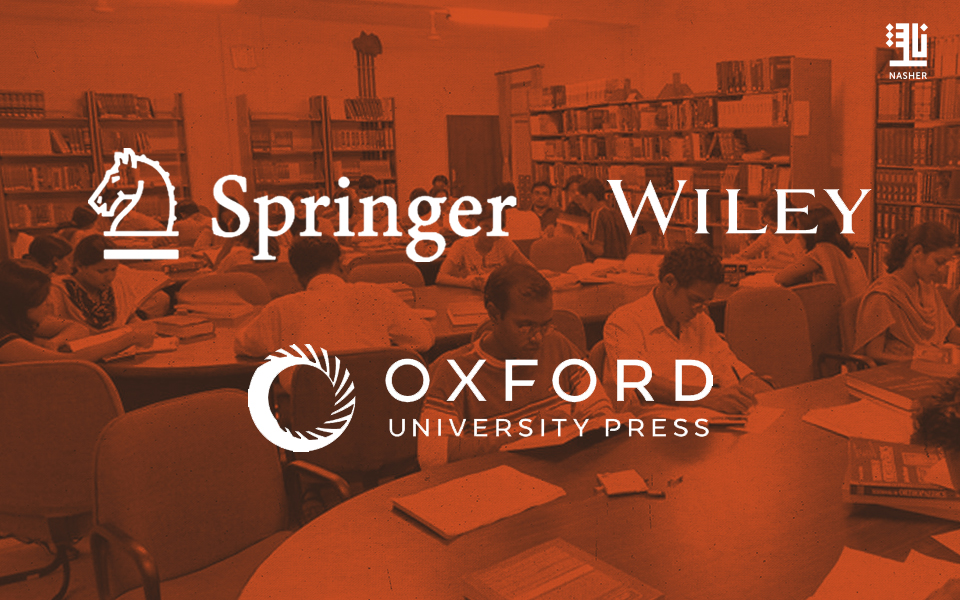
India’s academic publishing landscape has undergone significant transformation over the last few decades, with international publishers increasingly establishing a strong foothold. Despite the high prices of their books, foreign academic publishers like Springer, Wiley, and Oxford University Press have gained considerable influence within Indian academia. Several factors contribute to their success.


First, Indian universities and research institutions seek high-quality, cutting-edge materials, and international publishers often provide such content, ensuring global standards of scholarship. The desire to keep up with global research trends and access to the latest studies makes institutions willing to invest in these expensive resources.


Another reason for their success is the strategic partnerships these publishers form with Indian universities, granting access to e-resources, journals, and digital databases. These partnerships are often subsidized by universities, reducing the burden on students and researchers. Additionally, international publishers collaborate with Indian academic institutions on conferences, workshops, and research projects, reinforcing their presence in the country.


To mitigate the cost burden on Indian students, domestic publishers play a crucial role. Many Indian publishers acquire distribution rights for academic works published internationally. They produce affordable, locally printed editions of these books, making them accessible to a broader audience. These editions, often printed on cheaper paper and with simpler binding, help lower the costs while retaining the quality of the content. This model of popular editions ensures that Indian students and researchers have access to vital academic resources without being overburdened financially.


While international publishers have succeeded due to their quality and partnerships, the collaborative role of Indian publishers in reducing prices is vital in democratizing access to global academic knowledge within the country.


 

Recent News

02Sep
Why is Global Publishing Turning to Sharjah?

Why is Global Publishing Turning to Sharjah?

Sharjah’s rise to the forefront of the global cultural landscape was neither a matter of chance nor the result of isolated achievements. It is the outcome of a far-reaching cultural vision founded on the belief that culture is not merely a complement to development, but one of its fundamental pillars. For decades, His Highness Sheikh […]

02Sep
Lisbon Asks What Reading’s Future Holds

Lisbon Asks What Reading’s Future Holds

Lisbon will become a meeting point for some of the most influential voices in publishing, culture and public life on September 15 and 16, 2026, as the fourth edition of BOOK 2.0 – The Future of Reading takes place at the Belém Cultural Centre. Under the theme “Back to Basics, Back to Books,” the conference […]

31Aug
PocketBook Puts an E-Reader in Your Pocket

PocketBook Puts an E-Reader in Your Pocket

Swiss e-book company PocketBook has unveiled its latest ‘phone sized’ e-book reader PocketBook Q.  The company says: “The new PocketBook Q combines a slim, smartphone-sized form factor with all the essential features for comfortable reading on the go. Its 5.84-inch E Ink Carta™ 1300 display has a resolution of 788 × 1,576 pixels and a […]

Related Posts

What’s Really Behind the “Bestseller” Label?

What’s Really Behind the “Bestseller” Label?

Sometimes, all it takes is the word “bestseller” on a book cover for its success to appear settled beyond question. The label compresses the choices of thousands of readers into a single claim and pushes the book to the forefront. Yet behind it lies a far more...

Did Borges Enter the Digital Labyrinth Before Us?

Did Borges Enter the Digital Labyrinth Before Us?

On 24 August 1899, a writer was born in Buenos Aires, the Argentine capital, who would spend his life among books, labyrinths, mirrors and questions without end. Jorge Luis Borges never knew the internet, never saw a smartphone screen or a search engine. Yet decades...

Mary Shelley Asked the AI Question First

Mary Shelley Asked the AI Question First

Mary Shelley was born in London on 30 August 1797, and would go on to give literature one of its most famous creations: Frankenstein. She was only eighteen when she began writing the novel, unaware that she was placing at its heart a question that would remain alive...

Previous Next
Close
Test Caption
Test Description goes like this