Home 5 Articles and Reports 5 War and Peace: A Debate on Fate and Freedom

War and Peace: A Debate on Fate and Freedom

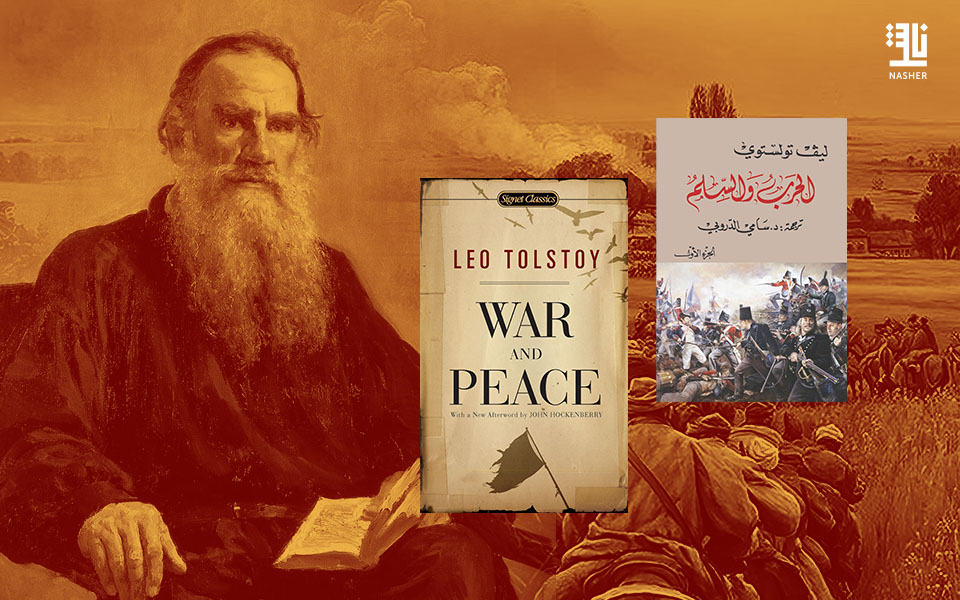
Leo Tolstoy stands among the greatest writers who captured life as it is, not as it ought to be. In his timeless masterpiece War and Peace, he did not merely recount a tale of military conflict or a love story; instead, he built an entire world in which hundreds of characters. Here, no single hero dominates the stage-rather, an entire society breathes and shifts, from the thunder of cannons on the battlefield to the hushed whispers of aristocratic salons.


In this work, Tolstoy does not portray war as a mere political or military event. He turns it into a mirror reflecting broader human questions: What is the role of the individual in the sweep of history? Where does freedom stand against fate? How can a sudden storm or a single decision alter the destiny of an entire nation? The great general may fall before nature’s surprises, and the anonymous soldier may become the pivot of change. Thus, war is transformed from dry lines in history books into an existential question that touches every human being.


On the other side of this vast canvas, an artistic creation as unique and beautiful as the finest works of art, lies the world of palaces, where battles no less fierce than those of war unfold. Here we find love constrained by social barriers, friendships cracked beneath the weight of ambition, and dreams quietly breaking apart. Tolstoy’s genius lies in weaving these small details into the very fabric of life, until the reader becomes a companion in the anxiety, hope, and heartbreak, living alongside the characters rather than simply reading about them.


War and Peace is not one novel but many interwoven narratives converging into a single river. Natasha with her dreams and stumbles, Prince Andrei with his inner wound, and Pierre in his restless search for meaning, all appear as separate threads, yet together they form a seamless tapestry. Even the smallest of moments, a fleeting glance, a whispered word, a brief silence, carry the same weight as cannon fire and the dread of decisions that shape the fate of nations.


Perhaps the secret of this novel’s immortality lies in the fact that it does not recount history in its coldness, but life in its warmth. Tolstoy presented Russian society as a living organism before the reader’s eyes, with all its layers and contradictions, as if to say that the true epic novel is one that makes us see ourselves in others. This is why War and Peace, more than a century and a half after its publication, continues to astonish readers, reminding us that great literature is not simply a story to be read, but a life fully lived on the page.
 

Recent News

27Nov
Orion Acquires Liam Brown’s New Novel

Orion Acquires Liam Brown’s New Novel

Hachette imprint Orion Fiction in the UK has bought a novel set in the world of publishing by Birmingham-based creative writing lecturer Liam Brown. Sarah O’Hara, editor, acquired UK and Commonwealth rights (excluding Canada) to Fanfiction from Salma Begum at Grehound Literary.  Orion plans to launch Fanfiction “with an unmissable campaign in hardback, trade paperback, […]

25Nov
New Zealand Disqualifies Books Over AI Covers

New Zealand Disqualifies Books Over AI Covers

The books of two award-winning New Zealand authors have been disqualified from consideration for the country’s top literature prize because artificial intelligence was used in the creation of their cover designs. Stephanie Johnson’s collection of short stories Obligate Carnivore and Elizabeth Smither’s collection of novellas Angel Train were submitted to the 2026 Ockham book awards’ […]

25Nov
Thousands of Titles Shine at Kuwait Book Fair

Thousands of Titles Shine at Kuwait Book Fair

The Kuwait International Book Fair continues to draw remarkable momentum, with more than 611 publishing houses from 33 countries filling its halls with a vibrant tapestry of books. The aisles unfold like a vast map of knowledge, new releases intersect with timeless classics, and scientific works sit alongside novels, history, and the arts. With hundreds […]

Related Posts

How Do Travel Books Shape Our Choices?

How Do Travel Books Shape Our Choices?

In every era of history, travel has opened horizons, but books have always been the compass that gives a journey its meaning and directs the traveler’s steps. Travel literature does not merely describe places; it shapes imagined portraits of them, often brighter in...

Tales of Small Languages Defying Disappearance

Tales of Small Languages Defying Disappearance

From Estonia to Iceland: Tales of Small Languages Defying Disappearance   Small languages, those spoken by only a few million people, face mounting pressure under cultural globalization and the dominance of English in publishing, education, and the media. This...

Milan Kundera: When the Novel Touches the Questions of Life

Milan Kundera: When the Novel Touches the Questions of Life

Since the publication of his most celebrated novel The Unbearable Lightness of Being in 1984, it has become impossible to view Milan Kundera as a traditional novelist. His work moves beyond the limits of storytelling into a wider universe where characters intersect...

Previous Next
Close
Test Caption
Test Description goes like this