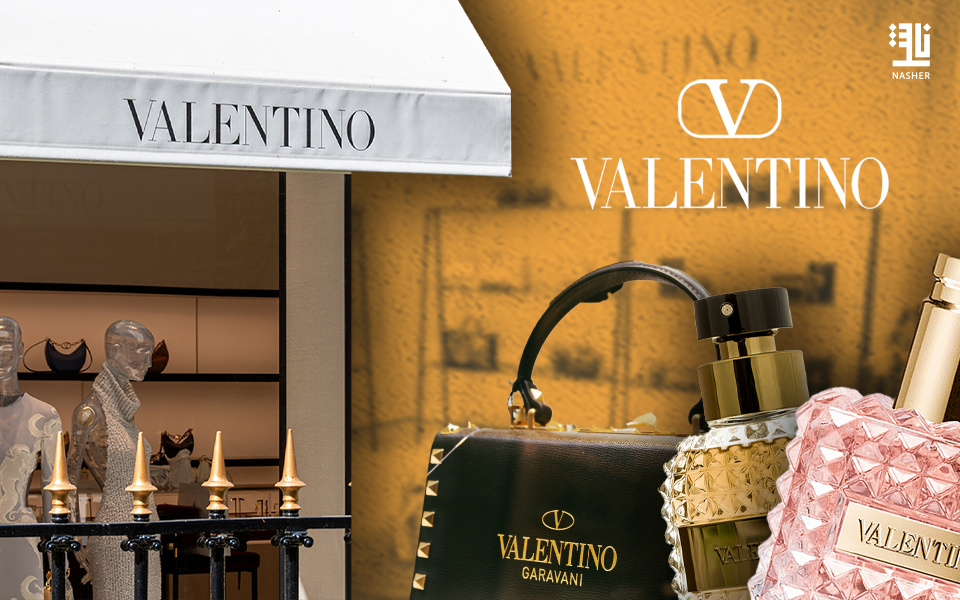
In a world crowded with brands and glittering names, Valentino remains a rare artistic exception. This luminous Italian house is not merely about fashion and design, it is a cultural and intellectual vision of human beauty, where thread meets thought, and fabric becomes a metaphor for the self, much like a novel in the hands of its author turns into a mirror of the soul. In Valentino’s philosophy, elegance is not a superficial appearance but an act of contemplation, a way of reading humanity through what it chooses to express. It is as if the brand quietly declares that each person has their own language, and that elegance can be a chapter in a life story written in color, silence, and movement.
Valentino believes that beauty is measured not by luxury but by meaning, and that whatever is crafted with honesty and imagination belongs closer to poetry than to commerce. The house does not simply create objects, it composes visual narratives about identity, memory, and the longing for impossible perfection. In every detail, one can sense a philosophical meditation on the relationship between art and time, on how a small craft can carry the fragrance of a grand tale, just as a slender book can hold an idea capable of transforming its reader’s life.
In this sense, Valentino can be read as an open literary work, echoing the same great themes that preoccupy literature itself: time, beauty, loss, and the endless search for meaning. Each creation by the house resembles a carefully written sentence, crafted not merely to adorn but to narrate the human story in its quest for the first word, and for the kind of beauty that travels through the senses toward thought. Its creations unfold like visual narratives of harmony and difference, showing how beauty can be a form of wisdom and color a language of reading.
The secret of Valentino’s uniqueness lies in its refusal to be just a fashion house, it practices the art of writing through other mediums. It redefines the relationship between body and meaning, form and substance, in an ongoing dialogue between art and intellect. Like the great writers, it holds that beauty is a responsibility, not an ornament, and that the smallest details, a button, a cut, a pattern, can encapsulate an entire world. In this way, Valentino meets literature at its core: both seek to arrange chaos into beauty, to grant us the ability to understand, to savor, and to reflect.
Valentino reminds us that beauty is an act of awareness, and that taste is not a social habit but a spiritual and intellectual experience. In a world that moves too quickly, the house offers a quiet lesson in the art of slowing down, to listen to the details, as a reader pauses over a line that takes their breath away. Within its simple lines lies a complex idea: that we do not wear only what we love, but what mirrors our soul, what reflects our beliefs, and what carries our dreams. That is why Valentino, at its deepest level, feels like an open book, one that never grows old, because true beauty, like great literature, does not age. It transforms with every reading into a new birth of wonder.