Top Five Female Writers Of All Time
Researchers at Northeastern University in Boston recently analysed data on nearly 4,500 books that made the New York Times Bestseller Lists from 2008 to 2016, allowing them to understand what helped certain titles sell better than others. Their analysis showed that general fiction sold the best, followed by biographies. Additionally, books that showed strong sales numbers out of the gate were more likely to continue their forward momentum.
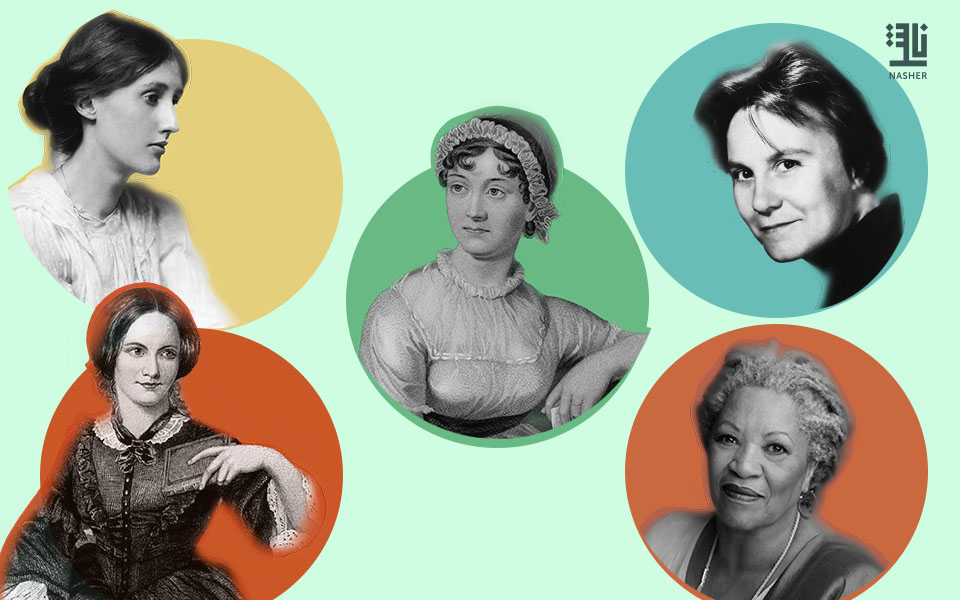
Here are five female authors we researched from 10 expert sites who we admire for their vision, fearlessness, originality, and their impact on the literary world and beyond. These authors have penned influential works that resonate with readers globally, addressing issues of identity, equality, and societal change. From the pioneering works of Virginia Woolf to contemporary brilliance, female writers have consistently enriched the literary canon with their remarkable storytelling and insights into the human experience.
- Virginia Woolf
From the research, no list of the best female writers will ever exclude Virginia Woolf. Her best works include the novels, Mrs. Dalloway, To the Lighthouse, and Orlando. She is regarded as a modernist 20th-century author whose narrative style was non-linear as evident from her famous novels. Virginia Woolf was much more than her novels as she wrote influential essays on literary history, artistic theory, and womens writing. Virginia Woolf wrote several short fiction which are guaranteed to influence anyone who follows English literature. At the age of 5, she wrote letters to her father narrating a new story every night, Virginia Woolf was born Adeline Virginia Alexandra Stephen on January 25, 1882, in London and died on March 28, 1941, in the United Kingdom. Woolf is one of the leading modernist writers of the 20th century. In the interwar period, she was a prominent figure in London literary society and a central member of the Bloomsbury Group, which brought together English writers, artists, and philosophers, says Fiction Horizon. Virginia Woolf rose to her best by fighting several mental breakdowns. She regarded as one of the most modernist authors of her time, not only challenged the social injustices faced by women in the early 1900s but also tested and incorporated various literary devices into our modern lexicon of creative writing, states Discover Walks.
- Jane Austen
The author of Pride and Prejudice, Emma, and Northanger Abby, Austen graced the world with her influence from 1775 to 1817. Her determination paved the way for future women writers, as she wrote at a time women were discouraged from making their voices heard, shares Colorado State University. More specifically, Austen was a writer who specialised in storylines that highlighted womens dependence on marriage or women who were pursuing economic security. Austen was one of the first female writers to publish works that questioned and commented on the British landed nobility. Since many of Austens works were published under pseudonyms, she did not experience much fame during her lifetime. She earned much more recognition as a writer after her passing, and her six full-length novels have hardly ever been out of print. As such, many of Austens works were published anonymously, meaning she enjoyed little fame during her life. It was after her death that she gained far more status as a writer.
- Harper Lee
Harper is best known for her 1960 novel, To Kill a Mockingbird. The book pushed her into literary success as an acclaimed writer. Lees childhood in Monroeville, Alabama inspired her idea for the novel. Her father, a former newspaper editor, businessman, and lawyer, served in the Alabama State Legislature from 1926 to 1938. During his time in this role, he defended two black men accused of murdering a white storekeeper. Both men were found guilty of the act and hanged setting the plot of Harper Lees famous novel. Harper Lee was born Nelle Harper Lee on April 28, 1926, in Monroeville, Alabama, and died on February 19, 2016, in the same city. Selling forty million copies, this book is a classic of American literature, studied as such in many secondary schools in the United States, and regularly cited at the top of the rankings of critics and booksellers.
- Charlotte Brontë
Charlotte is the third daughter of the Reverend Patrick Brontë, within a family of modest means with six children, benefits, like her four sisters and her brother, from the presence of a father who pushed his classical studies to the University of Cambridge and does not hesitate to pass on to them his culture and his vision of the world. Charlotte Brontë is the sister of Emily Brontë. Her first novel, The Professor, was initially rejected by publishers. Two of Charlottes famous books are Jane Eyre: This coming-of-age novel follows the journey of its eponymous heroine, including her love for Mr. Rochester and his home at Thornfield Hall. Shirley which is set in Yorkshire during the industrial depression of the early 19th Century, the story follows characters during the Luddite uprisings in the Yorkshire textile industry.
Charlotte Brontë is one of the most famous Victorian female writers in history. Setting the typical tropes of Victorian literature, Brontë was one of the first authors to experiment with different poetic forms, such as the long narrative and dramatic monologue but later gave up on poetic writing after the success of her prose.
- Toni Morrison
Toni Morrison was a American novelist who received the Pulitzer Prize and global recognition for winning the Nobel Prize in literature in 1993. Toni Morrison was born and raised in Lorain, Ohio. Toni established herself in the literary world after earning an MA in American Literature at Cornell University in the mid-to-late 1950s. She became famous for her ability to depict the Black American experience in her writing with such authenticity; in an unjust society, her characters typically struggle to find themselves and their cultural identity. Morrison didnt establish her name as an expert until the 1970s and the middle of the 1980s.