
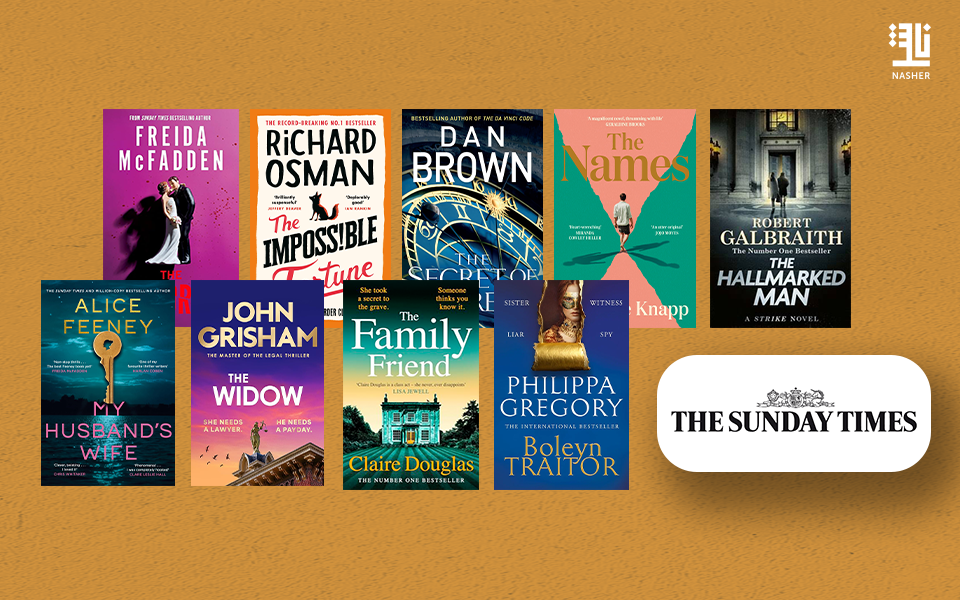
Nine of the 10 bestselling fiction paperbacks in the UK this week have one thing in common: a woman is murdered.
The novels, which appear on this week’s Sunday Times bestseller list, include The Secret of Secrets, The Divorce, The Names, The Family Friend, The Widow, The Impossible Fortune, The Hallmarked Man, My Husband’s Wife and Boleyn Traitor.
While the titles range from historical fiction to domestic noir and police procedurals, each centres on the death of at least one female character.
Only The Correspondent, a novel about the art of letter writing, breaks the pattern.
The trend was highlighted on Instagram by the author Wendy Jones, who wrote: “So 84% [sic] of the books people bought and read in the UK this week involved a woman being murdered for entertainment. What is going on here?”
The concentration of currently popular novels about femicide may be striking but is not a new literary phenomenon. From the gothic suspense of Daphne du Maurier to the psychological thrillers of Gillian Flynn, the murdered woman has long been one of fiction’s most enduring plot devices.
Flynn’s Gone Girl, published in 2012, helped propel novels centred on murdered or endangered women into one of the most commercially successful genres, with publishers spending much of the following decade searching for the next “girl” thriller.
But why does commercial fiction keep returning to the same story? Critics argue that repeatedly turning women into victims risks normalising violence against them. Yet the genre’s paradox is that women are also its biggest consumers, with some arguing its appeal may be a way of processing real-world fears.
The crime writer Mel McGrath wrote that the genre has, in some ways, moved on from the time of male authors such as Raymond Chandler and Mickey Spillane killing off women chiefly so the men investigating their deaths could be heroes. “Reading crime fiction written by women remains a powerfully feminist act,” she said.
The crime writer and critic Laura Wilson explained that domestic noir is popular at the moment because it reflects “some very real fears”.
The novelist Denise Mina traced the appetite back to the broadsheet sellers of 18th-century London, who found that manufactured crimes sold copies so long as the victim fitted a particular profile. “The trope of a dead woman, especially a pretty young white virtuous woman, has sold stories for centuries,” she said. “The fake stories almost always featured that kind of victim.”
But Mina resisted reading the appetite as sinister. “It’s what people want to read about, but perhaps it’s not because they want to harm such characters, as much as they want to save them. The narrative propulsion only works if the reader cares deeply about what happened.”
Not everyone agrees the genre needs defending. The Staunch prize, launched by the writer Bridget Lawless, set out to reward thrillers in which “no woman is beaten, stalked, sexually exploited, raped or murdered”. But it was met with fury from authors within the genre.