Home 5 News 5 The European Union and E-book Consuming

The European Union and E-book Consuming

by | Jul 12, 2017 | News

Paris, Shawqi bin Hassan,

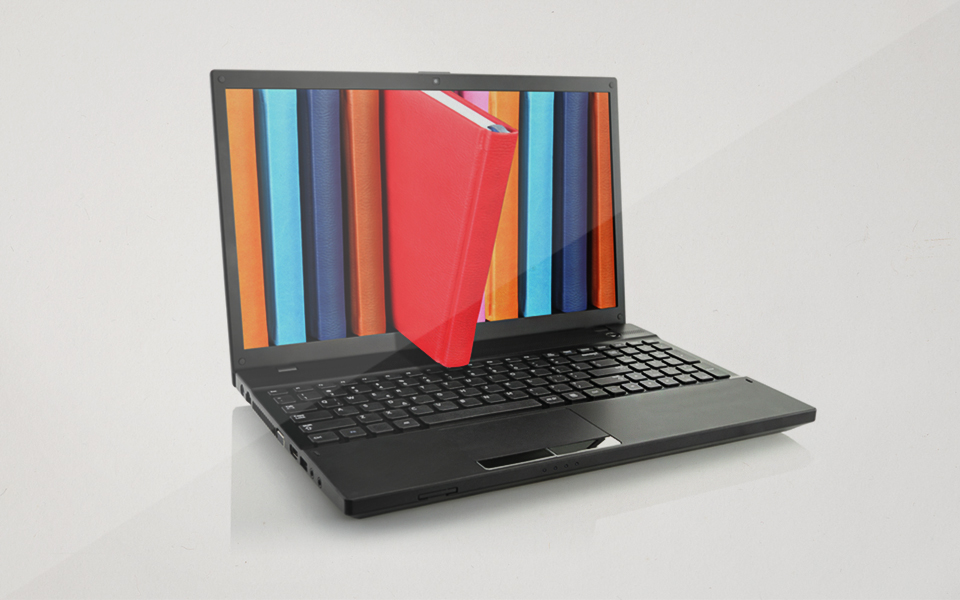
On June 1, 2017, the European Parliament revised the law on the Value Added Tax (VAT) rate on e-books. The revision was suggested by the Economic and Monetary Affairs Committee (ECON), and called for a reduction in the standard rate of VAT, which stood at 15%, applicable to all e-book purchases and sales – almost the same rate as the electronic devices used to read them.

The new law means the VAT rate is reduced to 5%, (closer to the majority of cultural e-publications, including e-books), with a suggestion of zero VAT rate on e-books in case they were not paper-printed, to ensure that the new proposal does not become the main reason for the ‘extinction’ of printed books.

It is well-known that tax is an instrumental tool that countries use in their commercial and economic policy-making, to increase or decrease demand on certain products.

Hence, the proposal indicates that the European Union member states see e-books as a product which needs financial support. It is considered by many as e-book’s first ‘triumph’, in a bid to push consumers/readers towards e-books over printed publications, given the higher economic and environmental cost of the latter. The step may feed into a widely-spread common view that the digital world will take over the future of books and knowledge in general.

The owners of physical cultural products have consistently asked for tax concessions to protect their businesses which are faced by many threats starting with piracy and ending with a general reluctance to buy physical cultural products.

On the one hand, e-books are among the products that are the most exposed to piracy, and to protect them against such phenomenon, they have to be cheaper than printed books. On the other hand, such tax policies encourage corporates (publishing houses in this case) to invest more and more in the benefiting products.

Probably, the European Union is taking this step to adapt to the world’s changing reading habits, which were the subject of a close inspection and detailed analysis of many academic studies. If the European keenness is in the interest of popularising e-books, we are left to wonder; does this keenness have an absolute positive impact on the overall book industry?
Recent News

20Dec
When Dia Mirza Writes for Children

When Dia Mirza Writes for Children

Indian actor Dia Mirza is embarking on a new creative journey as she develops a five-book children’s series inspired by her personal experiences, values, and long-standing love for storytelling. The project marks a significant shift in her artistic path, allowing her to channel her worldview into stories crafted to spark curiosity, nurture imagination, and offer […]

18Dec
Born With a Library Card

Born With a Library Card

UK think tank the Cultural Policy Unit (CPU) has proposed giving all UK newborns a lifelong library card to boost literacy rates among children and into adulthood.   Its proposal means that membership would be linked directly to registrations of birth, meaning library cards would be waiting for newborns at their local library. Currently, parents have […]

18Dec
Epistolary Literature Reclaim its Literary Power

Epistolary Literature Reclaim its Literary Power

In an age where words rush past like lightning and messages are reduced to quick taps on glowing screens, epistolary literature returns to remind us that writing was once a slow, deep, emotion-laden act. This form of literature offers more than a topic, it reveals its writer as they truly are: fragile, sincere, or brimming […]

Related Posts

Born With a Library Card

Born With a Library Card

UK think tank the Cultural Policy Unit (CPU) has proposed giving all UK newborns a lifelong library card to boost literacy rates among children and into adulthood.   Its proposal means that membership would be linked directly to registrations of birth, meaning library...

Epistolary Literature Reclaim its Literary Power

Epistolary Literature Reclaim its Literary Power

In an age where words rush past like lightning and messages are reduced to quick taps on glowing screens, epistolary literature returns to remind us that writing was once a slow, deep, emotion-laden act. This form of literature offers more than a topic, it reveals its...

Waterstones Sets Limits on AI Content

Waterstones Sets Limits on AI Content

Waterstones’ CEO James Daunt has said it will do everything it can to keep AI generated content out of its stores.  He told the BBC’s Big Boss podcast: “We use it in a limited way. It helps our customer service operation become more efficient. It helps us in logistics...

Previous Next
Close
Test Caption
Test Description goes like this