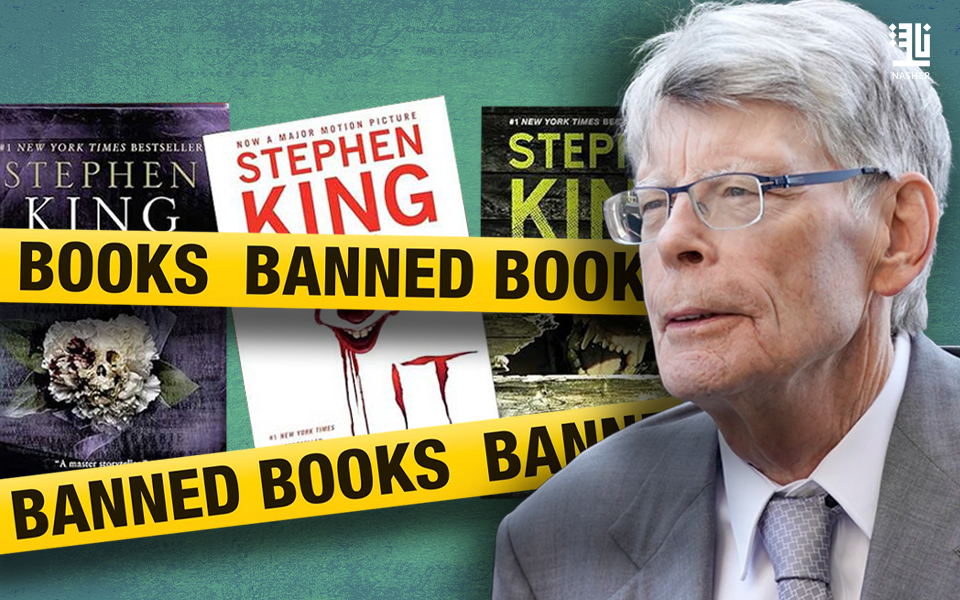
Stephen King leads the way as the most banned author in the US, according to a new report on ‘the normalisation of book banning’ just released by PEN America.
The organisation says: “Our latest report on the crisis of book bans documents nearly 23,000 instances of book removals since 2021 and sheds light on a disturbing normalization of censorship in public schools. Never before in the life of any living American have so many books been systematically removed from school libraries across the country. The report shows how a climate of fear has led to “obeying in advance” and federal efforts to restrict education mimic state and local rhetoric. This year’s most banned author is Stephen King, and the list includes beloved authors Judy Blume and Jodi Picoult along with bestseller
Sarah J. Maas and popular manga artist Yūsei Matsui.’
PEN America describes book censorship in the United States in 2025 as ‘rampant and common’. It adds: “Never before in the life of any living American have so many books been systematically removed from school libraries across the country. Never before have so many states passed laws or regulations to facilitate the banning of books, including bans on specific titles state wide. Never before have so many politicians sought to bully school leaders into censoring according to their ideological preferences, even threatening public funding to exact compliance. Never before has access to so many stories been stolen from so many children.”
PEN America observes: “Stories tell us who we are and who we can become. This right – the right to discover – is being taken from students under the guise of their “protection.” Over the past four years, a misleading campaign to “protect children” alongside advocacy for “parental rights” has been weaponized to diminish students’ First Amendment rights in schools, sow distrust in librarians and educators, and diminish the ability of authors and illustrators to connect with their intended audiences. In this upside down world, any rights of young people as students are somehow subservient to the absolute rights of their parents….For many students, families, educators, librarians, and school districts, book banning is a new normal.
It concludes that from a birds’ eye view, school districts today are surrounded by multiple and persistent local, state, and now federal pressures to ban books, with diminishing reasons not to. The result is a kind of everyday banning – the normalization and routinization of censorship as an expected part of public education in many parts of the country. Opposing this will no longer take just counter-efforts to any one of these threats; it will require a similarly committed effort, rooted in recognition of the fundamental right to read.
It urges concerned individuals to “message your state and Congressional representatives in support for the right to read; urge elected leaders to pass legislation that protects books, schools, libraries, and librarians, and to speak out on October 11 for Let Freedom Read Day – and then continuing to speak out, or reach out to a broad coalition of authors, students, and advocacy organizations to see how you can help us fight the good fight”.