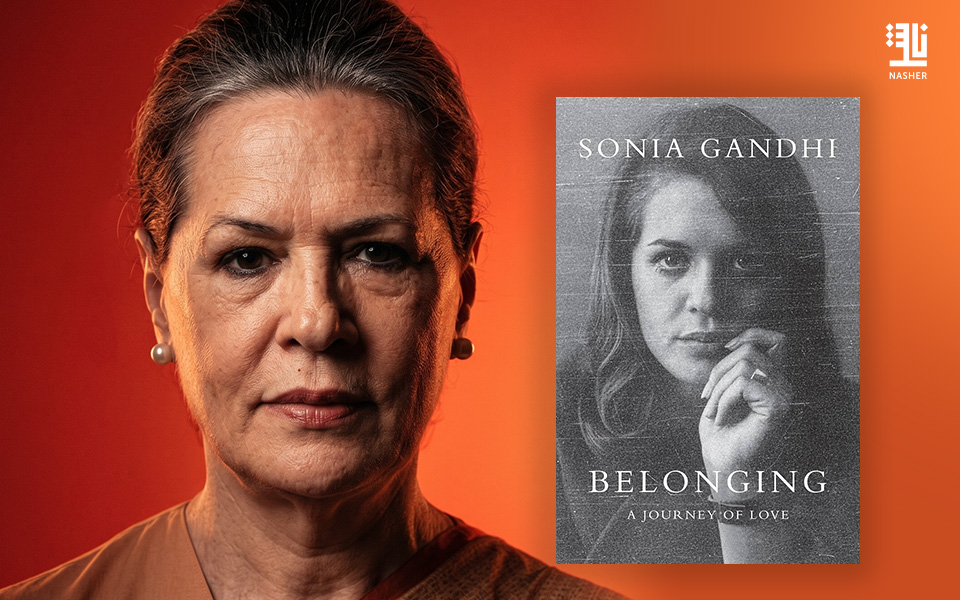
Sonia Gandhi is preparing to open a deeply personal chapter of her life with her forthcoming memoir, Belonging: A Journey of Love, due for international publication on November 10, 2026. Spanning her childhood in post-war Italy, her move to India and her place at the heart of one of the country’s most prominent political families, the book traces a life long lived in public view. Yet its central promise lies in allowing Gandhi to revisit that story in her own voice, moving between private memory and the larger forces of history that shaped it.
The 544-page memoir will be published by Alfred A. Knopf, an imprint of Penguin Random House in the United States, with an announced first printing of 100,000 copies. It follows Gandhi from her early years and her meeting with Rajiv Gandhi in Cambridge to her marriage, her arrival in India and her life within the Nehru-Gandhi family. In doing so, the memoir brings together intimate recollection and first-hand testimony from a period that spans some of the most consequential decades in modern Indian history.
Ahead of publication, the memoir has also become the subject of a wider publishing debate in India following reports of disagreements over proposed editorial changes to the manuscript. Penguin Random House India has denied that it withdrew from publishing the book because Gandhi rejected revisions, stressing that fact-checking and editorial recommendations are a routine part of the publishing process. The episode has nevertheless revived familiar questions surrounding memoir: how far an author’s personal voice should be mediated by editorial scrutiny, and where private recollection meets the demands of historical record.
Gandhi revisits defining moments including the assassinations of Indira Gandhi and Rajiv Gandhi, her eventual entry into politics, her long leadership of the Indian National Congress and her decision not to become prime minister in 2004. But Belonging is positioned as more than a conventional political memoir. It is also a narrative of love, grief, identity and cultural displacement, told by a woman who witnessed six decades of profound social and political transformation. Its literary interest may ultimately lie in that intersection between public history and private memory, between the Sonia Gandhi written about for decades and the one who now chooses to tell her own story.