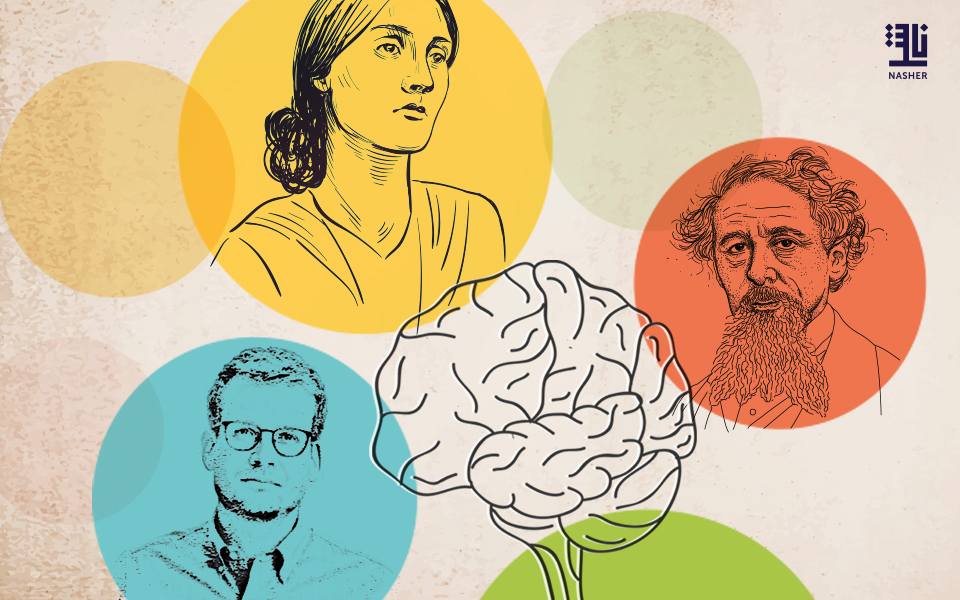
Some of the greatest work can be produced during a period of struggles and these authors all had to deal with various issues yet never stopped writing.
Ernest Hemingway
By 1959, Hemingway was not the man he’d once been. Assigned by Life magazine to write a 1,000-word piece about bullfighting in Spain, he submitted a manuscript of 130,000 words and found himself unable to edit it down into something suitable for publication, turning to his friend A. E. Hotchner for help. Hotchner reported that Hemingway was “unusually hesitant, disorganised, and confused.” Shortly afterward, the author became visibly depressed, remaining in bed for days on end, and in 1960 voluntarily entered the Mayo Clinic for electroconvulsive therapy. A few months later, Hemingway killed himself, and 25 years after that, the novel-length version of his bullfighting story was published as The Dangerous Summer.
Zelda Fitzgerald
Zelda Fitzgerald is a tragic figure, a classic example a person with “high spirits” secretly suffering from a severe mental disorder. When she was finally diagnosed with schizophrenia in the early 1930s, she spent time at a clinic, where she experienced a rush of creativity and wrote Save Me the Waltz as part of her therapy. Her husband, F. Scott Fitzgerald, wasn’t pleased with it because it covered much of the same semi-autobiographical material as the novel he was working on (which would eventually become Tender is the Night), and he forced Zelda to revise the book extensively before he would allow her to publish. The failure of the book and the mean-spirited reaction from her husband left Zelda crushed; she didn’t return to writing until after Scott’s death, and was working on a book when she died tragically in a fire at her hospital.
Sylvia Plath
While still in college, Plath plummeted into depression and was hospitalised and treated with shock therapy. She described her hospitalisation as a “time of darkness, despair, and disillusion — so black only as the inferno of the human mind can be — symbolic death, and numb shock — then the painful agony of slow rebirth and psychic regeneration.”
The poet made multiple suicide attempts before eventually succeeding in 1963. She consulted physicians that same year and complained of severe depression, even speaking about her numerous failed suicide attempts. Her doctor prescribed an antidepressant and acknowledged that she was, indeed, severely clinically depressed. Plath was also known, among friends and colleagues, for her frequent mood swings, tendencies toward impulsivity. She was easily plunged into dejection by even the smallest rejection or perceived failure. Her poetry deals with shock treatment, suicide, self-loathing and dysfunctional — all subjects with which she had firsthand experience.
Virginia Woolf
Woolf had her first bout with depression at the age of 15, battling it throughout her life — even being hospitalised in 1904 to treat the illness. Her creativity was frequently compromised by intermittent mood swings punctuated by sleeplessness, migraines and auditory and visual hallucinations. A more specific connection between Woolf’s experiences with mental illness and her creative work can be found in her criticism of medical establishments in Mrs Dalloway, which may reflect her own ineffectual treatments during the 1920s. Sadly, Woolf eventually committed suicide in 1941.
Charles Dickens
Dickens lived with depression and insomnia. During these sleepless periods of time, he would walk the streets of London and found inspiration for characters portrayed in his novels. Dickens was wealthy and successful, but the lack of sleep and severe depression affected his ability to write. In 1870 Dickens died of a stroke.
John Green
Green is best known for his books The Fault in Our Stars and Looking for Alaska, among others. He is also a YouTuber with several successful channels such as the Vlogbrothers (With brother Hank Green), Crash Course, and 100 Days.
John Green is very open about his mental health. He has spoken out on Twitter and has hosted a mental health AMA (ask me anything) on Reddit. When talking about it, he gives realistic and honest answers. He talks about the struggles of balancing work and health, about his medication, and the importance of having a support system around you.