Poetry Given Boost in New Sam Mendes Film
Poetry is given an unexpected boost in Sam Mendes’ new film Empire of Light. Three giants of English poetry are either referenced or quoted in Mendes’ elegiac tribute to Eighties cinema and the Art Deco palaces in which films were shown.
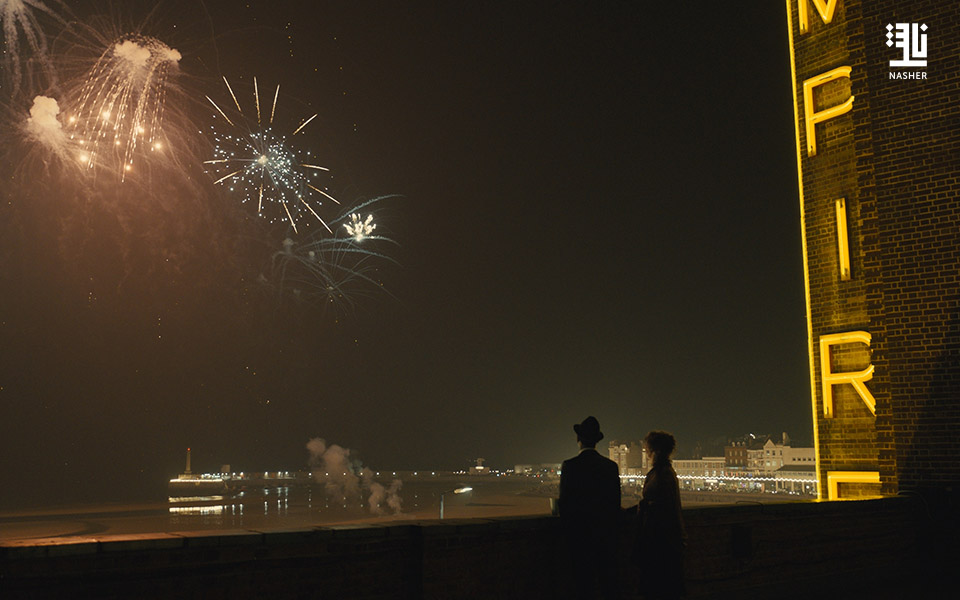
The story revolves around the romance that grows between the cinema manager, Hilary, played by Olivia Colman, and the young black man, Stephen, who joins the Empire cinema which sits like a beached liner facing the sea in Margate on England’s south coast.
An early indication that poetry will play a part in the film comes when the cinematographer Norman, played by Toby Jones, reads out the crossword clue from the newspaper. “First word of The Wasteland, five letters.” He pauses and then says “April”, quoting TS Eliot’s famous line ‘April is the cruellest month/breeding lilacs out of the dead land…’.
The film’s setting has an unspoken reference to Eliot too: it was to Margate that Eliot retreated from London, to recover from a breakdown he suffered at Lloyds bank in the City where he was working at the time. He went to Margate to convalesce, famously writing some of the twentieth century’s most famous poem, The Wasteland in a shelter on the sea front. ‘On Margate sands, I can connect nothing with nothing.’
Hilary is recovering from some unspecified breakdown herself. She seems to be bipolar and when local dignatories gather at the cinema for ‘the South Coast premier of Chariots of Fire’, she takes to the stage unexpectedly and begins reciting WH Auden’s Death’s Echo:
Dance, dance for the figure if easy,
The tune is catching and will not stop;
Dance till the stars come down from the rafters;
Dance, dance, dance till you drop.
But it is Philip Larkin who receives the most attention. Hilary gives Stephen a copy of Larkin’s High Windows and we see him with the book on the train. One of Larkin’s most beautiful poems is recited in full as we see Hilary’s face as she watches a movie in the cinema as if for the first time.
The poem is called The Trees and captures the film’s message of acceptance and letting go.
The trees are coming into leaf
Like something almost being said;
The recent buds relax and spread,
Their greenness is a kind of grief.
Is it that they are born again
And we grow old? No, they die too,
Their yearly trick of looking new
Is written down in rings of grain.
Yet still the unresting castles thresh
In fullgrown thickness eery May.
Last year is dead, they seem to say,
Begin afresh, afresh, afresh.’
The film is too quiet for this poem to receive the kind of boost WH Auden’s ‘Funeral Blues’ did after Richard Curtis’ 1994 film Four Weddings and a Funeral:
Stop all the clocks, cut off the telephone,
Prevent the dog from barking with a juicy bone,
Silence the pianos and with muffled drum
Bring out the coffin, let the mourners come.
The success of that film and the impact of the funeral scene at which that poem is recited led Faber to publish a special film tie-in edition of the poem and others.
Meanwhile, Mendes’ film continues to enchant audiences as it captures a particular kind of nostalgia and perhaps causes some to explore the poems quoted in their local bookshop.