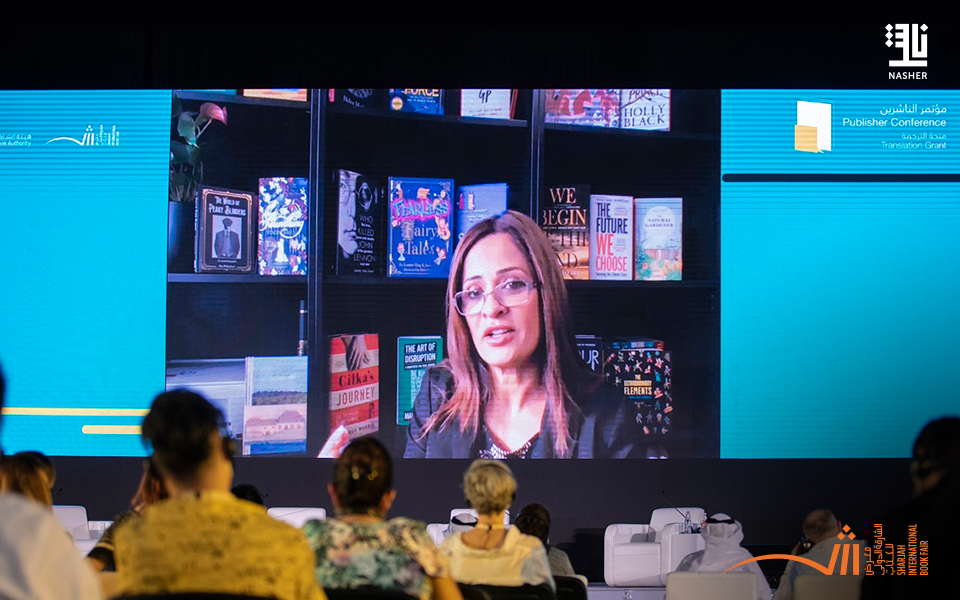
There were many smiles and elbow pumps as the 39th Sharjah International Book Fair got underway in the United Arab Emirates this week, with international visitors like Gvantsa Jobava from the Intelekti Publishing in Georgia (and also vice president of the Georgia Publishers Association) and Stacy Creamer from Audible in the US clearly delighted to be in the emirate (her first time) and pleased that the fair was taking place at all.
Ahmed Al Ameri, chairman of organisers the Sharjah Book Authority, described it as offering “a new page”, and renewing the vision of Sharjah’s Ruler, His Highness Sheikh Mohamad al Qasimi, member of the Supreme Council.
Social distancing and wearing of facemasks was much in evidence and there were clear screens dividing the almost 200 match-making tables at the back of the conference hall. The technology performed admirably, with no glitches on numerous international live links.
Jobava was particularly positive. “What Sharjah has done represents hope,” she said. “I think the future of books fairs will be hybrid – it is sometimes difficult for small publishers to come to international book fairs, so attendance by Zoom makes it easier. But what lockdown revealed is that we all share a common language, the language of books. In Georgia, suddenly everyone was talking about books on social media. It is impossible to replace physical book fairs completely, but a combination is possible, and I think the problems we have all faced make us stronger.”
Many speakers mentioned the positives that the shift online had revealed. Speaking via Zoom from Morocco, Marcia Lynx Qualey, founder and editor of the highly respected ArabLit site, noted that the audience for various Arab literature events had expanded as a result. “There have been events in London that have seen people from other parts of the country buying tickets, and publishers have been experimenting with online panels or podcasts or subscription offers – during the pandemic they have been able to make progress with these things.”
But there was acknowledgement too, that online emphasised ‘comfort reading’, rather than new names, with the public preferring to stick to established writers in lockdown. Trevor Naylor of the American University Press in Cairo said that backlist sold well during lockdown, “but it was harder to sell new titles”. This echoed the keynote address by Perminder Mann, CEO of Bonnier Books UK who said: “It has been harder to break out new writers – authors who are well-known have fared better.” Lisa Milton of HarperCollins UK’s HQ imprint, agreed. “The biggest challenge [of lockdown] has been discoverability – social media has become even more important. We’ve gone from a ‘broadcasting’ approach to one of dialogue with our audience.”
Nicolas Roche of the BIEF, the European and International Booksellers Federation, underlined the importance of physical bookshops for discovering new authors and noted that a number of literary prizes in France were not announcing their winners until the bookshops reopened, “so that they don’t lose their sales to online channels”.
The angriest words of the day belonged to Hassan Yaghi, editorial director of Dar al-Tanweer in Lebanon. “Who is following up on all the hacking and theft of ebooks?” he asked. “This is a disaster for Arab publishing. The legislation is there, but no one is following it up – in such a situation we won’t be able to continue.
How to monetise virtual events was raised by various speakers. Judith Curr, president and publisher of HarperOne in the US, spoke about its approach to selling The Greatest Secret, Rhonda Byrne’s follow up to the bestselling The Secret. “Bookshops can all sell tickets for a pre-recorded online interview as if it was unique to their shop. These ticketed events have opened up all kinds of opportunities.”
Finally, Naylor asked his panel if we would see lots of Covid-inspired novels in months and years to come. Lynx Qualey said: “Oh I think so, but maybe not immediately. It will be like the Lebanese civil war – we’ll be reading about this period in 20 or 30 years’ time. Literature is informed by the ground of life – and if it’s good, it’s good.”