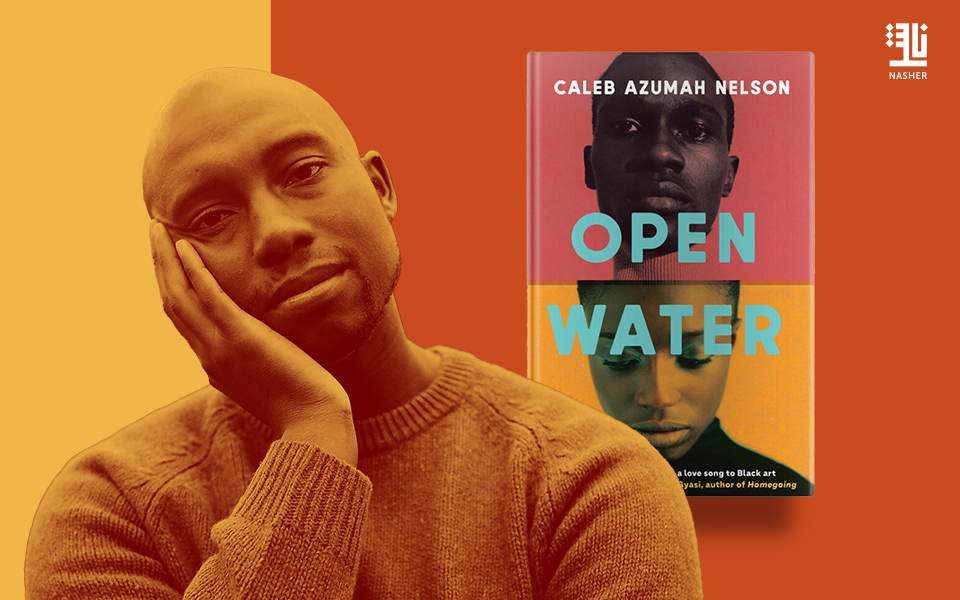
Open water is British-Ghanian writer and photographer Caleb Azumah Nelsons debut novel .It follows 2 main characters as they cross paths and become entangled in each others lives.
Open Water is narrated in thirty chapters from the perspective of an unnamed Ghanaian photographer. It tells the story of two black persons falling in love at first sight when they meet in a bar on a winter night: a British-Ghanaian photographer and his friends ex-girlfriend, a dancer. Their relationship lasts for a year in southeast London and is a test for the strength of their feelings towards each other and for the impact of emotion and being black on their daily lifes affairs and choices in a white-majority society.
But even with a passionate, intimate relationship evolving to bear fruit when his girlfriend provides him care, love, and a sense of belonging to the home, he fails to hold on to this love because his trauma torments him. The unnamed narrator is overcome by his feelings of insecurity, living a precarious life that could end at any moment because of the suspicion of criminality that falls over him because of his black skin.
We follow the main characters as they share their experiences growing up as Black in London. Both are Black British, both won scholarships to private schools where they struggled to belong, both are now artists all similarities that bring them together.
Their friendship grows and evolves, but with that comes challenges of opening up, dealing with their own trauma and making the choice of whether to continue or walk away.
You know that to love is both to swim and to drown. You know to love is to be a whole, partial, a joint, a fracture, a heart, a bone. It is to bleed and heal. It is to be in the world, honest. It is to place someone next to your beating heart, in the absolute darkness of your inner, and trust they will hold you close. To love is to trust, to trust is to have faith. How else are you meant to love? You knew what you were getting into, but taking the Underground, returning home with no certainty of when you will see her next, it is terrifying.
In and around this developing friendship are the realities of life being young and Black in London. The man, who knows to flip his hoodie down if he sees a police officer, who is stopped anyway some days, who sees violence and inequality everywhere and is exhausted and at times, completely overwhelmed by it. Both of them went to private schools and experienced being very much the minority and its a shared experience. Both are also artists he a photographer, she a dancer and that also seems like an escape for both of them as well. Theres also a lot about masculinity what that means, how it is expected to act in a certain way, to not act in other ways. Our male characters an avid reader and the book often mentions the piles of books in his room, the book he is reading, or his favourite author (Zadie Smith).
Azumah describes these profound feelings in one scene when the narrator is stopped on the street and asked by the police to get out of the car. The scene depicts the impact of each racist encounter on the characters and how their repetition can shatter their self-esteem, on the one hand, and stress their loss of the sense of safety and control over their life and fate on the other. These feelings of helplessness, when repeated, can lead to depression, as studies on psychological and mental health show. Nelson has the characters describe the aforementioned psychological impact through the following scene:
Walking towards the cinema, you pass a police van. They arent questioning you or her but glance in your direction. With this act, they confirm what you already know: that your bodies are not your own . You would like to be bulletproof. You would like to believe the shots will never penetrate. You would like to feel safe.
Caleb Azumah Nelsons Open Water explores the psychological impact of the stereotypical representation of black body as a source of diseases, violence and evil in colonial travel accounts, novel literature and media. Open Water focuses the reader´s attention on imagining Black peoples experiences, feelings, desires, and moral values beyond the stereotypical colonial representation and discourse that imagined black bodies as fixed and without agency and negate the impact of individuals diverse experiences.
Nelson is particularly strong when it comes to conveying the experience of inhabiting a black body, that sense of being stared at but not seen certainly not as a person with emotions and feelings.
and so you hide your whole self away because you havent worked out how to emerge from your own anger, how to dip into your own peace. You hide your whole self away because sometimes you forget you havent done anything wrong. Sometimes you forget theres nothing in your pockets. Sometimes you forget that to be you is to be unseen and unheard, or it is to be seen and heard in ways you didnt ask for. Sometimes you forget to be you is to be a Black body, and not much else.
What really comes across here is the fear young black men experience on a day-to-day basis. Will today be a day when they are stopped and searched? Will today be a day of confrontation? Will today be the day they lose their life?
Overall, the novel is a captivating debut that explores the concept of masculinity, belonging, identity, and the black bodys trauma in a racist environment. Open Water describes the psychological impact of harmful racist stereotypes on black people in heartfelt and moving language. In addition, it is a poetic piece of writing about love and the vulnerabilities and strength that come with it.
Given its slim size, the novel sometimes seems slightly crowded not just with these enthusiastic references to black artists, but in other ways too. Alongside the main narrative, other topics fleetingly referred to include the difficulties of being a black person in a private school, curling at the Winter Olympics, the Notting Hill Carnival, basketball, Kierkegaard, the loss of grandparents plus the fact that the short length of the book made it harder for the reader to engage with the characters, and this is not helped by them being nameless. Though if you analyse the intention of the writer in creating nameless character, it is probably his way of expressing how people are judged by their colours and are nameless to the ones in authority.
Azumah Nelson writes short stories and was a finalist for the BBC National Short Story Award, and Open Water is his first novel. He lives in southeast London, where Open Water is set between 2017 and 2018.
Open Water is published by Viking and we have given it a rating of 7/10