How often have you read a book but understood it in a totally different way to your friends? There has long been the issue of the intentions of the author versus the personal interpretation of the reader. Occasionally there are readers’ interpretations that are way off base and even seem to be at odds with the point of the book.
Here are 8 of the most commonly misunderstood works of literature.
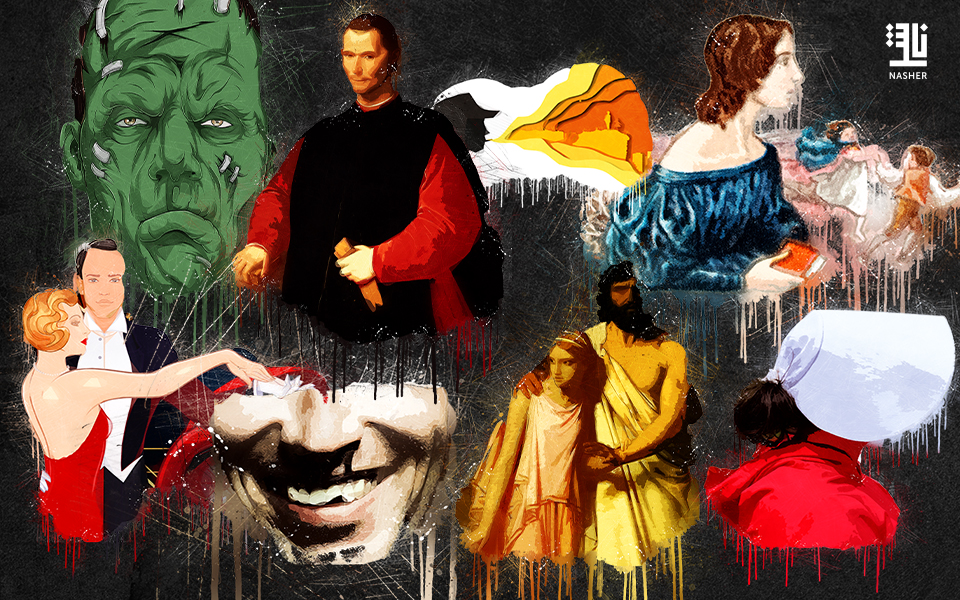
- Wuthering Heights (1847) by Emily Brontë
In a 2007 poll conducted by UKTV Drama to identify the greatest love story ever written, Emily Brontë’s Wuthering Heights came out on top, even though it wasn’t a love story. In response, historian Martin Kettle put it bluntly: “If Wuthering Heights It’s a love story, and then Hamlet is a family sitcom. Wuthering Heights has long been thought of as Jane Austen Pride and criticism (1813), but while the latter is a romance, the former is a gothic tragedy.
Heathcliff and Cathy love each other, but their relationship is abusive. Where Austen’s Mr. Darcy is a lovable but honourable leader, Brontë’s Heathcliff is cruel, argumentative, and sad. Heathcliff and Cathy’s relationship may have the expected feel of a great love story, but it is dark and destructive.
- Fight Club (1996) by Chuck Palahniuk
Many people have read Chuck Palahniuk War Group or watched David Fincher’s 1999 film adaptation and understand that it was intended as an anti-capitalist comedy. Others have taken the violence depicted in the novel and on the page as a strategy for resolving their anger with the world. Paulie Doyle, writing for Vice, explains War Group “has been embraced by a collection of radical online men’s communities (known as the “manosphere”) as a kind of evangelical text.”
Palahniuk believes that the fragmentation of his story “shows how few options men have in terms of metaphors: a skimpy portrait.” In the mill War Group in vouching for their violent contention, these groups completely miss the point of satire. Tyler Durden is not considered a popular hero or role model of masculinity; he is an example of a terrible reaction to the problems of the world.
- Oedipus Rex (429 BC) by Sophocles
When most people hear the name Oedipus, they think of Sigmund Freud’s Oedipus complex, a psychoanalytic theory that is now widely criticized as suggesting one of the stages of development over time. child about a child who wants to sleep with the father of another woman and hates the father of the same. the woman. This idea gets its name from the story of Oedipus, which is best known through the play of Sophocles. This has led some to believe that Oedipus wanted to sleep with his mother and kill his father, but the opposite is true.
In Sophocles’ play, Oedipus receives a prophecy about his mother and father and tries to prevent his fate. No one can rule out the ending in a Greek tragedy, but Oedipus ends up killing a stranger who becomes a father and marries a woman who becomes a mother. He does not like these things, according to Freud, when Oedipus discovers the truth, he cuts out his own eyes and declares, “if worse than all misfortunes, he became Oedipus.”
- The Prince (1532) by Niccolò Machiavelli
Niccolò Machiavelli has long been associated with violence, largely due to the misunderstanding of the political theory he laid down. The Prince. This guidebook for princes recommends trickery but only in a few situations, not in the “ends justify the means” guise it’s known for.
Machiavelli’s pragmatic views turned into pure evil helped by those who were repulsed by his disregard for Christian ideals. For example, Innocent Gentillet’s 1576 work, called Anti-Machiavel, depicted Machiavelli as a “sinister Atheist.” His bad reputation was further cemented by the scene of Machiavel, a character in Renaissance drama who was a caricature of his ideals. Some people have been involved with Machiavelli’s real constitution, but to this day, most people associate his name with crime.
- The Great Gatsby (1925) by F. Scott Fitzgerald
The Great Gatsby Conjures up images of Roaring Twenties parties complete with fancy flapper dresses and coupes of champagne. But anyone who actually reads the story will see that it’s an empty façade, underneath which is a deconstruction of the American Dream. This is not a new problem, as soon after the book was published, F. Scott Fitzgerald told his friend Edmund Wilson that “all reviews, the most interesting, nothing have a little idea of what the book is about.”
Great photos based on the story inspired the Great Gatsby-themed wedding. While the Roaring Twenties itself is not a bad theme, making a wedding as Gatsby-themed is another option given the shadow of Gatsby and Daisy. Their relationship leads to the death of many people, including Gatsby himself, so the wedding is about more bad ideas than gold jewellery.
- The Catcher in the Rye (1951) by JD Salinger
In recent years, JD Salinger’s Catching the Rye got a lot of hate, because people thought that Holden Caulfield was whiny. According to an Electric Lit article, “if you’re a young white, rich, perpetually poor person with no real problems, that’s pretty amazing.” To say that Holden doesn’t have real problems is an understatement, and these problems are the direct cause of his anger.
Holden’s struggle with the phoniness of the world is caused by the death of his younger brother, which puts him in a deep depression, which also causes him to fail all his classes. and expelled from school. These are serious issues for a young person to deal with, and they almost never get support. E. Ce Miller, writing for Bustle, said, “Holden’s story is one that his critics misunderstand.” This is not to say that he is a good character, but he is often understood by readers to treat his health problems as teenage angst.
- Frankenstein, by Mary Shelley
Two centuries after its composition, and through countless adaptations, reinventions, and revisions, people think they know the point of Frankenstein, usually offering up a variation of a “man shouldn’t mess with the laws of nature” approach. But Frankenstein is, rather, a strenuously pro-science novel that indicts man for his callousness toward non-human life. The “monster” of Shelley’s novel is smart and tragic—the true fiend is Dr. Frankenstein himself, not because he pursues knowledge and scientific breakthroughs, but because he holds the results of his work in contempt and refuses to accept the consequences of his actions.
- The Handmaid’s Tale, by Margaret Atwood
It’s not so much that this incredible novel is incorrectly interpreted—its feminist themes and exploration of a truly misogynistic society are crystal clear—so much as most readers don’t dig deep enough into it. The secret is that Atwood doesn’t paint a simplistic men-are-evil picture with her dystopian society, in which women are more or less breeding property; she explores how both sexes support and contribute to a horrifying vision of a future American society. Yes, it is clearly men who have reshaped the world in order to strip women of all political, economic, and legal power, but the women of the Republic of Gilead are often willing, cruel participants in the Handmaids’ oppression. This sort of shading is what makes this book orders of magnitude better than dystopian writing that relies on a simplistic “us vs. them” scenario.