An advocacy group is calling for the Giller Foundation to push lead sponsor Scotiabank to fully divest from Elbit Systems, an Israeli arms company.
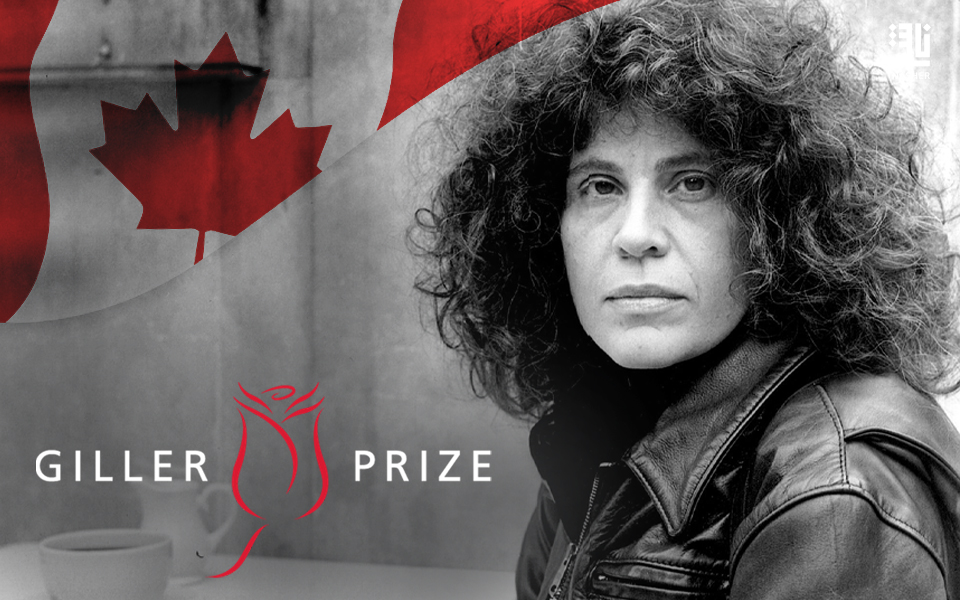
Canada’s Giller Prize was recently awarded to novelist and poet Anne Michaels for her novel Held amid controversy.
The Giller Prize is Canada’s most lucrative literary award, with a prize package of $100,000 for the winner and $10,000 for the shortlisted nominees.
The prestige of the award is being overshadowed by substantial criticism and protest. The advocacy coalition of arts groups No Arms in the Arts is calling for the Giller Foundation to push lead sponsor Scotiabank to fully divest from Elbit Systems, an Israeli arms company. In August, media reported Scotiabank’s asset management subsidiary had reduced its shares in Elbit Systems, following public pressure.
Some Giller winners (Sarah Bernstein, Suzette Mayr, Omar El Akkad, Madeleine Thien, Sean Michaels, Lynn Coady, Johanna Skibsrud and Michael Ondaatje) state in an open letter that “the only way to remedy what has been a deeply divisive period in Canadian arts is for the chief funders of so many arts prizes and organisations in Canada – banks such as Scotiabank – to divest from companies whose products are currently being used in mass killing.”
While the controversy is about the Israeli-Palestinian conflict interfering with the world of Canadian letters, it also reveals deeply antagonistic ideas about literature’s social role.
Last year’s Giller awards had already been troubled by protests. This year, two jurors withdrew and over 300 members of the literary community signed a petition asking for the Giller Foundation to cut ties not only with Scotiabank but also with Indigo Books. Thien, who won the Giller in 2016, asked not to be associated with the prize after her offer to raise money to fund this year’s award from previous Giller winners was rejected. She and El Akkad, Giller 2021 winner, have spoken out against how award administrators have handled authors’ calls.
Political controversies surrounding literary prizes are common. The awarding of the Nobel Prize for Literature to German writer Peter Handke in 2019 brought back accusations of denying genocide and being a supporter of Serb ultranationalism. At the other end of the spectrum, British writer John Berger gave half of the 1972 Booker Prize award for his novel G to the English Black Panthers.
According to the Giller winners who penned an open letter, and other writers, writers have a responsibility not to participate in this public relations machine that is supporting Israel’s war on Gaza. The Giller Foundation, for its part, states that the prize is not a political tool.
Anne Michaels’s statement after the prize was awarded spoke about the politics of art itself. “Everything I write is a form of witness – against war, against indifference, against amnesia of every sort.” She also wrote that every book bears “its own witness … its own form of resistance and assertion,” and affirmed her solidarity with all other writers, as well as with Canadian booksellers and publishers. This statement suggests a defence of art’s relative autonomy from social issues, and a belief that its responsibility is towards the community of readers, and not to society as a whole. She also noted: “A short time ago, less than 70 years – we lived in a country where only 14 books of Canadian fiction were published in a year – fewer in the entire country than the longlist for this prize.”