Norway planted 1,000 trees for a library no one can read until 2114, when the forest will be cut down to print 100 secret books
In a secluded wood near Oslo, Norway, there are a thousand young trees that are growing with a special mission. The trees are not being grown only for lumber or furniture. These trees will eventually become the pages of books that no one alive today will read in this century-long literary project.
The Future Library project was established in 2014 by the Scottish artist Katie Paterson. The project is based on planting a forest of 1,000 Norwegian Spruce trees in Oslo’s Nordmarka forest. In 2114, the trees will be cut down and used to produce paper for an anthology comprising 100 manuscripts written by authors from all over the world.
For now, the manuscripts are stored away and unreadable.
The books hidden for a hundred years
A new contributor is selected each year between 2014 and 2114 to write an entry in the collection. These texts are not accessible to the public but are known only to their authors.
According to Visit Norway, the initial author chosen was Margaret Atwood, the author of The Handmaid’s Tale and a Canadian novelist. She provided her unpublished manuscript, named Scribbler Moon in 2014, starting a trend where the authors write their books solely for future readers. Other contributing writers include David Mitchell, a British novelist; Sjón, an Icelandic writer; Elif Shafak, a Turkish novelist; Han Kang, a South Korean novelist; Ocean Vuong, a Vietnamese American poet; and Tsitsi Dangarembga, a Zimbabwean writer. The project continues to attract international authors because it asks them to write work that will outlive them but remain unread for decades.
A library without readers
Unlike traditional libraries, Future Library is built around waiting and patience.
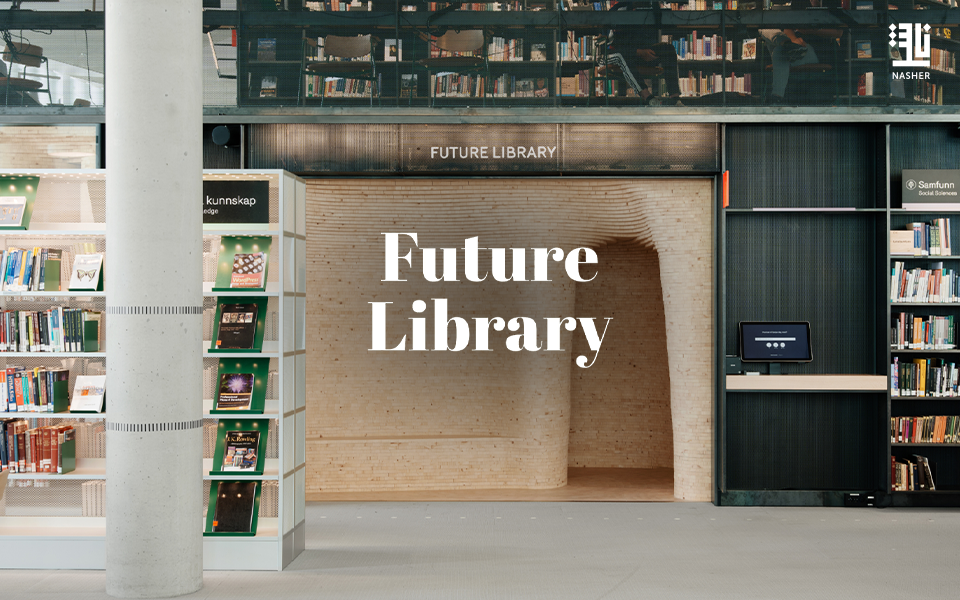
According to Katie Paterson’s official website, The Silent Room, designed by Paterson with Atelier Oslo and Lund Hagem, is intended to keep the collection until its final presentation in 2114. People will be able to visit the room and learn about the authors who took part in the project, but they will not be able to view the manuscripts for another 100 years.
Trees and literature in the Future Library
One notable feature of the project is that the forest will eventually supply the paper for the books. The forest is not merely symbolic; the trees are intended to provide the paper for the future books.
In 2114, when the project ends, the thousand trees planted in Nordmarka, Norway, will provide the paper for the entire anthology. This connection between trees and literature lies at the heart of Paterson’s project; it explores the way forests store time in their tree rings and books store ideas in words. As the description of this project says, it creates the “connection between forest, authors and readers” for 100 years.
Writing for people who have not been born yet
For the writers involved, the project offers a different way of thinking about writing. While most writers write books in order to have them published and reviewed immediately, the participants of the Future Library need to imagine a reader that exists after their lifetime. Margaret Atwood stated that she responded to the invitation immediately because of the unique chance to be a part of something that would last beyond her lifetime.
The project also raises questions about how societies preserve culture over time. In the era when books become easily accessible in digital format, the Future Library project makes a choice to delay.
The Future Library is more than an experiment in publishing; it is designed for future readers rather than the present generation.
The National Library of Australia has highlighted the Future Library as a century-long literary artwork created by Scottish artist Katie Paterson, with the project involving a forest planted in Norway’s Nordmarka region and a collection of unpublished manuscripts that will remain unread until 2114.
In 2114, readers will find 100 stories written by authors from an earlier era and printed on paper made from century-old trees. Only future readers will be able to know whether it is a masterpiece, a historical curiosity, or an experiment. Until then, the forest in Norway will continue to grow, preserving the library for the future.