Elizabeth Gaskell’s House exhibition Reveals Bronte Link
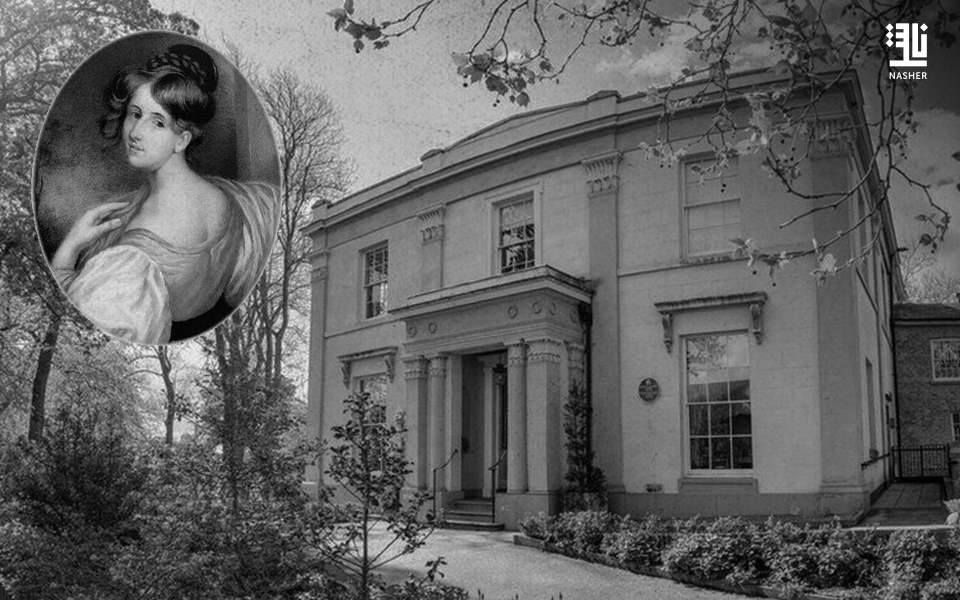
A new permanent exhibition has opened at Elizabeth Gaskell’s House exploring the author’s role in Victorian society and her links to Charlotte Bronte.
The Cranford author lived in the 19th Century Manchester villa from 1850 until her death in 1865.
The exhibition explores Gaskell’s involvement with social and charitable organisations in the city.
It also shows her association with the leading reformers, writers and artists of the time. They held her in high esteem, with her friend Charlotte Bronte describing her as “kind, clever, animated and unaffected”.
Gaskell wrote about poverty, class divide and inequality, in novels such as North and South, and Wives and Daughters, and was an active citizen that wanted to see change.
Amongst the circle of friends she would meet, invite to her home and correspond with were Harriet Beecher Stowe, George Eliot, Florence Nightingale and Charles Dickens. Sally Jastrzebski-Lloyd, house manager, said: “As well as extending perceptions of Elizabeth and exploring different aspects of her life, [the exhibition] helps to paint a fascinating picture of Victorian life – of women that shared not just passions in their work, but passions for change and improvements to the world around them.
“Elizabeth Gaskell was very much a woman ahead of her time, which is perhaps why her novels have held such relevance to generations of readers ever since.”
The novelist Elizabeth Cleghorn Gaskell is now best-known as the author of Cranford and North and South, and the biographer of her friend Charlotte Brontë. Her greatest books were written in reaction to the industrialisation of Manchester, where she lived for much of her life.
She was born in Chelsea, London on 29 September 1810, the daughter of two devout Unitarians, William Stevenson and Elizabeth Holland. After her mother died in 1811, she was brought up by her aunt, Hannah Lumb, in Knutsford, Cheshire. In 1832, she married William Gaskell, a Unitarian minister and later a professor of history, literature and logic; both were interested in new scientific ideas and literature. The couple settled in Manchester.
Shattered by the death of her infant son in 1845, she turned to writing for solace. Mary Barton, published anonymously in 1848, won praise from Charles Dickens, who called her his ‘dear Scheherazade’ and invited her to contribute to his journals. In January 1853 she published the controversial Ruth, the story of a seduced seamstress. Cranford, a gentle but acutely observant Knutsford-set tale of two spinster sisters, was serialised in Household Words later that year. And in 1855, she published North and South, a study of the tensions between mill-owners and workers.
Gaskell met Charlotte Brontë while on holiday near Windermere. They became close friends through their letters to one another, and after Charlotte’s death in 1855, Gaskell wrote a carefully researched and protective biography of her.
She was still working on Wives and Daughters, a humorous coming-of-age tale, when she died suddenly of a heart attack on 12 November 1865.